



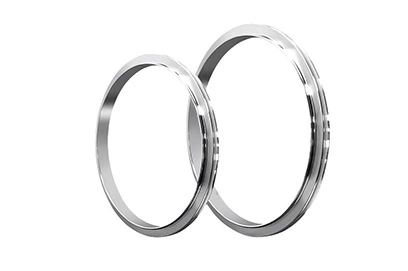
ISO Centering Rings is a mechanical part used in vacuum systems in accordance with the International Organization for Standardization (ISO) standards, and is usually used in conjunction with outer rings and O-rings.


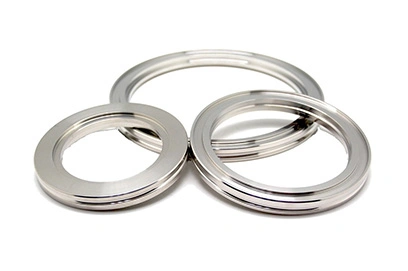
ISO Vacuum Flanges are International Organization for Standardization (ISO) compliant vacuumflanges used for connection and sealing of piping, equipment and other components in vacuum systems in conjunction with the sealing element O-Ring.
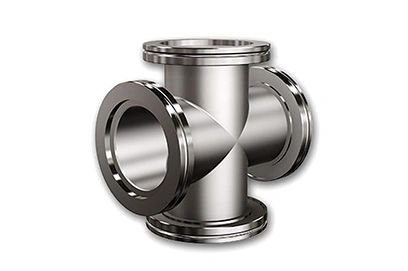
ISO Vacuum Fittings are vacuum fittings that conform to International Organization for Standardization (ISO) standards and are used in vacuum systems to connect various equipment and piping for the construction and maintenance of a vacuum environment. Commonly, there are elbows, tees, crosses, 5 way crosses, and 6 way crosses.
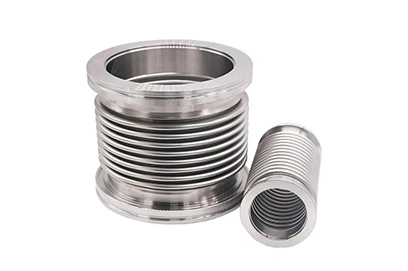
ISO Vacuum Bellows are typically made of a thin-walled metallic material, such as stainless steel, with a series of corrugated pleated structures. These pleats give the bellows good flexibility and expandability. The bellows are typically fitted with flanges or other connecting parts at both ends to allow connection to other equipment or piping in the vacuum system.
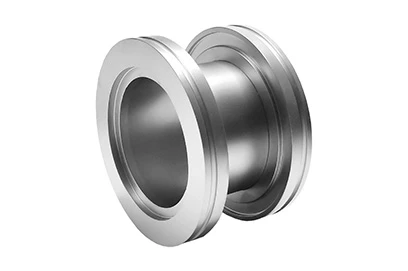
ISO Nipples are a type of connector for use in areas such as vacuum systems, primarily for creating weldless, straight connections in vacuum systems, but also as an adapter for straight connections between different pipe diameters or flange types.
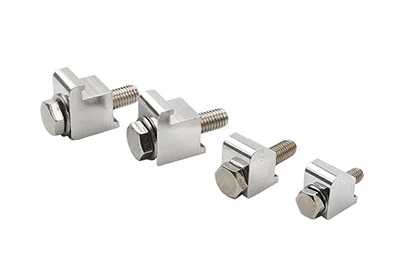
ISO Clamps are clamps used to connect vacuum system components to form a vacuum-compatible system.includes ISO single wall clamps, ISO double wall clamps,,ISO double claw clamps.


ISO vacuum products mainly includes: ISO center ring, ISO vacuum flanges, ISO vacuum fittings, ISO vacuum bellows, ISO nipples, ISO clamps, etc.
1.Abnormal vacuum degree abnormality (failure to reach the set value or continuous rise)
2.Leak detection reactions (increased helium leak detector readings or soap water bubbling)
3.Damaged, aged, or deformed seals; 4)Loose or misaligned flanges/clamps. If the above situations occur, the seal has failed and needs to be repaired.
Choose 304 or 316L stainless steel ISO fittings based on the environment and budget:
1.For regular/weakly corrosive environments or when cost is a concern, choose 304;
2.for strong corrosive environments (containing chlorine, acids, alkalis) or when high corrosion resistance is required, choose 316L.
Corrosion resistance: 316L contains molybdenum, has much better chlorine corrosion resistance than 304, and is suitable for harsh environments.
It is recommended to purchase spares separately, as they are wearing parts and prone to failure due to aging, wear or corrosion.
Actual service life depends on working conditions; it is advisable to reserve in advance as needed.
Inspection before reactivation:
1)Appearance: Check for rust, deformation of accessories, aging of sealing rings, and looseness of connectors.
2)Sealing: Conduct leak detection with low-pressure gas (e.g., nitrogen); for vacuum systems, observe pressure recovery after vacuum pumping.
3)Components: Check if valves operate smoothly manually/electrically; inspect pumps by oil replacement and manual rotation; ensure electrical wiring is intact.
Protection during shutdown:
1)Fill the system with dry nitrogen (slight positive pressure) to prevent moisture and corrosion.
2)Remove vulnerable parts (such as sealing rings), clean and store them in sealed containers; replace pump oil and cover equipment for dust prevention.
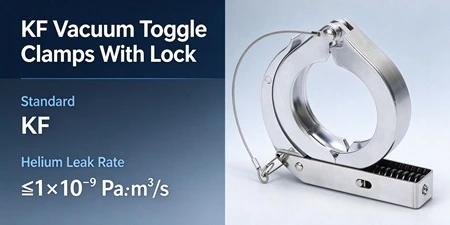 KF Clamp Tightening: How Much Torque Is Actually Enough?
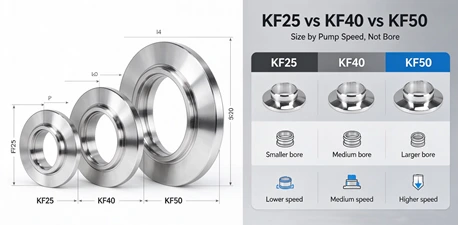 KF25 vs KF40 vs KF50: Selecting by Pump Speed and Line Length, Not Just Similar Inner Diameter
 Why KF Quick-Connect Fittings Are So Widely Used in Modular Vacuum Systems
 Why KF Seals Fail: Centering Ring & O-Ring Guide
Rich stock, fast delivery
Quick response within 24h
Quality assurance
Accessory replacement
GET A QUOTE