Determining adequate tightening torque for ISO-KF clamp connections, with size-based reference ranges and practical “enough” criteria.


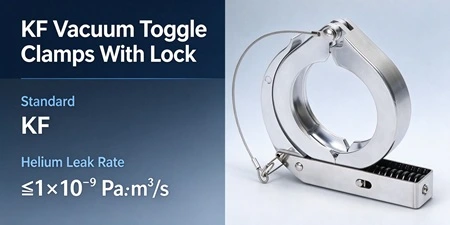
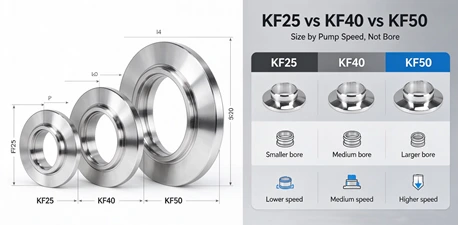
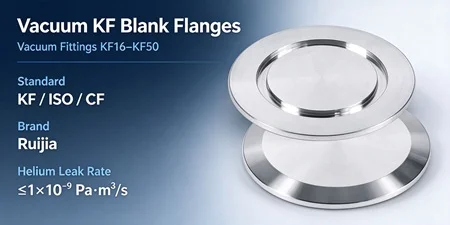
There is no single torque value that fits every KF connection. For common elastomer-sealed ISO-KF joints, adequate tightening typically falls between roughly 2 Nm and 6 Nm, depending on flange size (DN 10–50) and seal material. In most wing-nut and hinged-clamp installations, a firm hand-tight feel already reaches the intended compression; a torque wrench is useful for confirmation and repeatability, not for “cranking it down.” Over-tightening is a more common cause of leaks than under-tightening in KF systems.
A KF joint is not a bolted flange in the conventional sense. Two flange faces, a centering ring, an O-ring, and a clamp form the sealing interface. The clamp’s job is to draw the angled outer edges of the flanges together so the O-ring is compressed uniformly — not to generate the highest possible bolt load.
That design intent explains why many manufacturers describe KF tightening as “hand-tight” rather than prescribing a large torque figure. Agilent’s vacuum practice guidance states plainly that KF clamps must not be overtightened; excessive force can distort the sealing faces and damage the elastomer without improving vacuum integrity. One technical reference for NW16 wing-nut clamps puts the general recommendation at hand-tight, with approximately 70 inch-pounds (about 7.9 Nm) as a maximum — and notes that over-tightening can cause leaks, not prevent them.
So when a buyer searches for “KF clamp torque,” the honest answer has two layers: a size-and-seal-dependent range, and a tactile criterion that tells you when the joint is already closed.
The table below consolidates publicly stated torque values from vacuum component manufacturers, not RUIJIA product specifications. It is intended as a starting reference, not a universal setting. Actual requirements should be confirmed against the clamp and flange supplier’s documentation for the specific part number.
| Flange size | Elastomer seal (O-ring) — reference torque | Metal seal — reference torque | Source context |
|---|---|---|---|
| DN 10–16 ISO-KF | 2.5 Nm | Not typically specified for standard KF elastomer joints | Inficon clamp datasheet lists 2.5 Nm for DN 10–16 |
| DN 20–25 ISO-KF | 3.5 Nm (elastomer); 3 Nm (metal, chain clamp) | 3 Nm | Inficon: 3.5 Nm for DN 20–25; vacuum-shop chain clamp: elastomer 3.5 Nm, metal 3 Nm |
| DN 32–40 ISO-KF | 5 Nm | Depends on clamp design | Inficon: 5 Nm for DN 32–40 |
| DN 50 ISO-KF | 6 Nm | Depends on clamp design | Inficon: 6 Nm for DN 50 |
| Hinged / wing-nut clamp, general | ~2 Nm often cited as sufficient; hand-tight is the design intent | — | Demaco: “Just 2 Nm for a secure hold — no over-tightening needed” |
| NW16 wing-nut clamp | Hand-tight; approx. 70 in-lb (~7.9 Nm) maximum | — | BenchChem NW16 documentation: hand-tight recommended; over-tightening can damage O-ring and aluminum clamp |
How to read this table: The values are not contradictory; they reflect different clamp styles, screw conditions, and sealing materials. A small aluminum wing-nut clamp on a DN 16 joint behaves differently from a chain clamp on a DN 50 joint. The lower end of the range (~2 Nm) is common for routine elastomer sealing; the higher end (5–6 Nm) appears in larger sizes or specific chain-clamp configurations. If a supplier specifies a value outside this general band, the supplier’s value governs.
For installations where the joint will be repeatedly assembled and disassembled, the tactile “hand-tight” criterion is often more practical than chasing a torque number. The KF system was designed for tool-free or minimal-tool connection, and the clamp geometry itself limits how much compression can be applied before the flanges seat against the centering ring.
“Hand-tight” is not a vague instruction — it corresponds to a recognizable mechanical stop. As the wing nut or clamp screw is turned, resistance increases gradually as the O-ring begins to compress. The correct stopping point is when the flanges are drawn together so that the centering ring is captured and the gap between the flange faces is even around the circumference. Further turning after that point does not improve the seal; it begins to extrude or pinch the elastomer.
A practical field check:
If a torque wrench is used, a calibrated tool with an appropriate low-range setting (capable of reading 2–6 Nm reliably) is necessary. Many general-purpose torque wrenches are inaccurate at the bottom of their scale, and a false reading can lead to either under- or over-tightening.
In a KF joint, the O-ring is the sealing element. Its compression is intended to be moderate and uniform. Excessive clamp force can:
Agilent’s guidance is direct: KF clamps “must not be overtightened” because the design already produces a seal through uniform clamp pressure, not through high torque. The NW16 reference similarly warns that over-tightening can damage the O-ring and the aluminum clamp, and that leaks may result from too much force rather than too little.
This is why the question “how much torque is enough” is better framed as “how little torque achieves uniform compression without losing the seal?” In most routine KF assemblies, the answer is at the lower end of the range, not the upper end.
A torque specification is most useful in three situations:
A torque wrench is not routinely necessary for small wing-nut clamps on DN 10–25 joints with standard elastomer O-rings. In those cases, hand-tight plus a visual even-gap check is the normal practice. If a buyer is uncertain, the correct next step is to confirm the clamp part number, flange size, and seal material with the supplier and request the installation torque for that specific combination — not to apply a generic number from a different clamp style.
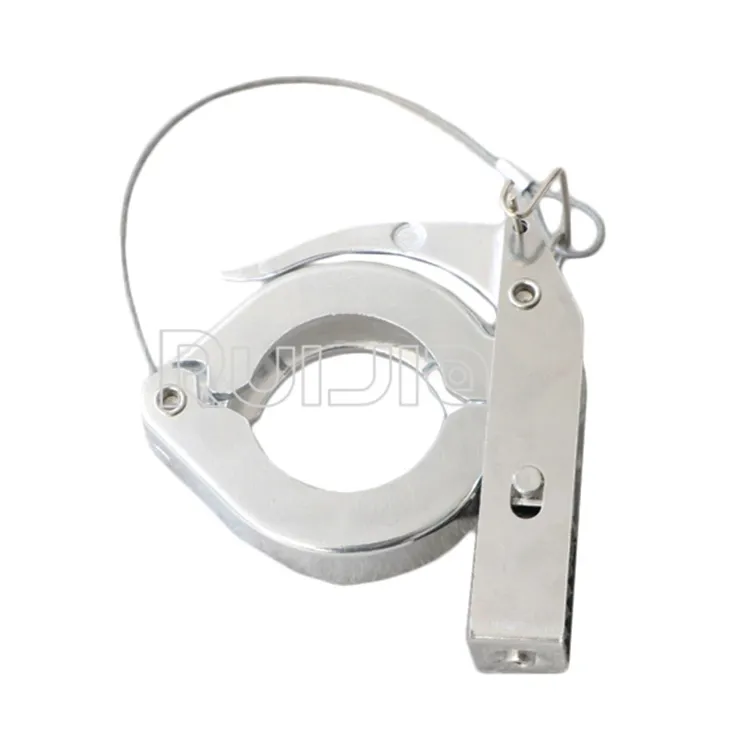
For buyers reviewing clamp options for a project, wing-nut spring clamps, single-pin and double-pin clamps, toggle clamps, and chain clamps differ in how force is applied and how much tactile feedback the operator receives. Reviewing those design differences alongside the seal material is more useful than selecting a clamp by torque rating alone.
For a standard DN 25 ISO-KF joint with an elastomer O-ring and a wing-nut or hinged clamp, 2–3.5 Nm is commonly cited as sufficient, and many operators achieve a reliable seal at hand-tight without measuring torque. If the joint is on a vibrating system or will be repeatedly cycled, confirm the clamp supplier’s value for the specific part number.
Only if the wrench is calibrated and accurate in the low range (2–6 Nm). Many automotive-style torque wrenches are not reliable at the bottom of their scale. A low-range calibrated wrench, or a manufacturer-specific installation tool where available, is preferable.
Over-tightening can pinch or extrude the O-ring, distort the centering ring, or warp the flange face. A leak that appears after increased force often indicates seal damage, not insufficient torque. Disassemble, inspect the O-ring and centering ring, and reassemble with clean, undamaged components at a lower force.
Not necessarily “more” across the board; the required compression is different. For chain clamps on DN 20–25, one reference lists 3 Nm for metal seals versus 3.5 Nm for elastomer seals — metal seals do not always require higher torque. The governing factor is the seal manufacturer’s specified compression, not a blanket rule.
Check for an even, parallel gap between the flange faces and a centered centering ring. The wing nut should feel snug and resistant, without a sudden hard stop. After the system is at operating temperature, a small re-snug may be needed as the elastomer relaxes.
Yes. Lubricated threads reduce friction, so the same torque produces higher clamp force than dry threads. If a supplier specifies a torque value, it is typically stated for a defined thread condition. When switching between dry and lubricated assembly, treat the first value as a reference and confirm the joint by the visual/tactile criteria rather than assuming the torque number transfers unchanged.
The “right” KF clamp torque is not a universal number — it is a size-and-seal-dependent range, bounded at the upper end by the risk of O-ring damage and flange distortion. For common elastomer-sealed ISO-KF joints, 2–6 Nm covers most DN 10–50 applications, but hand-tight with an even-gap visual check is the practical standard for small wing-nut clamps. A torque wrench is valuable for repeatability in production or larger sizes, not as a substitute for recognizing when the joint is already closed.
The most common mistake is treating “tighter” as “safer.” In KF systems, over-tightening is a more frequent cause of leaks than under-tightening, because it damages the very seal it is meant to compress. When a project requires a documented torque value, confirm it against the specific clamp, flange size, and seal material with the supplier rather than applying a generic figure.
If you are selecting clamps for a system that will see repeated assembly, or need to match a clamp style to a specific seal and flange size, review the available KF clamp configurations and compare the force-application method against your maintenance and repeatability requirements.
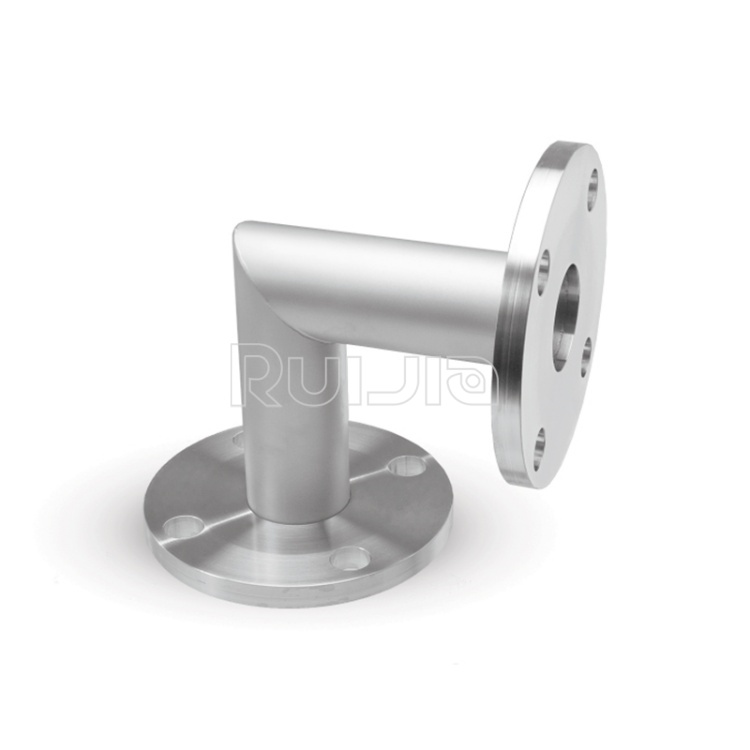
|
Temperature |
-26˚C to 200˚C |
|
Working Pressure |
Vacuum~atmosphere pressure |
|
Helium Leak Test |
1×10 -9 Pa・m³/sec or less |
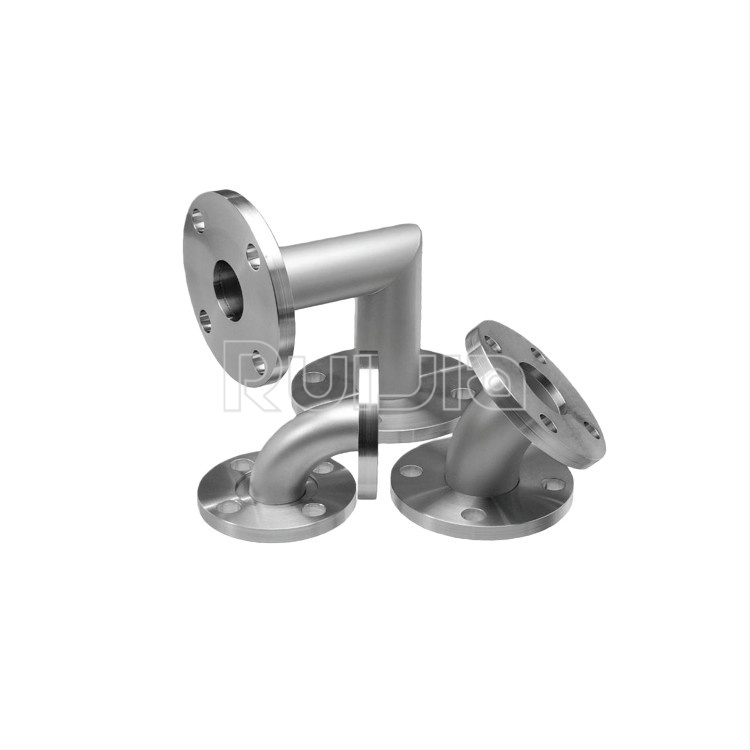
|
Temperature |
-26˚C to 200˚C |
|
Working Pressure |
Vacuum~atmosphere pressure |
|
Helium Leak Test |
1×10 -9 Pa・m³/sec or less |
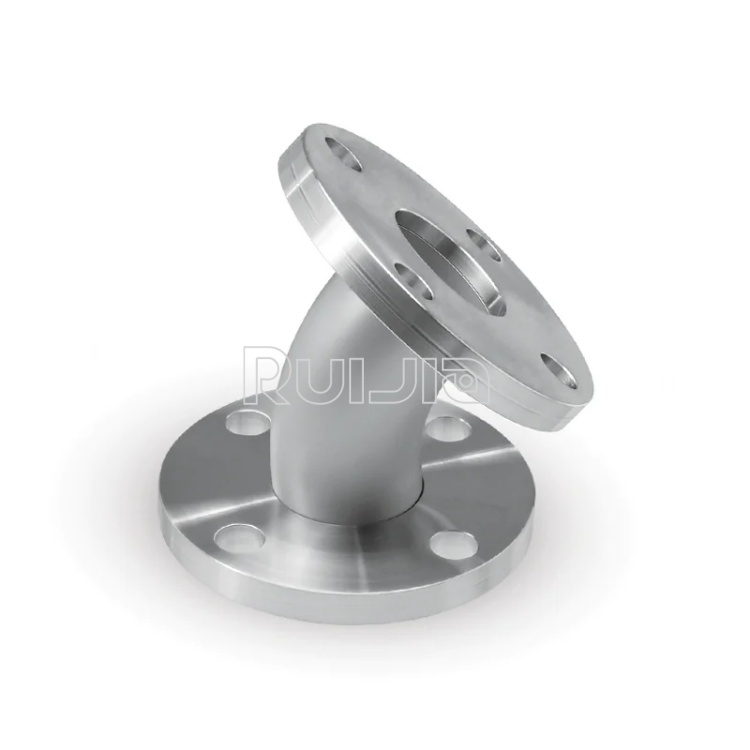
|
Temperature |
-26˚C to 200˚C |
|
Working Pressure |
Vacuum~atmosphere pressure |
|
Helium Leak Test |
1×10 -9 Pa・m³/sec or less |
Rich stock, fast delivery
Quick response within 24h
Quality assurance
Accessory replacement
GET A QUOTE