Determining adequate tightening torque for ISO-KF clamp connections, with size-based reference ranges and practical “enough” criteria.


Most KF vacuum seal failures are not caused by the clamp or the flange itself — they trace back to the centering ring and O-ring. The centering ring positions and supports the elastomer seal; the O-ring provides the actual vacuum barrier. If either component is the wrong size, made from an incompatible material, or degraded by heat and chemical exposure, the seal will fail regardless of how carefully the clamp is tightened. This guide explains how each component works, what causes each to fail, and how to select and maintain the right combination for your application.
A standard KF (Klein Flansche) connection is a four-component assembly: two mating flange faces, a centering ring, an O-ring, and a clamp. Each component has a specific role:
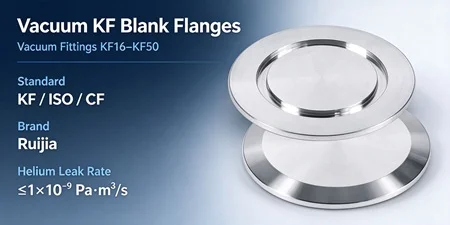
The flange faces provide the mating surfaces that the seal is compressed against.
The centering ring aligns the two flanges and holds the O-ring in the correct position between them.
The O-ring is the elastomer element that, when compressed, forms the vacuum-tight barrier.
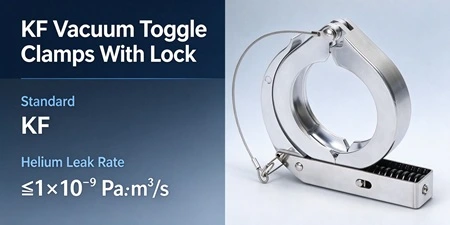
The clamp applies the closing force that compresses the O-ring against the flange faces.
The critical insight is this: the clamp does not create the seal — it only provides the compression force that allows the O-ring to do its job. If the centering ring is the wrong size, the O-ring is the wrong material, or either component is worn or damaged, no amount of clamp tightening will produce a reliable seal.
The centering ring is often treated as a simple positioning accessory. In practice, it performs three functions that directly affect seal integrity:
Radial alignment: The ring centers the two flange faces so the O-ring is compressed evenly around the full circumference. A centering ring that is too small or too large for the flange size will allow the flanges to shift off-center, creating an uneven compression pattern.
O-ring retention: The ring holds the O-ring in its groove and prevents it from rolling, extruding, or being pulled out of position during assembly or pressure cycling.
Compression control: The thickness of the centering ring determines how much the O-ring is compressed when the flanges are brought together. A ring that is too thin will under-compress the O-ring; a ring that is too thick will prevent the flanges from closing properly.
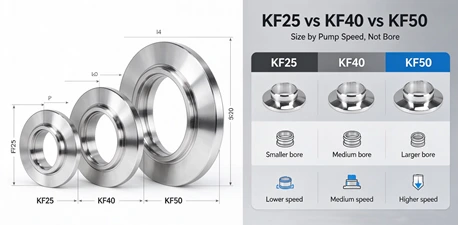
A common mistake in maintenance and replacement purchasing is mixing centering rings from different manufacturers or regional standards without verifying dimensional compatibility. KF flange designation and tube outside diameter are related but not always identical. A ring marked “KF25” from one supplier may not match the flange from another source.
The O-ring is the component that provides the vacuum barrier. Its performance depends almost entirely on three factors: material compatibility with the process, temperature range, and compression set resistance.
The most commonly used O-ring materials in KF vacuum applications are:
NBR (Buna-N / Nitrile): General-purpose vacuum sealing. Good mechanical properties and low cost. Suitable for non-corrosive, moderate-temperature applications.
FKM (Viton): Wider temperature range and better chemical resistance than NBR. Commonly specified for semiconductor, chemical, and higher-temperature vacuum processes.
Silicone: Excellent low-temperature flexibility but limited chemical resistance and higher outgassing than FKM. Used in specific low-temperature or clean applications.
EPDM: Good resistance to water, steam, and some chemicals. Less common in general vacuum service than NBR or FKM.
The table below summarises the practical selection logic:
| Consideration | NBR | FKM (Viton) | Silicone | EPDM |
| Typical temperature range | Moderate | Wider | Low-temp focus | Moderate |
| Chemical resistance | Limited | Good | Limited | Good (specific) |
| Outgassing (relative) | Moderate | Lower | Higher | Moderate |
| Compression set resistance | Moderate | Good | Moderate | Good |
| Typical KF application | General vacuum | Semiconductor, chemical | Low-temperature | Water/steam exposure |
This table provides general guidance only. Actual material performance depends on the specific process chemistry, temperature profile, and cycle conditions. Buyers should confirm compatibility with the component supplier.
An O-ring that is chemically incompatible with the process gas or vapour will degrade rapidly — hardening, swelling, or cracking — leading to a leak path. An O-ring operating above its rated temperature will take a permanent compression set, meaning it will no longer recover its original shape after the clamp is released, and will fail to seal on the next assembly.
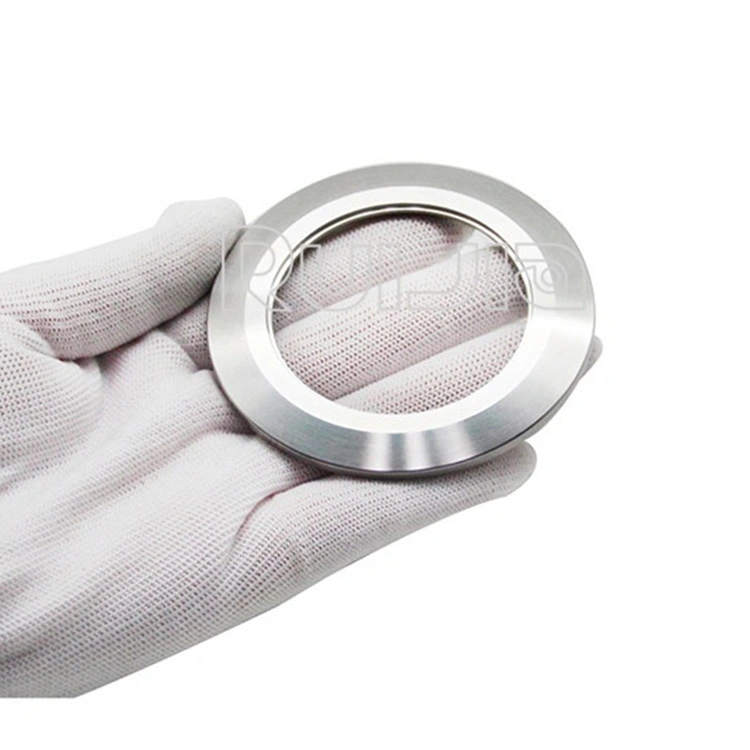
Based on published vacuum assembly and troubleshooting guidance, the majority of KF seal failures can be traced to one of the following:
1. O-ring compression set
This is the most common long-term failure mode. Over time — particularly under elevated temperature — the elastomer loses its elastic recovery. When the clamp is removed and the joint is reassembled, the O-ring no longer expands to fill the sealing gap. The result is a leak that may be intermittent at first (appearing only under certain pressure or temperature conditions) and then becomes permanent.
2. Centering ring dimensional mismatch
A centering ring that does not match the flange designation or the tube outside diameter will not position the O-ring correctly. This can cause the O-ring to be compressed unevenly, to shift off-center during assembly, or to be pinched between the flange faces. In some cases, a mismatched ring will prevent the flanges from closing fully, leaving a visible gap.
3. O-ring damage during installation
The O-ring can be cut, nicked, or pinched during assembly. This often happens when the ring is not properly seated in the centering ring groove, or when the flanges are brought together without ensuring the O-ring is correctly positioned. A damaged O-ring may seal initially but develop a leak after thermal cycling or pressure changes.
4. Chemical or thermal degradation
Exposure to incompatible process gases, cleaning agents, or temperatures beyond the O-ring’s rated range will accelerate degradation. Symptoms include hardening (loss of flexibility), swelling (dimensional change), and surface cracking. Once degradation begins, the O-ring must be replaced — tightening the clamp will not restore the seal.
5. Contamination on the sealing surfaces
Particles, oil films, or residual cleaning agents on the flange face or the O-ring surface can create a leak path even when the components are otherwise correct. This is particularly common in maintenance situations where the flange faces are not cleaned before reassembly.
When a KF joint leaks and the decision is to replace the sealing components, the following sequence helps avoid a repeat failure:
Checklist: KF centering ring and O-ring replacement
For replacement components, sending the existing component marking, flange outside diameter, tube outside diameter, and a clear photo allows the supplier to verify the requested interface against the available configuration.
If a KF joint fails repeatedly after correct replacement of the centering ring and O-ring, the problem may be outside the sealing components themselves. Flange face damage (scratches, dents, or corrosion pitting) can prevent the O-ring from sealing even when it is new and correctly sized. In this case, the flange itself may need replacement.
Similarly, if the system is operating at the upper limit of what a KF elastomer seal can support, a different sealing technology — such as a CF metal-seal flange for higher vacuum or temperature — may be the appropriate engineering solution rather than continued maintenance of a KF joint.
A KF seal fails for a specific reason, and in most cases that reason can be found in the centering ring or the O-ring rather than in the clamp or the flange. The centering ring must match the flange and tube dimensions; the O-ring must match the process chemistry and temperature. When both are correct and correctly installed, a KF joint provides reliable vacuum sealing for the full service life of the elastomer.
Before ordering replacement seals or troubleshooting a persistent leak, review the available KF configurations to confirm the correct centering ring and O-ring combination for your flange size and application. If the failure pattern suggests the flange itself is damaged or the application exceeds elastomer seal limits, discuss the material and process requirements with a technical supplier.
Q: How do I know if my KF O-ring needs replacement?
A: Visual inspection is the most reliable indicator. Look for hardening (the O-ring feels stiff rather than rubbery), surface cracks, permanent deformation (the cross-section is no longer round), or swelling. If the O-ring has taken a compression set, it will not return to its original shape after the clamp is removed. Any of these signs means replacement is required.
Q: Can I use a Viton O-ring in place of NBR without changing anything else?
A: In many cases yes, provided the centering ring groove is compatible with the O-ring cross-section. Viton (FKM) generally offers a wider temperature range and better chemical resistance than NBR. However, the change should be confirmed against the specific process requirements — material substitution without verifying compatibility can introduce new failure modes.
Q: Why does my KF joint leak after I replace the O-ring?
A: The most common reasons are: the centering ring is not the correct size for the flange, the O-ring was damaged during installation, the flange faces were not clean, or the new O-ring material is not compatible with the process. Check each of these before assuming the replacement component is defective.
Q: How often should KF centering rings be replaced?
A: The centering ring itself is typically durable and does not require routine replacement unless it is damaged. The O-ring is the consumable component. Replacement frequency depends on operating temperature, cycle frequency, and process chemistry. In general vacuum service, O-rings may last through many assembly cycles; in high-temperature or chemically aggressive service, more frequent inspection and replacement may be needed.
Q: What is the difference between an inner centering ring and an outer centering ring?
A: An inner centering ring fits inside the flange bore and positions the O-ring on the inner side of the flange faces. An outer centering ring fits around the outside of the flange faces and is used in configurations where an additional retaining function is needed, such as systems that may experience overpressure conditions. The correct type depends on the flange design and the system’s pressure regime.
Q: Can I reuse a centering ring with a new O-ring?
A: In most cases, yes — provided the centering ring is undamaged and dimensionally correct. Inspect the ring for deformation, cracks, or wear at the O-ring seating groove. If the ring is in good condition, it can be reused with a new O-ring of the correct material and size.
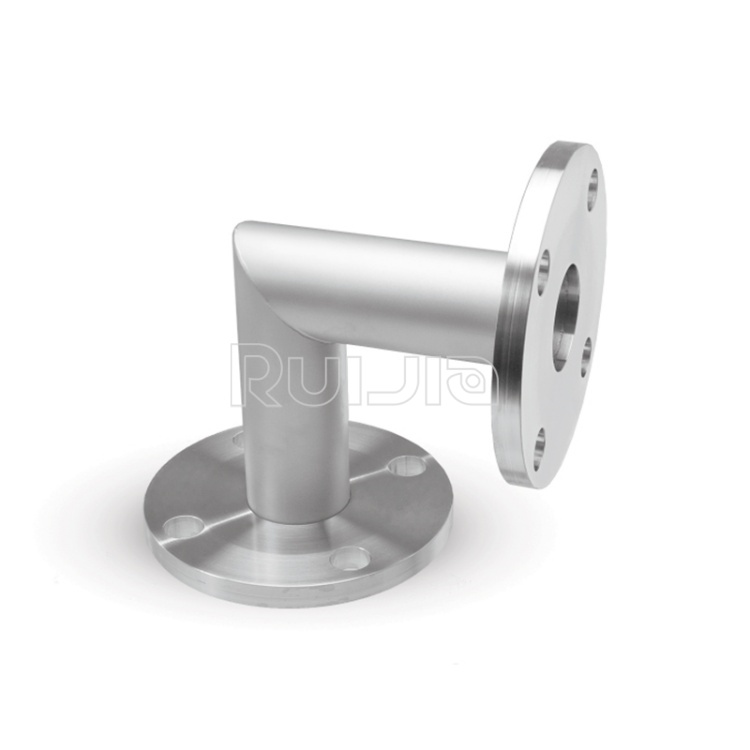
|
Temperature |
-26˚C to 200˚C |
|
Working Pressure |
Vacuum~atmosphere pressure |
|
Helium Leak Test |
1×10 -9 Pa・m³/sec or less |
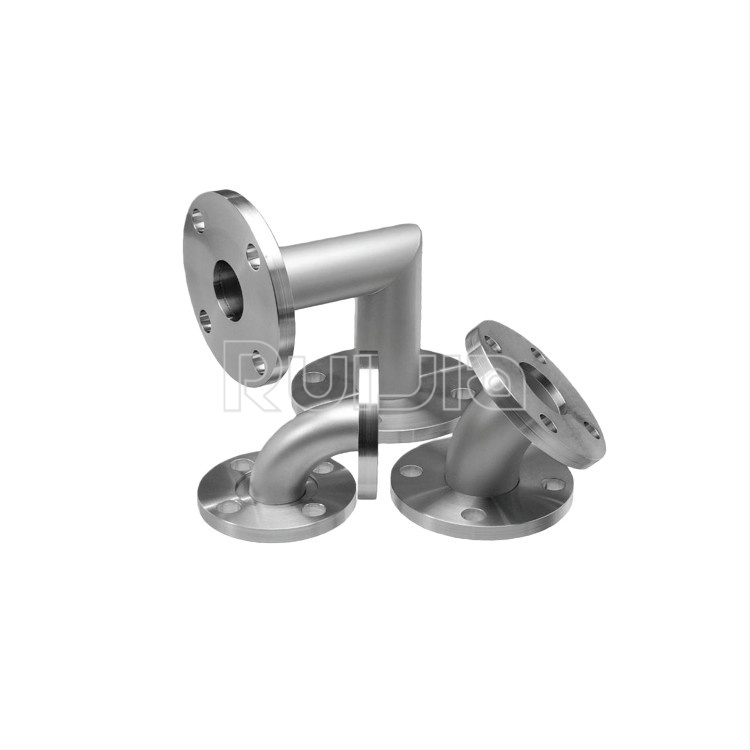
|
Temperature |
-26˚C to 200˚C |
|
Working Pressure |
Vacuum~atmosphere pressure |
|
Helium Leak Test |
1×10 -9 Pa・m³/sec or less |
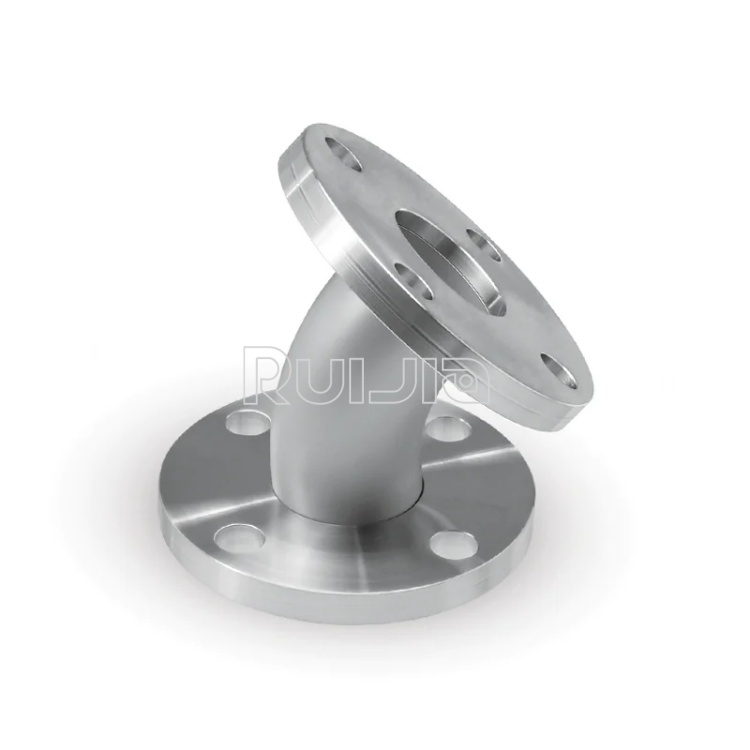
|
Temperature |
-26˚C to 200˚C |
|
Working Pressure |
Vacuum~atmosphere pressure |
|
Helium Leak Test |
1×10 -9 Pa・m³/sec or less |
Rich stock, fast delivery
Quick response within 24h
Quality assurance
Accessory replacement
GET A QUOTE