



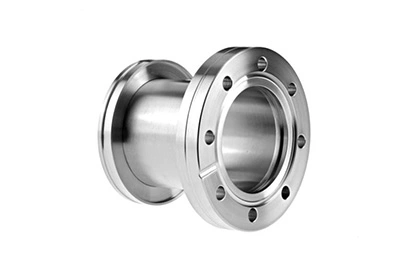
Vacuum Tubulated Adapter is a core adapter fitting in vacuum systems, whose primary function is to enable seamless connection between vacuum pipes/equipment with different standard interfaces, pipe diameters, or materials.


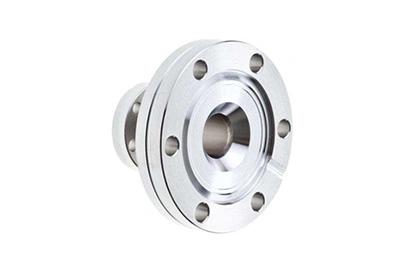
Vacuum Conical Reducing Adapter is a core vacuum system component, enabling precise transitional connection between pipes/equipment of different diameters or interface standards. Its conical design integrates high sealing, low flow resistance, and structural stability, ensuring leak-free vacuum integrity.
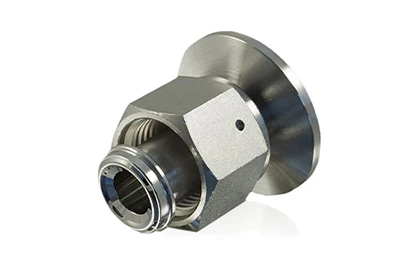
The Vacuum VCR Adapter is a high-precision connecting component based on VCR (Vacuum Coupling Retainer) vacuum coupling locking technology, achieving zero-leakage sealing through its "metal hard seal + locking structure.
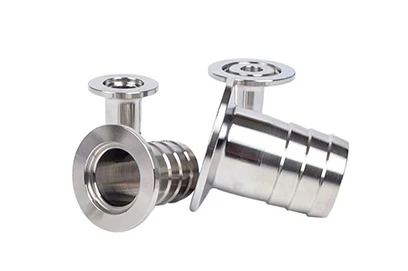
The Vacuum Rubber Hose Adapter is a flexible adapter in vacuum systems specifically designed for precise connection between rubber hoses, pipes, and equipment interfaces. It effectively absorbs pipeline vibrations, compensates for installation deviations, while maintaining the vacuum tightness of the system.
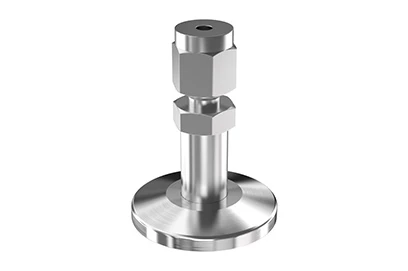
Vacuum Swagelok Adapter is a high-precision vacuum adapter based on Swagelok's core ferrule sealing technology. Designed for precise connection of pipes, equipment, and different interfaces in vacuum systems, it delivers high sealing performance and structural stability via "ferrule sealing + precision structure.
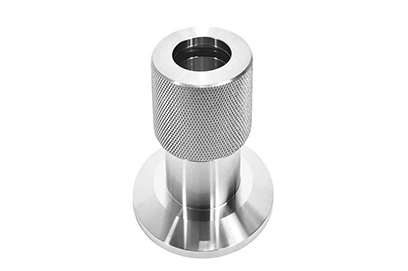
Vacuum Quick Disconnect Adapter is a high-precision connecting component designed specifically for quick assembly/disassembly in vacuum systems, compatible with low, medium, and high vacuum conditions.


The common types of vacuum adapters have Tubulated Adapter, Conical Reducing Adapter, VCR Adapter, Rubber Hose Adapter, Swagelok Adapter and Quick Disconnect Adapter.
Vacuum level matching:Low/medium vacuum (≥10⁻⁵ Pa): Rubber-sealed adapters such as KF, threaded, or hose adapters (e.g., Rubber Hose Adapter) can be selected;High/ultra-high vacuum (<10⁻⁵ Pa): Metal-sealed adapters like CF, VCR, or Swagelok adapters must be chosen to ensure low leak rates.
Interface compatibility: Select the corresponding adapter according to the interface type of the components to be connected in the system (such as flanges, threads, ferrules). For example, when connecting a KF flange to a steel pipe, a KF to Swagelok reducing adapter can be selected.
To correctly install a vacuum adapter, it is necessary to ensure reliable sealing and stable connection. The steps are as follows: clean the interfaces, install the seals, align accurately, fasten evenly, and verify leak tightness.
Common materials and their applicable scenarios:Stainless steel (304/316): Corrosion-resistant and high-temperature resistant, suitable for high-vacuum and corrosive environments.
1)Check the seals: See if they are aged, damaged, or mismatched in size.
2)Clean the sealing surfaces: Check for oil stains or scratches, then clean or polish them for repair.
3)Inspect tightness: Check if flange bolts are evenly tightened, and if threads/ferrules are loose or over-tightened.
4)Check the material: Corrosive media may corrode the material, causing air leakage.
5)Use tools: Locate the leak with a helium leak detector or soapy water, then replace or repair accordingly.
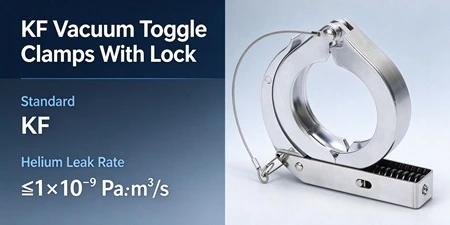 KF Clamp Tightening: How Much Torque Is Actually Enough?
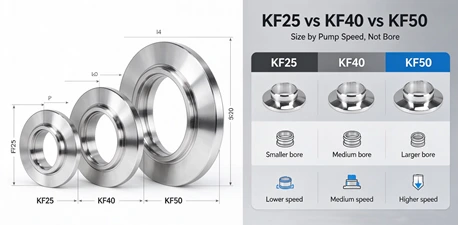 KF25 vs KF40 vs KF50: Selecting by Pump Speed and Line Length, Not Just Similar Inner Diameter
 Why KF Quick-Connect Fittings Are So Widely Used in Modular Vacuum Systems
 Why KF Seals Fail: Centering Ring & O-Ring Guide
Rich stock, fast delivery
Quick response within 24h
Quality assurance
Accessory replacement
GET A QUOTE