



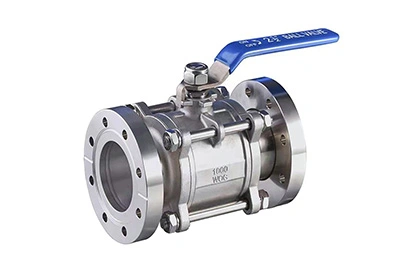
Vacuum Ball Valves are high-precision valve components for media on-off control in vacuum systems. Adopting a ball rotation sealing structure and integrating "low-flow-resistance flow channel + high sealing performance" design, they enable quick opening/closing and reliable shut-off in vacuum environments, compatible with low, medium, high, and ultra-high vacuum conditions.


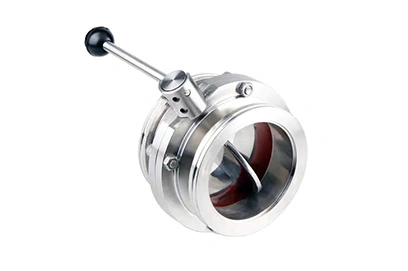
Vacuum Butterfly Valves are high-precision valve components for media on-off control and flow regulation in vacuum systems. Adopting a disk rotating opening/closing structure and integrating the core advantages of "thin design + low-flow-resistance flow channel + high sealing performance", they enable quick shut-off, precise flow control, and reliable sealing in vacuum environments.
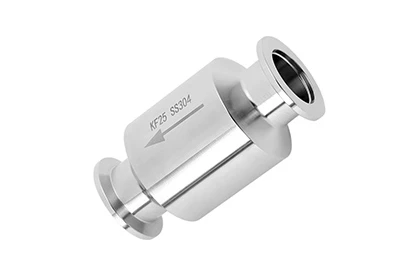
Vacuum Check Valves are automatic functional components in vacuum systems. They only permit gas flow in one direction and effectively prevent reverse airflow, pressure surges, or pump oil backstreaming into vacuum chambers and pipelines.
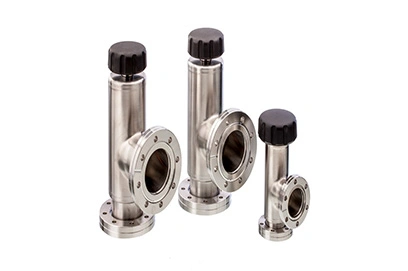
Adopting a "angle flow channel + piston/diaphragm-driven sealing" design and integrating core advantages of "low flow resistance + high sealing performance + quick opening/closing", it achieves precise shut-off and reliable sealing in vacuum environments.


1)Low vacuum : Choose gate valves, butterfly valves, check valves etc., with rubber seals, low cost.
2)Medium vacuum : Choose angle valves, baffle valves with metal-rubber combined seals, with a leak rate ≤10⁻⁷ Pa・m³/s.
3)High vacuum : Choose baffle valves, gate valves with all-metal seals, with a leak rate ≤10⁻¹⁰ Pa・m³/s and low flow resistance.
There is no fixed schedule; it depends on working conditions:
1)For regular working conditions (normal temperature, non-corrosive, low frequency of operation): Rubber parts should be replaced every 1-2 years; diaphragms should be replaced as soon as signs of aging (hardening, cracks) appear.
2)For harsh working conditions (corrosive, high temperature, high frequency of operation): Inspect every 3-6 months, and replace immediately if damaged or ineffective.
1)Manual: Suitable for low-frequency operation and simple systems, with low cost and no need for automation.
2)Pneumatic: Suitable for medium-to-high frequency operation, requiring rapid response, or explosion-proof/dusty environments, and dependent on an air source.
3)Electric: Suitable for systems requiring precise control and high automation, capable of remote programming, with higher cost.
1)Appearance: Check for rust, cracks, and loose components.
2)Seals: Dismantle and inspect O-rings and diaphragms; replace if aged or damaged.
3)Cleaning: Wipe the sealing surfaces and valve seats with alcohol, remove rust, and clean.
4)Moving parts: Test whether the opening and closing are flexible without jamming.
5)Leak detection: Perform vacuum leak detection after assembly to ensure tightness.
1)Dry dust: After disassembling the valve, purge with low-pressure compressed air, clean residual dust with a soft brush, then rinse with alcohol and let dry.
2)Sticky/oily impurities: After disassembling the valve, wipe with alcohol/neutral cleaning agent; stubborn impurities can be soaked before cleaning, and finally rinsed and dried.
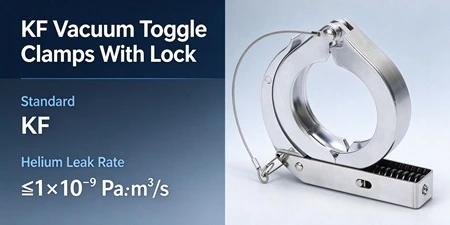 KF Clamp Tightening: How Much Torque Is Actually Enough?
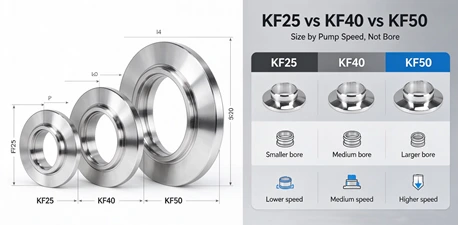 KF25 vs KF40 vs KF50: Selecting by Pump Speed and Line Length, Not Just Similar Inner Diameter
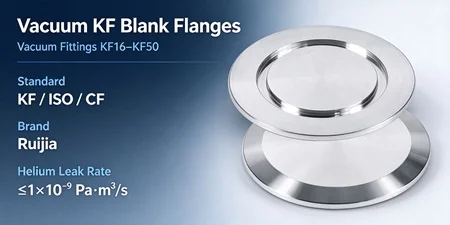 Why KF Quick-Connect Fittings Are So Widely Used in Modular Vacuum Systems
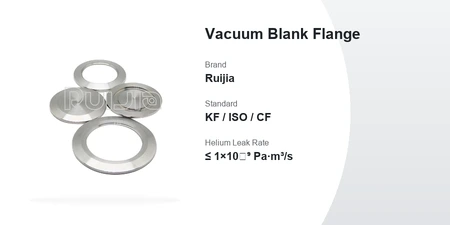 Why KF Seals Fail: Centering Ring & O-Ring Guide
Rich stock, fast delivery
Quick response within 24h
Quality assurance
Accessory replacement
GET A QUOTE