Determining adequate tightening torque for ISO-KF clamp connections, with size-based reference ranges and practical “enough” criteria.


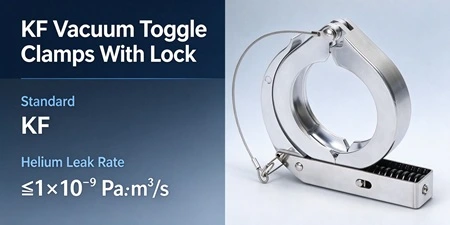
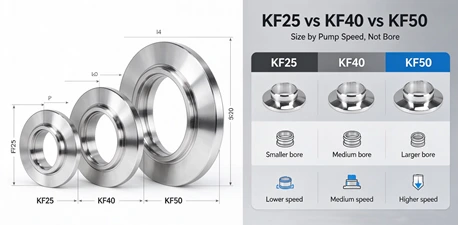
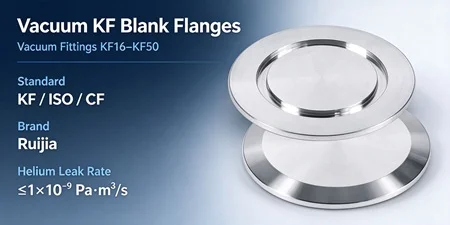
KF quick-connect fittings dominate modular vacuum systems because they combine standardized interfaces (ISO 2861), tool-free assembly, and full reusability. A KF joint uses two symmetrical flange faces, a centering ring with an O-ring, and a single wingnut clamp — so any component can be swapped, rotated, or replaced without welding or specialized tools. The trade-off is a temperature and vacuum-range limitation set by the elastomer seal. This article explains the engineering logic behind KF adoption, compares it with ISO and CF alternatives, and provides a practical selection framework.
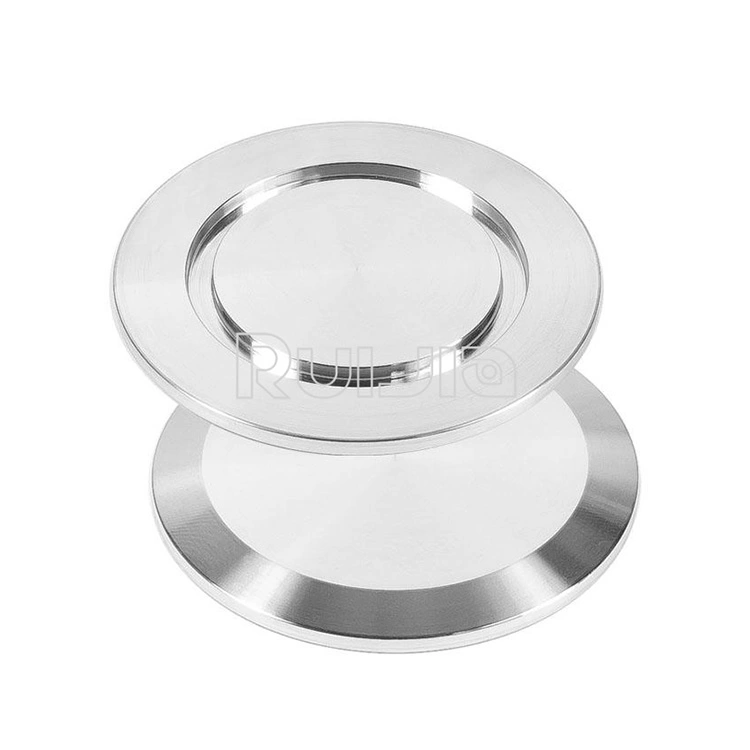
A KF joint is defined by four components working together: two matching flange faces, a centering ring, an O-ring, and a clamp. The clamp applies closing force around the angled outer surfaces of the flanges, compressing the O-ring against the flange faces to form the vacuum seal.
The “quick-connect” label comes from three design features:
Tool-free assembly: The wingnut clamp is designed for hand-tightening. No wrenches, torque specifications, or bolt patterns are required for standard connections.
Sexless interfaces: KF flanges are symmetrical. Either flange can mate with any other flange of the same size, eliminating gender-matching errors.
360° rotatability: Components can be rotated before final clamp tightening, allowing flexible routing without additional adapters.
These features are not conveniences added after the fact. They are the design foundation of the ISO-KF standard.
KF dimensions are governed by ISO 2861, with nominal sizes from KF10 to KF50. The standard covers flange outside diameter, tube outside diameter, and the angled sealing surface geometry.
Standardization produces three practical benefits for modular system design:
Cross-manufacturer compatibility. A KF25 flange from one supplier should mate with a KF25 centering ring and clamp from another, as long as both conform to ISO 2861. This reduces single-source dependency and simplifies replacement procurement. However, buyers should verify both the KF designation and the tube outside diameter, since these two dimensions are related but not always identical.
Predictable system planning. Because dimensions are standardized, engineers can design a piping layout using catalog data and be confident that components will physically fit. This is particularly valuable in modular systems where components are specified by different teams or installed at different project phases.
Simplified maintenance documentation. A KF connection is described by its nominal size and component type (centering ring, clamp, flange, elbow). Maintenance manuals do not need to reference manufacturer-specific part numbers for every joint.
Modular vacuum systems are designed to be changed — components added, removed, or rearranged as process requirements evolve. KF connections support this through three mechanisms:
Reusable components. Unlike welded joints or metal-gasket seals that deform on compression, KF components are reusable. The O-ring is the only wear item, and it can be replaced independently of the flange or clamp. In systems that require frequent cleaning or modification, this reusability reduces both downtime and component replacement cost.
Tool-free disassembly. A wingnut clamp can be opened by hand. This means a component swap does not require a technician to locate a wrench, access a bolt pattern, or follow a torque sequence. In laboratory and R&D environments where configurations change weekly or daily, this speed advantage compounds over time.
No welding or brazing. Building a KF piping run requires no thermal processes. Components are joined mechanically. This eliminates the need for a welding station, post-weld cleaning, and weld inspection in system assembly areas — and it allows reconfiguration without cutting and re-welding.
For systems that undergo frequent reconfiguration, these three properties make KF the default connection choice in the low-to-high vacuum range. If you need to review the available component options for building or expanding a KF-based system, the KF flanges and fittings category page lists the full range of flanges, centering rings, clamps, elbows, tees, and crosses.
KF is not the only standardized vacuum connection system. ISO-K/ISO-F and CF (Conflat) flanges serve different ranges and requirements. Understanding the boundaries helps system designers make the right choice.
| Feature | KF (ISO-KF) | ISO-K / ISO-F | CF (Conflat) |
| Nominal sizes | DN10–DN50 | DN63–DN630 | DN10–DN250 |
| Seal type | Elastomer O-ring | Elastomer O-ring | Metal gasket (copper) |
| Assembly method | Hand-tightened clamp | Claw clamp or bolts | Bolts and nuts |
| Tool-free assembly | Yes | Partially | No |
| Typical vacuum range | Down to ~10⁻⁷ mbar (elastomer) | Down to ~10⁻⁶ mbar | Down to ~10⁻¹² mbar |
| Bakeout temperature | Up to ~150–200°C (FKM) | Up to ~150°C | Up to ~450°C |
| Reusability | High (O-ring is wear item) | High | Gasket replaced each cycle |
| Best suited for | Foreline plumbing, small systems, frequent reconfiguration | Larger high-vacuum lines | UHV and bakeable systems |
Sources: ISO 2861, ISO 1609, ISO 3669; manufacturer technical data
The practical selection logic is straightforward:
Use KF when the system operates in the low-to-high vacuum range, requires frequent disassembly or reconfiguration, and the process temperature stays within the elastomer seal's limits.
Use ISO-K/ISO-F when the line bore exceeds KF's maximum size (DN50) but the vacuum requirement does not demand metal seals.
Use CF when the system requires ultra-high vacuum, high-temperature bakeout, or both.
A common design pattern in semiconductor and research systems is to use CF for the high-vacuum chamber ports and KF for the foreline and roughing lines. This combines the sealing performance of CF where it matters with the assembly speed and reconfigurability of KF where frequent maintenance is expected. If you need to connect KF components to CF or ISO interfaces, tubulated adapters provide standard transition solutions.
The KF system's combination of speed, standardization, and reusability makes it suitable for a range of industrial and research environments:
Semiconductor manufacturing. KF fittings are commonly used for foreline plumbing — the piping between the process chamber's high-vacuum pump and the backing pump. These lines require periodic maintenance and component replacement, and KF's tool-free disassembly reduces mean time to repair.
Laboratory and R&D systems. Research vacuum setups often change configuration between experiments. KF's reusability and tool-free assembly support rapid modification without specialized labor.
Coating and thin-film deposition. KF connections are used in the rough and medium vacuum sections of coating systems, where the process pressure falls within the elastomer seal's operating range.
Pharmaceutical and food processing. Clean-in-place and sterilization cycles may require regular disassembly. KF's tool-free design reduces maintenance time in these regulated environments.
Aerospace and vacuum heat treatment. KF fittings serve in the foreline and utility vacuum sections of aerospace test chambers and vacuum furnaces, where the high-vacuum sections use CF flanges.
The common thread across these applications is not the specific industry — it is the operational pattern: systems that need to be built, modified, and maintained by people who are not welding specialists, in environments where downtime is expensive.
KF quick-connect economics are best understood through four cost elements. These are not product prices — they are the factors that determine the total cost of a KF-based system.
| Cost Factor | What It Includes | How KF Compares |
| Component cost | Flanges, fittings, centering rings, O-rings, clamps | KF components are typically lower-cost than CF or ISO components at equivalent sizes due to simpler machining and no metal gasket requirement |
| Assembly labor | Time to install each joint | Tool-free, hand-tightened connections reduce labor time compared with bolted or welded alternatives |
| Maintenance and reconfiguration | Time and parts to modify the system | Reusable components and tool-free disassembly reduce both parts cost and downtime |
| Seal replacement | O-ring replacement frequency and cost | O-rings are low-cost wear items that can be replaced without replacing the flange or clamp |
The cost advantage of KF is not in any single element — it is in the combination. A system with more joints, more frequent reconfiguration, and higher maintenance access requirements will show a larger KF cost advantage than a static system with few connections.
For engineers evaluating component sourcing, the key cost question is not “what is the unit price” but “what is the cost per connection over the system's service life, including assembly labor and maintenance access.” This framing often makes KF the more economical choice even when individual component prices appear higher from certain suppliers.
A balanced evaluation requires acknowledging KF's limitations:
Vacuum level: Elastomer-sealed KF connections are generally limited to approximately 10⁻⁷ mbar. For lower pressures, metal-sealed connections are required.
Temperature: Standard elastomer O-rings limit KF connections to approximately 150–200°C depending on the O-ring material. High-temperature processes require CF or metal-seal alternatives.
Size: KF is available only up to DN50. Larger line bores require ISO-K/ISO-F or CF.
Vibration and lateral loads: The wingnut clamp provides good axial compression but is not designed for high lateral loads or vibration. Systems subject to these conditions may require additional support or a different connection type.
These limitations are not defects — they are the boundaries of the design envelope. Understanding them is the first step in deciding whether KF is the right choice for a specific application.
Use this checklist when evaluating whether KF quick-connect fittings are appropriate for a new or reconfigured system:
Can KF fittings be used in ultra-high vacuum systems?
Standard KF fittings with elastomer O-rings are generally limited to approximately 10⁻⁷ mbar. For ultra-high vacuum (below 10⁻⁷ mbar), CF flanges with metal gaskets are the appropriate choice.
What is the difference between KF and NW or QF?
KF, NW, and QF are different names for the same quick-clamp connection family. KF stands for Klein Flansche, NW is associated with nominal diameter designations, and QF stands for Quick Flange. All refer to the ISO 2861 standardized connection system.
How often should KF O-rings be replaced?
O-ring replacement depends on the process chemistry, temperature cycling, and inspection findings. O-rings should be replaced whenever they show signs of hardening, cracking, swelling, or permanent deformation. In clean, stable applications, O-rings may last through many assembly cycles. In aggressive chemical or high-temperature environments, replacement intervals are shorter.
Can KF fittings be mixed with ISO or CF components?
Direct mating between KF and ISO or CF flanges is not possible without an adapter. Tubulated adapters and transition fittings are available to connect KF interfaces to ISO, CF, NPT, and other standard connections.
What determines the maximum temperature for a KF connection?
The O-ring material is the limiting factor. FKM (Viton) O-rings typically allow continuous operation up to approximately 200°C, while NBR and silicone have lower limits. Metal-sealed KF variants can achieve higher temperatures but are used in specialized applications.
Is a torque wrench required for KF clamp tightening?
No. KF wingnut clamps are designed for hand-tightening. Tightening beyond the point where the clamp securely holds the flanges together does not improve the seal and can damage components.
KF quick-connect fittings are widely used in modular vacuum systems because they solve a specific engineering problem: how to build a vacuum-tight piping system that can be assembled without welding, modified without specialized tools, and maintained without replacing the entire connection.
The key decision factors are straightforward: operating pressure, process temperature, line size, and the expected frequency of reconfiguration. If the application falls within KF's operating envelope — low to high vacuum, moderate temperatures, DN10–DN50 — and the system will be modified or maintained over its service life, KF is typically the most practical connection choice.
Before specifying KF components, verify the O-ring material compatibility for your process chemistry, confirm that the tube outside diameter matches the KF flange designation, and plan adapter requirements for any CF or ISO interfaces in the system. For a detailed review of available KF components and configurations, explore the KF flanges and fittings product range or discuss your system requirements with a technical specialist.
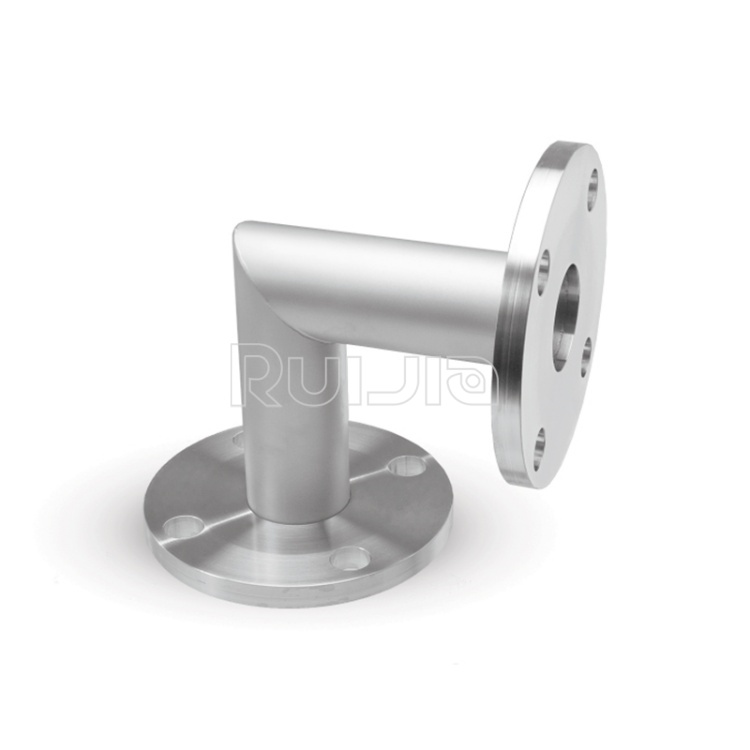
|
Temperature |
-26˚C to 200˚C |
|
Working Pressure |
Vacuum~atmosphere pressure |
|
Helium Leak Test |
1×10 -9 Pa・m³/sec or less |
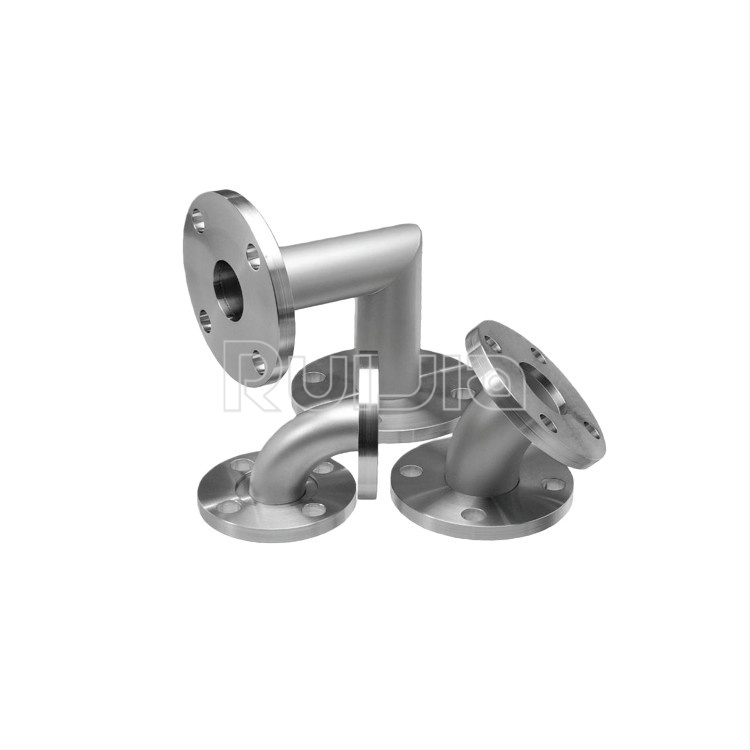
|
Temperature |
-26˚C to 200˚C |
|
Working Pressure |
Vacuum~atmosphere pressure |
|
Helium Leak Test |
1×10 -9 Pa・m³/sec or less |
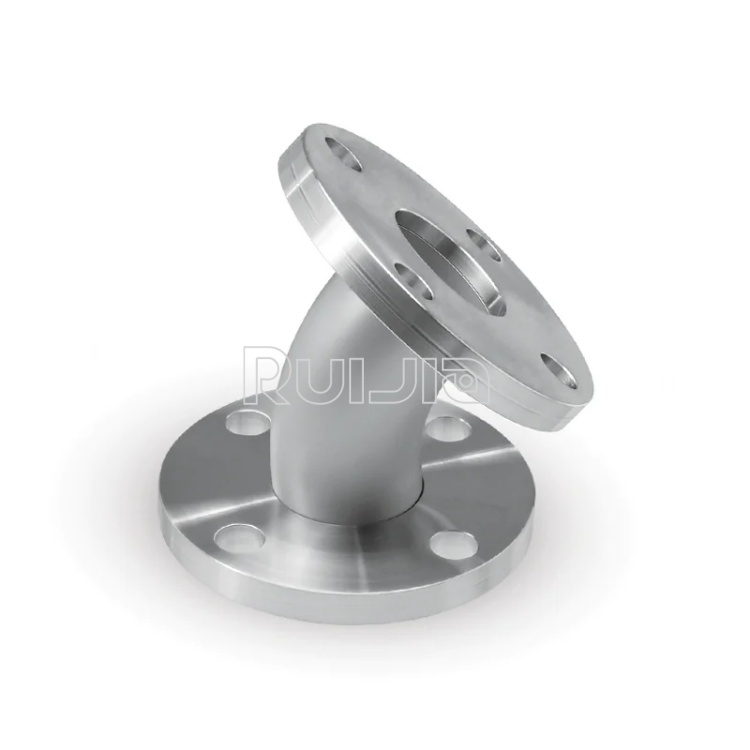
|
Temperature |
-26˚C to 200˚C |
|
Working Pressure |
Vacuum~atmosphere pressure |
|
Helium Leak Test |
1×10 -9 Pa・m³/sec or less |
Rich stock, fast delivery
Quick response within 24h
Quality assurance
Accessory replacement
GET A QUOTE