Determining adequate tightening torque for ISO-KF clamp connections, with size-based reference ranges and practical “enough” criteria.


A few years ago, a colleague of mine spent an entire afternoon chasing a leak in his vacuum rig. He re-tightened every clamp, inspected every O-ring, and even broke out the helium leak detector. The culprit? A single poorly matched centering ring that had been sitting in inventory for months — same nominal size, wrong material for the process conditions. The fix took five minutes and cost less than ten dollars. The diagnosis took four hours.
If you‘ve ever been in that position — staring at a stubborn pressure curve that just won’t stabilize — you know the feeling. Vacuum hardware seems simple until it isn‘t.
The challenge isn’t that good components are hard to find. It‘s that the selection process tends to get compressed into a single question: “Does it fit?” That question matters, but it’s the seventh question, not the first. Ask it too early and you risk skipping the ones that determine whether the hardware actually performs under your conditions — for months or years, not just during initial installation.
What follows is drawn from real-world experience: conversations with lab technicians who‘ve seen seals swell after process changes, procurement teams trying to reconcile cost targets with reliability requirements, and system builders who’ve learned that “standard” doesn‘t always mean “interchangeable.” The goal isn’t to sell you something. It‘s to help you ask better questions — before you’re standing in front of an open chamber at 4 p.m. on a Friday.
Different vacuum applications operate in vastly different pressure regimes, and not all connection hardware performs equally across the board. Quick-release small-bore fittings — commonly built to ISO 2861 and DIN 28403 — are typically suitable for pressures down to 10⁻⁸ mbar.That covers a broad range of low and high-vacuum applications, from laboratory roughing lines to coating systems.
But if your process pushes into the ultra-high vacuum (UHV) range — say below 10⁻⁹ mbar — metal-sealed ConFlat-style connections become the standard.
Why this matters: Selecting hardware rated for a lower vacuum than your process requires doesn‘t just create a leak risk. It can produce “virtual leaks” — trapped gas pockets in poorly designed weld zones or seal interfaces — that cause pressure to drift unpredictably over hours or days. In thin-film deposition or surface analysis work, that drift translates directly into scrapped samples.
Stainless steel 304 and 316L are the most common body materials for vacuum connection hardware, and for good reason — they offer excellent corrosion resistance and mechanical strength across a wide temperature range.Aluminum options also exist, providing weight savings where that matters.
But the body material is only half the story. The elastomer seal inside the centering ring — the component that actually forms the vacuum-tight barrier — is where things often go wrong. Different O-ring materials have markedly different chemical compatibility and temperature limits:
Viton (FKM): Good chemical resistance, continuous service up to ~150°C, widely used as a general-purpose vacuum seal.
Buna-N (Nitrile): Cost-effective for less demanding applications, but limited to approximately 80°C and less aggressive chemical environments.
Silicone and EPDM: Available where specific chemical resistance or clean-room compatibility is required.
Why this matters: I‘ve seen a lab switch from solvent-based cleaning to a mildly acidic process rinse — same vacuum chamber, same connection hardware, same seals. Within two weeks, the O-rings began to swell. Pump-down times crept up. The system was still “working,” but baseline pressure had drifted by half an order of magnitude. Nobody had thought to re-evaluate elastomer compatibility.
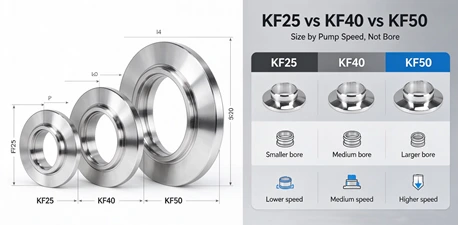
The ISO-KF standard (also referred to as NW or quick-flange) has been the dominant small-bore connection interface globally for decades, originally developed by Leybold and now used worldwide for fittings up to DN 50 inner diameter.Standard sizes include DN 10, 16, 25, 40, and 50 — with DN 20 and DN 32 being far less common.
Here‘s the issue: not everything marketed as “ISO-KF compatible” actually conforms to the full dimensional tolerances of ISO 2861/1 or DIN 28403. Some manufacturers produce parts that are “close enough” — but in vacuum sealing, close enough isn’t.
Why this matters: The quick-seal mechanism relies on a precisely machined 15° tapered surface. When the clamping ring tightens, it applies uniform circumferential pressure across this taper, compressing the O-ring against both flange faces simultaneously.If the taper angle is off by even a fraction of a degree, the compression becomes uneven. One side seals; the other develops a slow leak. These leaks can be nearly impossible to pinpoint without a helium mass spectrometer.
What to look for:
Explicit reference to ISO 2861 and/or DIN 28403 in the product specification
Manufacturer-provided surface finish specifications (roughness average, Ra, in microns)
Cleanliness documentation — properly finished vacuum hardware should be free of machining oils, particulates, and surface oxides
This is the question that procurement teams often skip — and it‘s the one that creates the most long-term cost. In the vacuum industry, components from different manufacturers can look nearly identical in a photograph but perform very differently over time.
Differences come down to three things: raw material sourcing, machining tolerances, and quality verification. A conscientious manufacturer will provide material certificates (confirming heat numbers for stainless steel), surface finish data, and evidence of leak testing. A less rigorous supplier may simply ship parts that “look right.”
Research on industrial vacuum equipment procurement highlights a key insight: the goal is not finding “the cheapest equipment with equivalent parameters” — it’s finding a provider that can deliver a system solution that operates stably and continuously in your specific environment.These two objectives are rarely aligned.
What to ask suppliers:
Do you provide material certificates (mill test reports) with each batch?
What leak-testing procedures do you perform before shipment?
Can you supply samples for evaluation?
What are your minimum order quantities and lead times?
Suppliers who can answer these questions clearly — and who offer options like OEM customization and small-batch sample orders— are demonstrating a level of transparency that reduces risk downstream.
If you‘d like to evaluate vacuum connection hardware from a manufacturer that provides detailed specifications, material traceability, and flexible ordering options, you can review Ruijia’s complete product range here.
Vacuum sealing comes in essentially two flavors: elastomer seals (rubber O-rings compressed between flange faces) and metal seals (copper gaskets deformed between knife-edge flanges).
Elastomer-sealed quick-connect systems are the default choice for most low-to-high vacuum applications. They‘re fast to assemble — no tools required beyond hand-tightening a wing nut — and they’re reusable. You can open and close the same connection dozens of times without replacing the seal.
Metal-sealed ConFlat connections are the standard for UHV. The copper gasket deforms plastically against a knife-edge, creating a near-perfect seal. But there‘s a catch: once you open the joint, the gasket must be replaced. In a system that requires frequent reconfiguration, that cost adds up.
Why this matters: I’ve seen laboratories default to metal-sealed connections for everything — “just to be safe” — and then discover that their process actually runs at pressures where elastomer seals are perfectly adequate. The reverse happens too: a system designed with quick-connect hardware gets repurposed for a UHV application, and suddenly the baseline pressure won‘t go low enough.
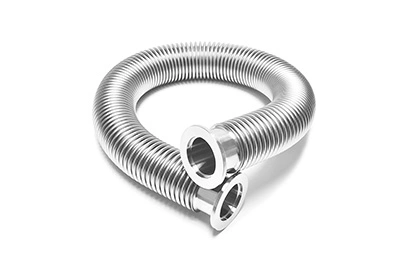
Even premium components can leak if they‘re installed wrong. The most common installation mistakes include: misaligned flanges, under- or over-tightened clamps, damaged O-rings, and dirty sealing surfaces.
Before your system is under vacuum, a thorough visual inspection catches most issues. Look for:
Cracks, scratches, or dents on flange faces
O-rings that appear flattened, cracked, or deformed
Clamps that are finger-tight but not fully engaged
Debris or particles on sealing surfaces
After the system is pumped down, helium leak detection provides the gold standard for verification. A helium mass spectrometer can identify leaks far smaller than what a pressure-rise test alone can detect.
Why this matters: A systematic approach to installation verification transforms leak detection from “something‘s wrong, where is it?” into “everything is confirmed good.” The time investment is trivial compared to the cost of troubleshooting an uncharacterized system.
A practical installation checklist for elastomer-sealed connections:
Clean both flange faces and the centering ring with isopropyl alcohol and a lint-free wipe
Inspect the O-ring under good lighting — replace if there’s any doubt about its condition
Seat the centering ring so the O-ring rests evenly between both flange faces
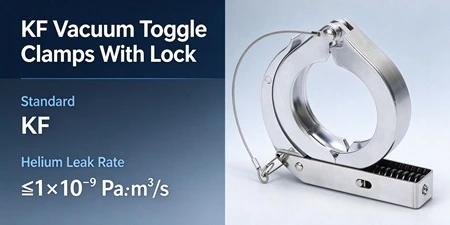
Position the clamp so it engages both flange tapers symmetrically
Hand-tighten the wing nut — do not use tools, over-tightening can distort the seal
Perform a pressure-rise test before introducing process gases
Now we arrive at the fit question — and the answer is more nuanced than a simple yes or no.
Components built to ISO-KF dimensions are, by design, intended to be interchangeable across manufacturers. The standard defines the flange face geometry, the centering ring dimensions, and the clamp interface — so, in principle, a DN 25 quick-connect flange from one supplier should mate with a DN 25 component from another.
In practice, interchangeability depends on manufacturing precision. When two manufacturers both machine to the specified tolerances, interchangeability is excellent. When one manufacturer‘s tolerances drift, problems arise: clamps that won’t fully seat, centering rings that bind, or — worst of all — slow leaks that only appear under certain temperature conditions.
Mix-and-match approaches using adapters between different flange families (e.g., ISO-KF to ConFlat) are possible but not recommended unless absolutely necessary to match existing components.Every adapter adds two additional sealing interfaces, each of which represents a potential leak path.
There‘s a pattern across all seven questions: good outcomes in vacuum system design come from treating connection hardware as a critical system component rather than a commodity. The difference between hardware that works and hardware that causes problems is usually invisible at first glance — it lives in material certifications, dimensional tolerances, surface finishes, and the quality systems behind them.
If you’re evaluating options for your next project — whether it‘s a new build, a system upgrade, or a replacement order — take a closer look at Ruijia’s quick-connect vacuum components. The product range covers standard DN 10 through DN 50 sizes, manufactured to ISO 2861 / DIN 28403 specifications, with material options in 304 and 316L stainless steel. Each assembly — flange pair, centering ring with O-ring, and clamp — is built for reliable, leak-tight sealing in low and high vacuum environments.
Leybold GmbH. “Hardware: ISO-KF.” Accessed May 2026.
Busch Vacuum Solutions. “Non-Genuine Spare Parts and Oils: The Hidden Costs to Vacuum Pump Efficiency.” December 2025.
ISO 2861:2020 — Vacuum technology — Quick-release couplings — Dimensions
DIN 28403 — Vacuum technology; quick-release couplings; clamped and screwed connections
Disclaimer: This article is provided for informational purposes only. Always consult with your vacuum system manufacturer or a qualified engineer when selecting components for critical applications. Specifications, dimensions, and material properties should be verified directly with the supplier before purchase.
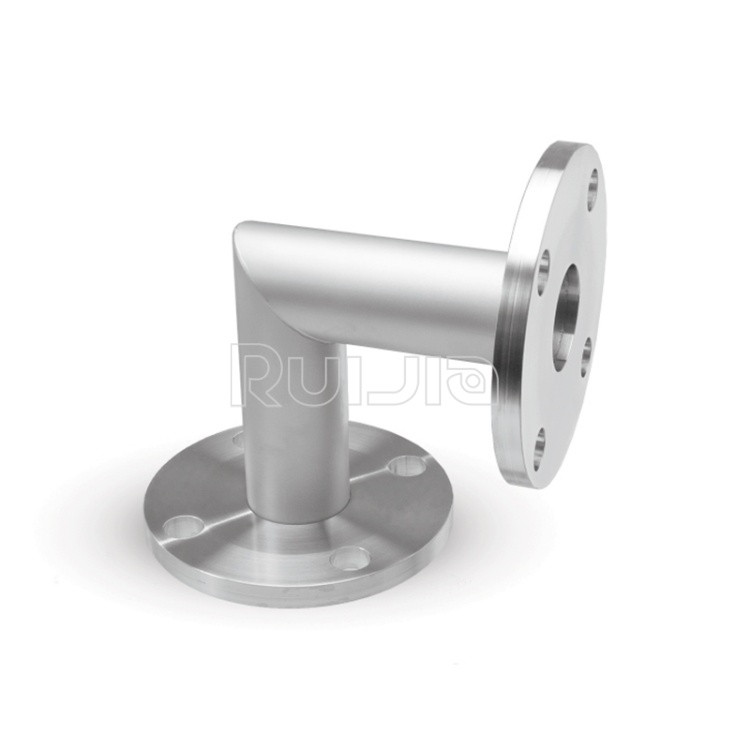
|
Temperature |
-26˚C to 200˚C |
|
Working Pressure |
Vacuum~atmosphere pressure |
|
Helium Leak Test |
1×10 -9 Pa・m³/sec or less |
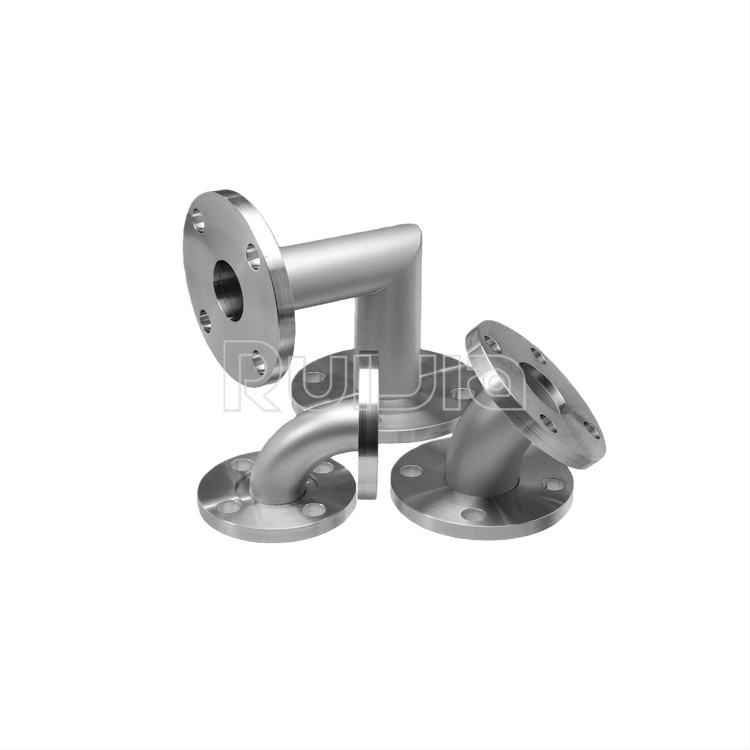
|
Temperature |
-26˚C to 200˚C |
|
Working Pressure |
Vacuum~atmosphere pressure |
|
Helium Leak Test |
1×10 -9 Pa・m³/sec or less |
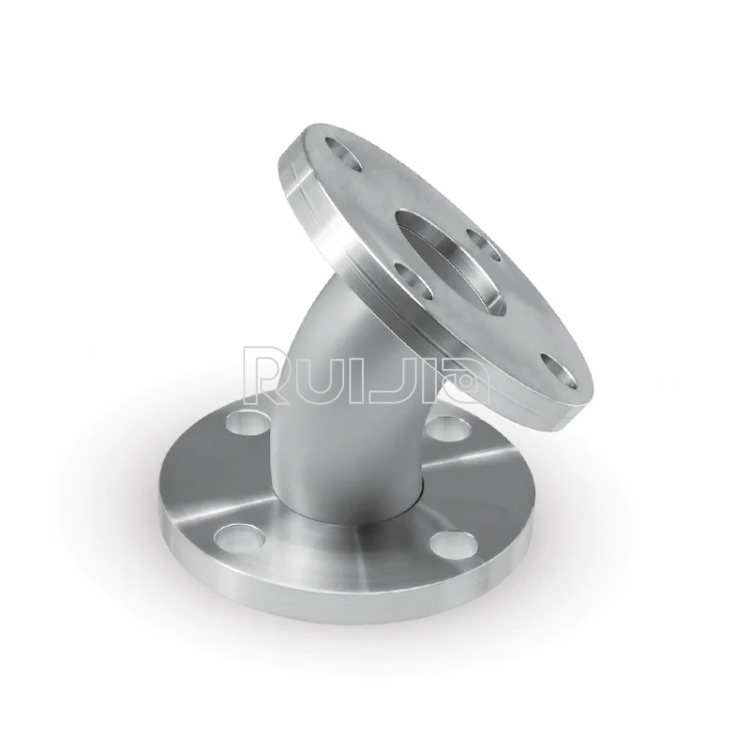
|
Temperature |
-26˚C to 200˚C |
|
Working Pressure |
Vacuum~atmosphere pressure |
|
Helium Leak Test |
1×10 -9 Pa・m³/sec or less |
Rich stock, fast delivery
Quick response within 24h
Quality assurance
Accessory replacement
GET A QUOTE