Determining adequate tightening torque for ISO-KF clamp connections, with size-based reference ranges and practical “enough” criteria.


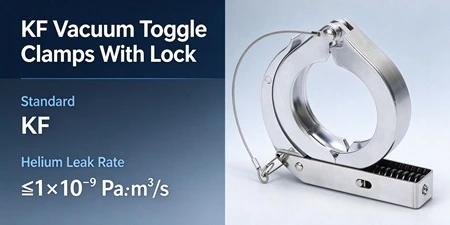
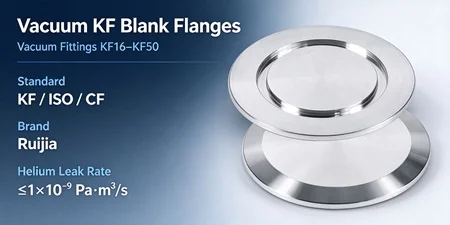
You’ve just finished plumbing a new surface analysis chamber. The turbo pump spins up, the ion gauge reads a promising 10⁻⁹ mbar, and you head home. The next morning: 10⁻⁷ mbar and a stubborn helium peak on the RGA. After two days of spraying acetone and chasing virtual leaks, you tighten a dozen bolts on a single flange—and the baseline drops. The culprit wasn’t the chamber, the pump, or the gauge. It was a poorly chosen vacuum connection.
Whether you’re designing a beamline, retrofitting a PVD system, or simply trying to keep a storage ring at 10⁻¹⁰ mbar, the integrity of your vacuum envelope begins and ends with the flanges and fittings you select. Here are five tips to navigate the options, drawn from real-world assembly benches and more than one copper gasket that didn’t seal.
Tip 1: Understand the Seal Mechanics Before Comparing Prices
All vacuum flanges are not created equal. The single most important distinction is whether the seal is elastomer-based or metal-to-metal. Elastomer seals (Viton, Buna-N) can comfortably reach 10⁻⁸ mbar and are perfectly fine for rough-to-medium vacuum work—until you need to bake the system. At sustained temperatures above 150°C, elastomers outgas heavily, deteriorate, and lose their sealing force.
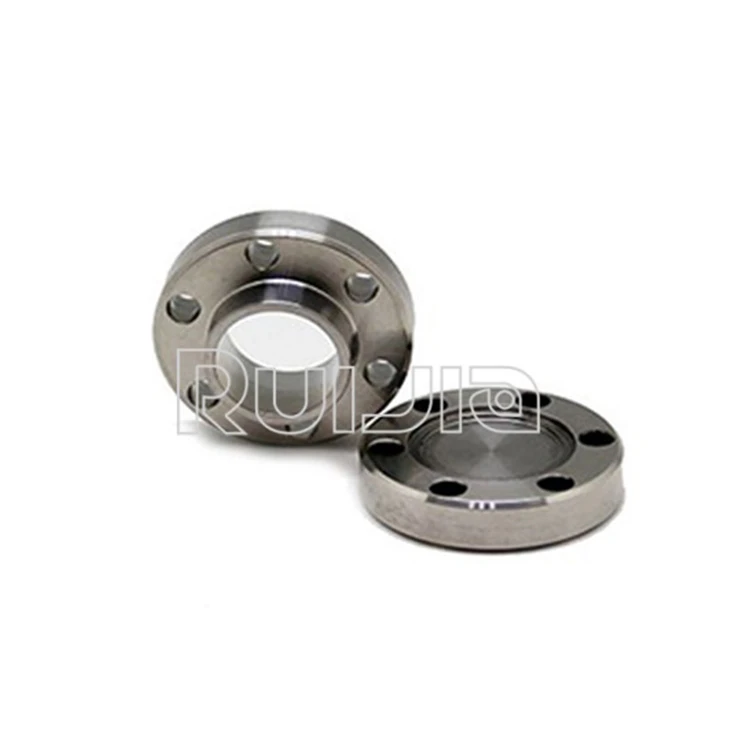
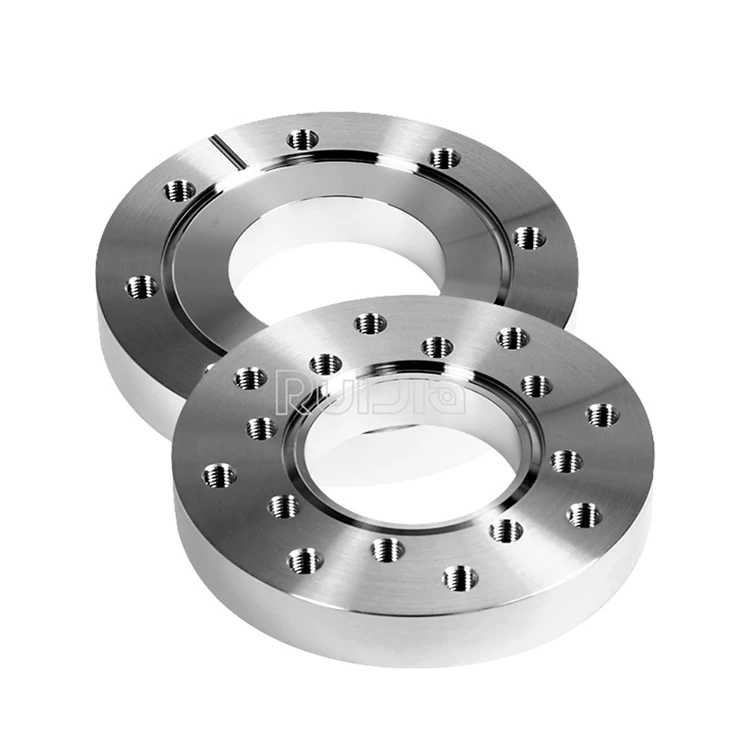
For ultra-high vacuum (UHV) where cleanliness, low outgassing, and bakeability matter, the seal philosophy shifts entirely. One proven approach uses a circular knife-edge that bites into a soft, oxygen-free copper gasket, creating a cold-welded, leak-tight joint that withstands repeated bakeout cycles up to 450°C. This design, found on flanges often referred to as the “CF type,” remains the backbone of countless surface science, semiconductor, and accelerator systems. Before you settle on a flange family, ask yourself: What is the base pressure I really need after bakeout, and what residual gas species can I tolerate? The answer almost always dictates the seal style.
Tip 2: Size Isn’t Just About the Tubing O.D.
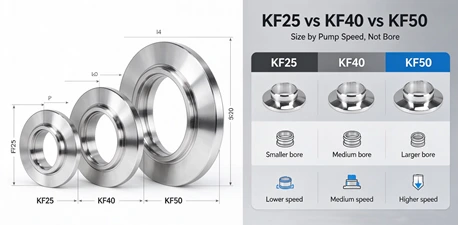
It’s tempting to pick flange sizes solely based on the outer diameter of the tubing you’re connecting. But in vacuum engineering, three dimensions matter: the flange’s nominal size, the clear bore inner diameter, and the bolt circle diameter. A DN40 flange with a severely restricted bore can choke the effective pumping speed far more than the tubing length does.
Nominal sizes for metal-sealed UHV flanges typically run from DN16 up to DN250, with many suppliers offering larger custom bores for special beamline ports. When laying out your system, map the required conductance for each pump line and check the actual bore diameter against the flange datasheet, not just the nominal label. If you’re mixing component generations or swapping instruments frequently, it’s also prudent to standardize on a couple of sizes to reduce inventory chaos later.
Tip 3: Material Compatibility Is More Than “Just Use Stainless”
304 and 316L stainless steels dominate vacuum hardware for good reason: they’re corrosion-resistant, relatively easy to machine, and have well-characterized outgassing rates. But the choice gets nuanced fast. If your process involves aggressive gases (chlorine, fluorine, or hot hydrogen), 316L with low carbon and molybdenum content offers better pitting resistance. For synchrotron front-ends or neutron instruments, 316LN or even titanium flanges might be required to handle thermal gradients and magnetic constraints.
The gasket material stack matters just as much. Standard copper gaskets work beautifully for clean, high-temperature applications, but silver-plated copper or pure nickel gaskets become relevant when you’re facing cryogenic cycling or need extremely low magnetic permeability. And if you’re baking the system, don’t forget the bolts: standard 12.9-grade fasteners lose their temper above 300°C; in high-temperature zones, A286 or silver-plated fasteners are a safer bet. The takeaway: ask your flange vendor for the full material spec, not just “stainless steel.”
Tip 4: Standards Compliance Makes or Breaks Interchangeability
A flange that looks right in the CAD model can still leak—or worse, gall irreversibly—if it doesn’t meet the correct dimensional and surface-finish standards. For knife-edge-sealed UHV joints, ISO 3669 is the governing document. It defines everything from the knife-edge radius and angle to the bolt hole pattern and flange thickness. Flanges manufactured to ISO 3669 can mate reliably with components from any other compliant manufacturer, which is essential when you’re integrating ion pumps, valves, and manipulators from multiple sources.
Reputable suppliers will state the surface roughness of the sealing face (typically below 0.8 µm Ra), the tolerance on the knife-edge height, and the cleanliness spec. If this information is absent from a catalog, treat it as a red flag. A quick cross-check: always verify that the copper gaskets you’re using also conform to the annealed temper and dimensional requirements of ISO 1609—a mismatch here is a common source of slow, frustrating leaks that can easily be mistaken for virtual leaks.
Tip 5: Evaluate Supplier Quality Beyond the Website Image
The difference between a flange that seals on the first torque sequence and one that needs repeated re-tightening often comes down to manufacturing rigor. Knife-edge concentricity, hardness of the gasket material, and post-machining cleanliness all affect the seal yield. At the assembly bench, you quickly learn to inspect every flange under a bright light for burrs, residual machining oil, or scratches crossing the knife edge.
It’s worth seeking out suppliers who perform helium leak testing on each batch, offer electropolished or passivated versions for low-outgassing requirements, and ship parts in cleanroom-ready packaging. Documentation—dimensional inspection reports, material certificates, and leak test results—saves hours of troubleshooting later. When you’re comparing options, view quality control standards and material documentation to gauge how seriously a supplier treats repeatability.
Common Pitfalls That Even Seasoned Engineers Fall For
Even when you’ve chosen the right flange type, a few predictable mistakes can undermine an entire vacuum system. Over-tightening is the most frequent: the copper gasket needs a specific, progressive crush to form a cold weld; extra torque distorts the knife edge or cuts the gasket. Always follow a multi-step, cross-pattern torque sequence to the manufacturer’s recommended value. Another trap is mixing brand-new gaskets with used ones—a practice that often goes wrong because used gaskets have already work-hardened and won’t conform properly. Using an elastomer O-ring as a quick fix on a metal-seal flange during troubleshooting is equally dangerous: the elastomer outgasses and can actually trap contaminants beneath the knife edge, permanently degrading the sealing surface.
A Smarter Way to Approach Your Next Build
If you’re aiming for a clean, repeatable, and low-maintenance vacuum system, specifying the right connection technology from the start is the highest-leverage decision you can make. Ruijia has built a focused portfolio of bakeable, fully traceable vacuum flanges and fittings that align with ISO 3669 and come with detailed dimensional reports and helium leak certificates. Components are available from DN16 to DN250 in 304, 316L, and electropolished finishes, and are packed under cleanroom conditions to avoid the all-too-common “oil-spotted flange” surprise right out of the box. Browse Ruijia’s selection of bakeable vacuum flanges and fittings to keep your next project on schedule and free of flange-driven leaks.
Disclaimer: The information above is for general guidance. Always consult your vacuum system designer and follow OEM torque specifications for critical applications.
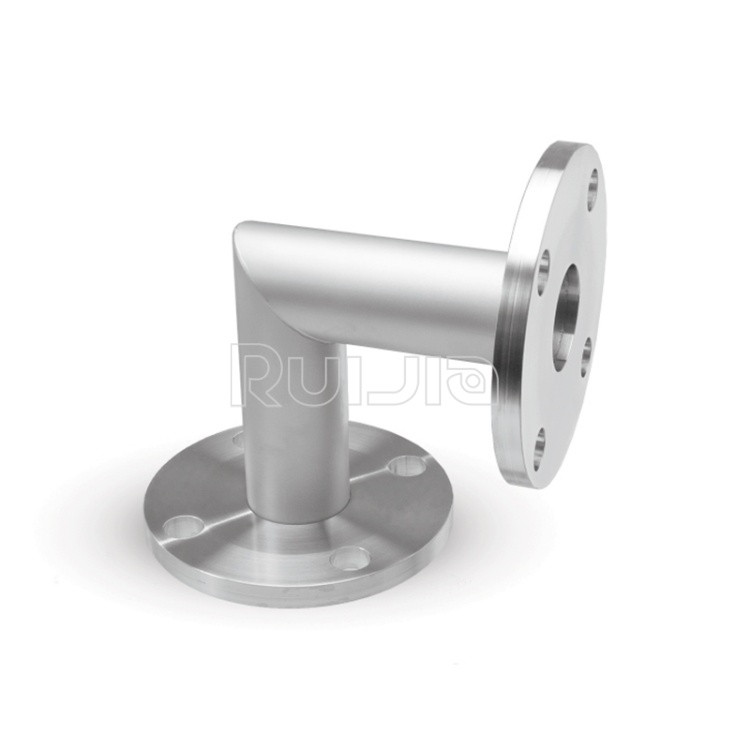
|
Temperature |
-26˚C to 200˚C |
|
Working Pressure |
Vacuum~atmosphere pressure |
|
Helium Leak Test |
1×10 -9 Pa・m³/sec or less |
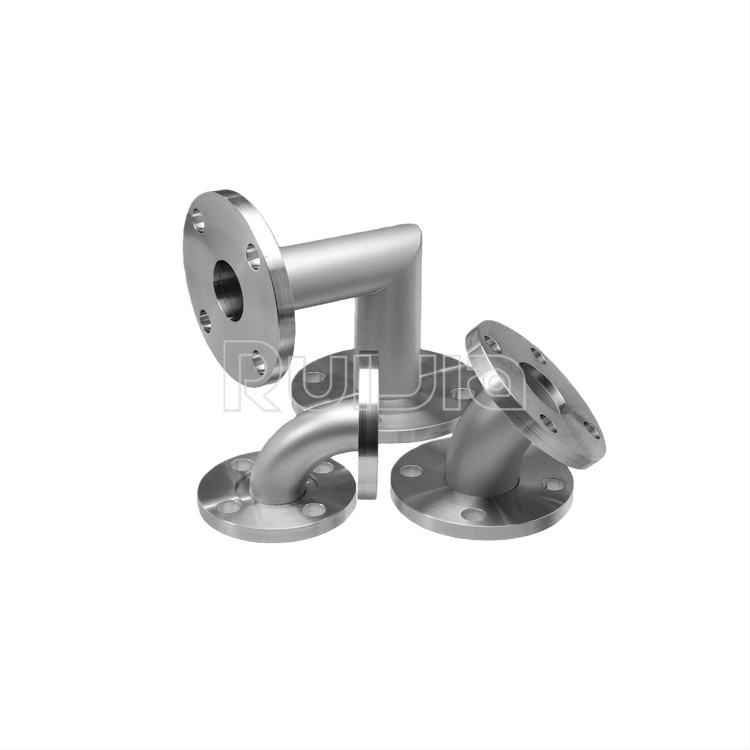
|
Temperature |
-26˚C to 200˚C |
|
Working Pressure |
Vacuum~atmosphere pressure |
|
Helium Leak Test |
1×10 -9 Pa・m³/sec or less |
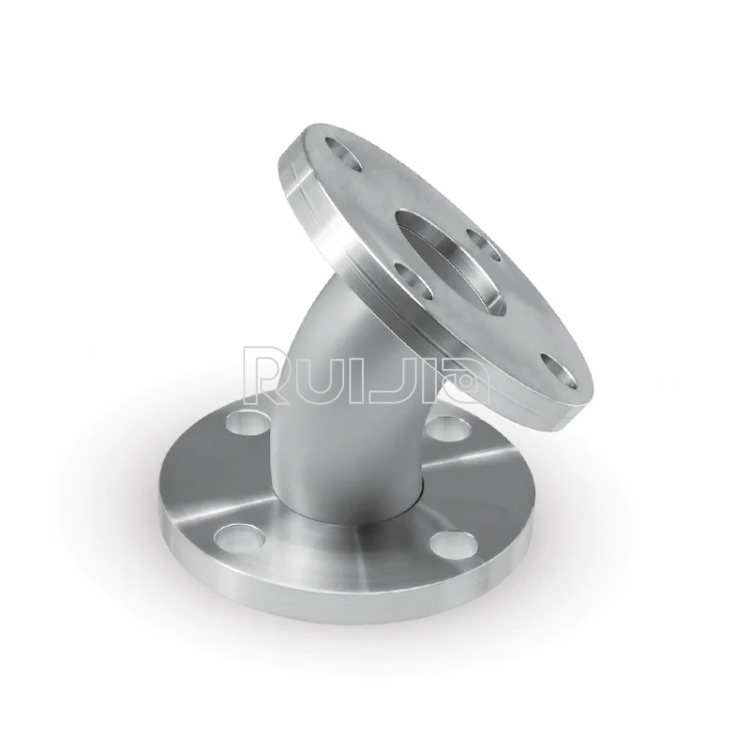
|
Temperature |
-26˚C to 200˚C |
|
Working Pressure |
Vacuum~atmosphere pressure |
|
Helium Leak Test |
1×10 -9 Pa・m³/sec or less |
Rich stock, fast delivery
Quick response within 24h
Quality assurance
Accessory replacement
GET A QUOTE