On-the-spot assessment of CF knife-edge damage for maintenance and assembly decisions, focused on defect geometry and sealing-band continuity rather than absolute depth measurement.


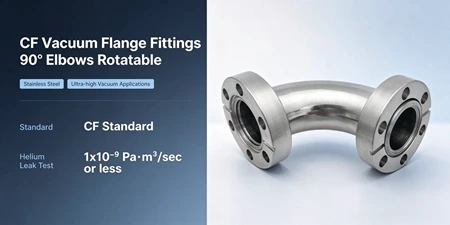
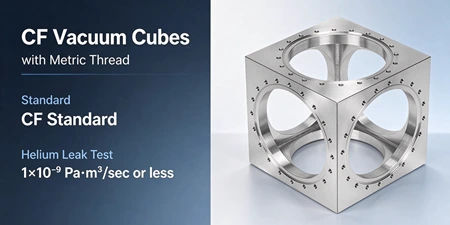
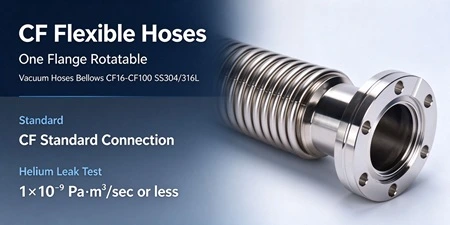
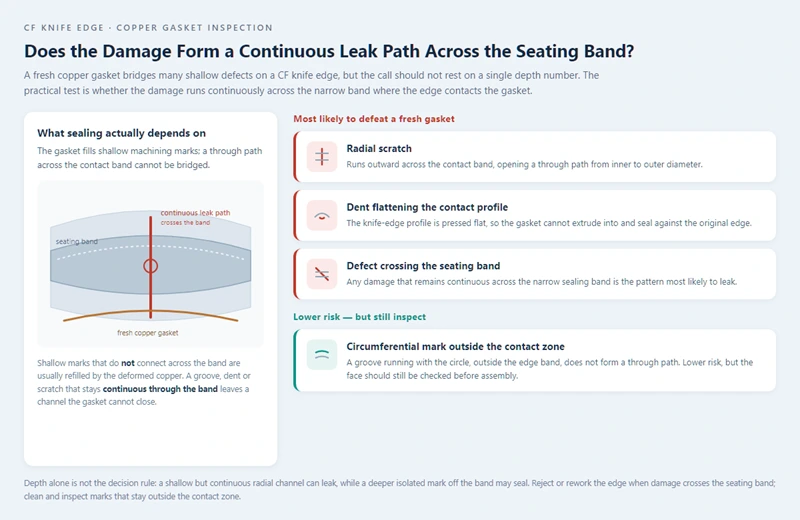
A new copper gasket can bridge many shallow defects on a CF knife edge, but the decision should not rest on a single depth number. The practical question is whether the damage creates a continuous leak path across the narrow band where the knife edge contacts the gasket. Radial scratches, dents that flatten the contact profile, and defects that cross the seating band are the patterns most likely to defeat a fresh gasket; circumferential marks outside the contact zone are lower risk but still require inspection.
The CF seal is localized. A stainless steel knife edge with a nominal 20° taper bites into a softer oxygen-free copper gasket, and the copper plastically flows outward to fill small imperfections around the contact zone. The sealing work is done by a narrow band of contact, not by the entire flange face. A defect that sits within that band and runs across it can remain open even when the copper deforms, because the copper flows outward from the knife edge rather than sideways along a radial channel.
This is why a shallow radial scratch and a shallow circumferential scratch of similar depth can behave differently. The radial defect crosses the sealing band and can connect the inner and outer boundaries of the joint. The circumferential defect may sit partly or entirely within the copper flow zone, where the gasket has a better chance to extrude into it. Depth matters, but geometry and position determine whether the gasket has a path to close.
The first high-risk pattern is a continuous radial scratch. If the mark runs from the inner diameter outward, or from the outer edge inward, and remains visible across the full width of the seating band, the copper cannot be expected to bridge it under normal bolt load. Additional torque does not solve a defect that is oriented across the flow direction.
The second pattern is a dent or gouge that interrupts the knife-edge profile. A localized impact can flatten or round the tip that would otherwise concentrate stress into the gasket. Even if the dent is not deep, it changes the contact geometry: the copper may not receive enough localized pressure to plastically flow into the surrounding micro-irregularities.
The third pattern is clustered damage within the contact band. Several small pits, scratches, or handling marks grouped in one sector can collectively create a leak path that no single defect would create alone. The assessment should therefore treat the contact band as a continuous ring and ask whether any sector is compromised across its full width, not merely whether each individual mark is shallow.
Begin with cleaning and bright light. Machining residues, old gasket material, and handling films can hide or mimic damage. Use a lint-free wipe and a suitable solvent, then inspect under oblique lighting so that the knife-edge profile casts a shadow.
Next, trace the contact band as a ring. Mark the inner and outer boundaries of the shiny band left by previous gasket contact. Any defect that crosses this band radially should be treated as a potential leak path until proven otherwise. A defect that runs parallel to the band, or sits clearly outside it, deserves closer inspection but is not automatically disqualifying.
Then assess profile continuity with a fingertip or a soft probe, if the procedure allows. A sharp, raised burr is more problematic than a smooth depression because it prevents the gasket from seating uniformly. A burr can also scratch a new gasket during assembly, turning a marginal flange into a leaker.
Finally, decide whether the flange is a candidate for a new gasket or should be routed to repair or replacement. The table below summarizes the practical distinction. For specification confirmation before ordering, review the available CF flanges and fittings.
| Assessment finding | Likely effect with a new copper gasket | Recommended action |
|---|---|---|
| Radial scratch crossing the full seating band, continuous | High risk of a direct leak path; copper cannot bridge across the flow direction | Do not rely on a new gasket; arrange technical evaluation for repair or replacement |
| Dent or gouge that flattens the knife-edge tip within the contact band | Local contact stress may be insufficient for plastic flow into the defect | Evaluate profile continuity; if the tip is visibly deformed, replace or refurbish |
| Circumferential mark within the contact band, smooth and shallow | May be bridged by copper flow, but effective contact stress can be reduced | Attempt with a new gasket only after confirming no radial component; leak-test after assembly |
| Clustered small defects in one sector of the band | Collective leak path possible even if individual marks are shallow | Treat the sector as compromised; do not assume “each mark is small enough” |
| Damage located clearly outside the contact band | Limited effect on the metal seal itself | Clean and monitor; verify that the damage does not create a particle trap or burr |
A damaged knife edge is sometimes masked by a gasket that has already been compressed. If a used gasket is left in place, the indented ring can look continuous even when the knife edge beneath it is not. The assessment should always be made on the bare flange, not through the imprint of a used gasket.
Tightening practice also affects the outcome. Uneven bolt loading can cause the knife edge to contact the gasket preferentially on one side, leaving a damaged sector underloaded. A staged, diagonal tightening sequence reduces this risk, but it cannot compensate for a defect that crosses the sealing band. If the assessment identifies a radial defect, changing the torque sequence is not a corrective action.
For flanges that pass visual assessment, a helium leak test after assembly remains the verification step. A helium leak rate better than 10⁻¹⁰ Pa·m³/s is the specification associated with Ruijia’s CF flanges and fittings, and the same UHV expectation should guide acceptance of any critical joint. A leak test is not a substitute for inspection, but it is the final check that the chosen gasket and the assessed knife edge are working together.
If the knife edge shows a continuous radial defect, a visible flat or rounded tip, or clustered damage across the contact band, the practical answer is to stop relying on a fresh gasket alone. A new copper gasket is a consumable designed to deform into a sound knife edge, not to reconstruct a damaged sealing profile. Continuing to tighten or repeatedly replacing gaskets on the same flange can consume gaskets without resolving the leak path.
At that point, the decision becomes a repair-or-replace question. Review the available CF flanges and fittings to confirm the original specification, material, and size, and discuss the damage pattern with the technical team to determine whether refurbishment is practical or whether a replacement flange is the more reliable route. For operations that need support beyond the component itself, vacuum repair and refurbishment services can be discussed against the confirmed condition of the flange and the system requirements.
No. A shallow radial scratch that crosses the full contact band can be more problematic than a deeper circumferential mark that sits within the copper flow zone. Geometry and continuity matter more than a single depth reading.
The imprint shows where contact occurred, but it can appear continuous even when the knife edge beneath it has a radial defect. Assess the bare flange surface, not the used gasket.
Not automatically. A smooth circumferential mark within the contact band may be bridged by copper, but a deep groove can reduce local contact stress. Confirm that it has no radial component and leak-test after assembly.
A silver-plated gasket can offer different deformation behavior and is used for frequent make-and-break cycles, but it does not change the fundamental requirement: the knife edge must present a continuous contact band. A radial leak path remains a leak path.
When the assessment shows a continuous radial defect, a flattened or rounded knife-edge tip, or clustered damage across the seating band. At that point, a new gasket is unlikely to restore a reliable metal seal.
Check the flange size, material, and connection standard against the original drawing or the product category page, and confirm the gasket type intended for the application. If the drawing is unavailable, provide the measurable dimensions and the damage description to the technical team.
The most useful CF knife-edge assessment is not a search for a precise depth limit. It is a check of whether the damage crosses the narrow contact band in a direction the copper cannot close. Radial continuity, profile integrity, and clustering are the patterns that should stop an assembly before a new gasket is spent. When those patterns are present, move from “try another gasket” to a specification-confirmed repair-or-replacement decision. For flanges that pass the assessment, verify the outcome with a helium leak test and tighten in a staged, diagonal sequence. If the damage pattern is borderline, confirm the original flange specification and discuss the condition with the technical team before committing to a production or maintenance plan.
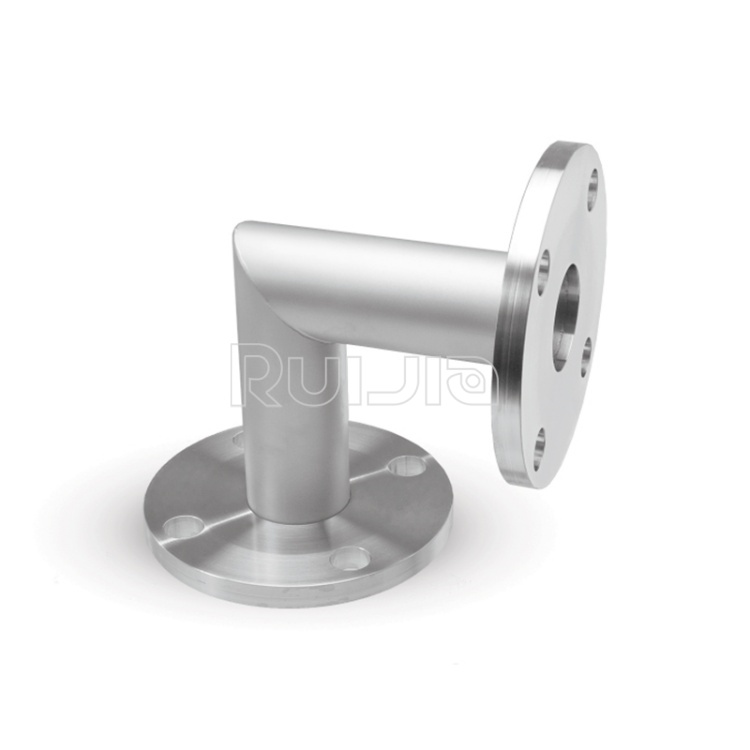
|
Temperature |
-26˚C to 200˚C |
|
Working Pressure |
Vacuum~atmosphere pressure |
|
Helium Leak Test |
1×10 -9 Pa・m³/sec or less |
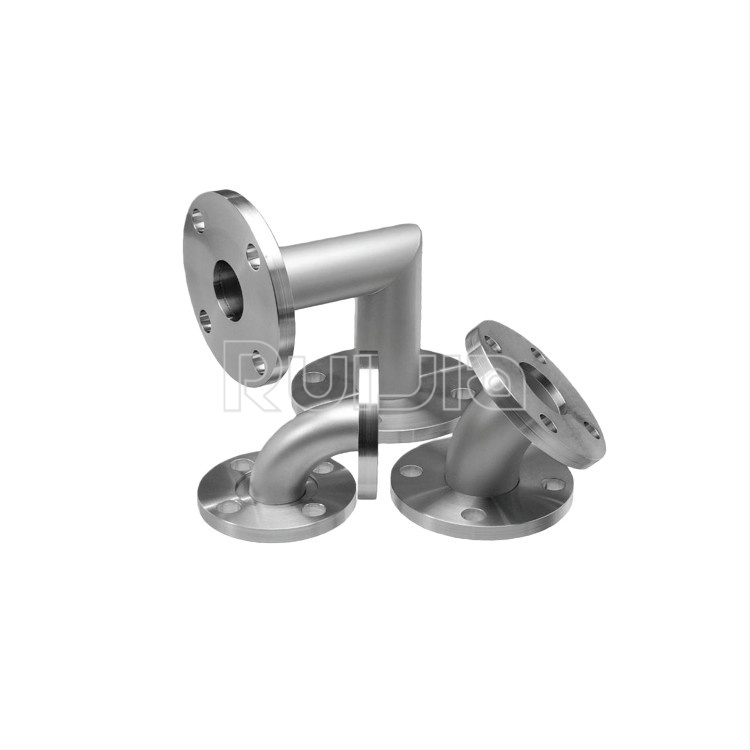
|
Temperature |
-26˚C to 200˚C |
|
Working Pressure |
Vacuum~atmosphere pressure |
|
Helium Leak Test |
1×10 -9 Pa・m³/sec or less |
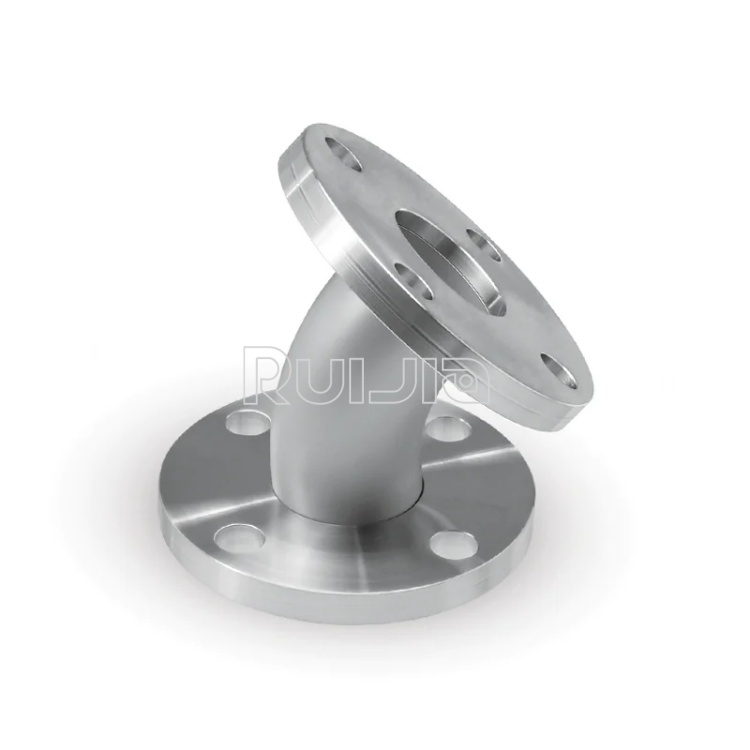
|
Temperature |
-26˚C to 200˚C |
|
Working Pressure |
Vacuum~atmosphere pressure |
|
Helium Leak Test |
1×10 -9 Pa・m³/sec or less |
Rich stock, fast delivery
Quick response within 24h
Quality assurance
Accessory replacement
GET A QUOTE