How to judge whether a damaged CF/ConFlat knife edge can still achieve a reliable metal seal with a fresh copper gasket, and when repair or replacement is required.


A new copper gasket can often seal a lightly damaged CF knife edge, but there is no single depth number that separates “usable” from “replace.” The decisive question is whether the damage creates a continuous leak path across the narrow sealing band, and whether the copper can still flow into the defect under normal bolt load. Radial scratches, damage spanning more than half the seating area, and deep gouges that interrupt the knife-edge profile are the conditions most likely to defeat a fresh gasket.
The CF seal does not work by compressing a flat gasket between two flat faces. The stainless steel knife edge bites into a softer oxygen-free copper gasket; the copper plastically deforms and extrudes outward, filling small imperfections around the knife-edge contact zone. The seal is therefore localized: only a narrow band of the copper surface actually does the sealing work, and only a portion of the knife surface contributes to that contact.
That localized mechanism explains why a shallow scratch in one place and a shallow scratch in another can behave completely differently. A defect that sits within the contact band and runs across it can create a channel that the copper cannot close, because the copper is flowing outward from the knife edge, not sideways along the scratch. A defect of similar depth that runs parallel to the sealing band, or sits outside the effective contact zone, may be bridged by the copper flow.
Damage assessment is more useful when it is organized by geometry and location rather than by a single measured depth.
Radial scratches are the highest-risk pattern. A radial scratch runs from the inner diameter outward, or from the outer edge inward, and therefore crosses the sealing band. A continuous radial defect can form a direct leak path that the gasket cannot fill, regardless of how much additional torque is applied. In flange-face assessment outside the vacuum world, the same principle is well established: a radial scratch is treated as a direct leak path and is not considered closable with a gasket alone.
Circumferential scratches are lower-risk, but not automatically safe. A scratch that follows the circular direction of the sealing band may sit partly or entirely within the copper flow zone. If the copper can extrude into and across it, the seal may still form. However, a deep circumferential groove can reduce the effective contact stress or create a local reservoir that the copper cannot completely fill. A reported production case describes a circumferential feed mark of approximately 0.02 mm depth across a knife edge producing a leak channel detectable by helium leak testing. That example should not be read as a universal 0.02 mm threshold—it is a single observation under specific machining and assembly conditions—but it illustrates that even shallow continuous defects can matter when they interrupt the sealing band.
Dents, nicks, and localized gouges are judged by whether they displace the knife-edge tip or remove material from the contact zone. A shallow dent that only blunts the tip may still allow copper flow around it; a gouge that removes a segment of the knife profile leaves a void that copper must fill, and the outcome depends on void volume relative to the available copper deformation.
Damage area also has a practical limit. A widely used field criterion is that damage affecting more than half of the gasket seating area is not reliably closable with a gasket alone and points toward remachining or replacement. This is not a precision specification, but it is a useful screening rule before a leak test.
A practical way to frame the threshold is summarized below.
| Damage pattern | What it does to the seal | Typical decision path |
| Shallow circumferential scratch, within or near the contact band | May be bridged by copper flow; risk rises with continuity and depth | Clean, assemble with a new gasket, verify by helium leak test |
| Continuous radial scratch across the sealing band | Creates a potential direct leak path that copper cannot close | Do not rely on additional torque; evaluate repair or replacement |
| Localized dent or nick that does not remove a continuous segment | May still seal if copper can flow around the disturbed zone | Inspect under magnification; test before accepting for UHV service |
| Deep gouge or missing knife-edge segment | Void volume may exceed what the copper can fill locally | Repair by machining or replace; do not assume a new gasket will solve it |
| Damage affecting more than half the seating area | Too much of the sealing band is compromised | Remachine or replace |
A depth micrometer or surface profilometer can quantify a defect, but it cannot by itself tell you whether the copper will bridge it. The following checks are more directly tied to sealing outcome.
A 10× hand lens or stereo microscope is commonly used to identify nicks, scratches, and tip deformation before assembly. The question is not only “how deep” but “does the defect run across the contact band, and does it remove a continuous segment of the knife profile?”
A defect that the fingernail catches as it crosses the knife edge is more likely to behave as a leak path than a mark that is only visible but not palpable. This is a qualitative screen, not a measurement, but it quickly separates surface staining from geometry-changing damage.
After a test assembly, the indented ring on the gasket shows where the knife edge actually contacted the copper. If the scratch or gouge corresponds to a visible interruption or an incomplete indentation in that ring, the sealing band was not continuous. Industry guidance notes that if no scratches are visible in the gasket at 50× magnification, a vacuum seal can generally be achieved; conversely, a scratch that replicates across the gasket impression is a stronger warning than the same scratch on the flange alone.
Visual and tactile inspection narrow the decision, but the final judgment should be based on a leak rate appropriate to the application. For UHV CF systems, acceptance requirements are substantially stricter than for high-vacuum elastomer-sealed connections; a leak rate below 1 × 10⁻⁹ std cc/sec helium is often cited as a starting point for high-vacuum flanges, while UHV CF joints typically require verification at a much lower level. Ruijia’s CF product pages state helium leak testing to better than 10−10 Pa·m3/s for its CF range, which provides a reference for the verification standard a buyer may request when evaluating a damaged or repaired part.
The repair path depends on whether the knife-edge geometry can be restored without removing too much material or changing the sealing angle.
Polishing is sometimes used for very shallow scratches that have not displaced the knife-edge tip. Ultra-fine abrasive cloth may reduce a surface mark, but polishing that rounds the tip or widens the contact band can change the sealing behavior. Polishing should be followed by dimensional verification and a leak test, not assumed to restore the original condition.
Filling a localized gouge with a soft vacuum-compatible metal has been described as a field workaround, but it is not a substitute for restoring the knife-edge profile and should be treated as a temporary or non-critical option at best.
Remachining the knife edge can restore the angle and tip geometry if the flange has sufficient material allowance. This is a workshop operation, not a hand-tool fix, and the result should be verified against the applicable dimensional standard and by helium leak testing. ISO 3669 and ASTM E2734 define knife-edge flange dimensions; a remachined part that falls outside those tolerances may fit but may not seal reliably.
Replacement is the safer choice when the damage is widespread, when a radial scratch is deep and continuous, when the knife-edge tip is significantly deformed, or when remachining would remove more material than the flange can spare. Because CF sealing depends on a specific tip geometry and surface finish—commonly specified at 32 micro-inch or better for the knife edge—a worn or repeatedly polished flange may reach a point where replacement is more predictable than further rework.
For buyers managing a maintenance or turnaround schedule, the practical implication is that “can it be saved?” should be answered before the assembly is closed, not after a leak is detected. If the inspection result is borderline, a test assembly with a fresh gasket and a helium leak check is usually faster than a theoretical calculation.
If the knife edge passes visual and tactile screening but the assembly still leaks, the next diagnostic step is to examine the gasket impression for a corresponding interruption. A scratch that transfers to the gasket is stronger evidence of a sealing-band defect than a scratch on the flange alone. Reviewing the available CF flange and fitting configurations can help confirm whether the flange in question matches the intended dimensional standard and material specification.
Sometimes. A shallow circumferential scratch that the copper can bridge may seal, but a continuous radial scratch that crosses the sealing band usually will not. The only reliable confirmation is a helium leak test at the application’s acceptance criterion.
No single depth number applies across all sizes, materials, and bolt loads. A reported case linked a 0.02 mm circumferential feed mark to a detectable leak, but that is an observation under specific conditions, not a universal threshold. Direction and continuity of the defect are more useful screening criteria than depth alone.
10× magnification is commonly used for production visual inspection of knife-edge profiles, while 50× is often referenced when examining the copper gasket impression for scratch transfer. Higher magnification helps, but the key question remains whether the defect crosses the sealing band.
A single shallow radial scratch may be a candidate for remachining if material allowance permits. Deep, multiple, or widespread radial damage usually points toward replacement. Any repair should be verified dimensionally and by helium leak testing.
Generally no. Additional torque increases gasket deformation, but it cannot make copper flow across a continuous radial channel or fill a void that is outside the contact stress zone. Excess torque can also distort the flange and create new sealing problems.
Replacement is the more predictable choice when the knife-edge tip is deformed, when damage covers more than half the seating area, when a radial scratch is deep and continuous, or when remachining would leave the knife-edge dimensions outside the applicable standard.
The usable/unusable boundary for a CF knife edge is not a single depth value. It is a combined judgment about defect direction, continuity across the sealing band, the condition of the knife-edge tip, and the area of the gasket seating surface that remains intact. A fresh copper gasket can forgive shallow, non-continuous imperfections; it cannot reliably bridge a continuous radial leak path or restore a missing segment of the knife profile. When inspection leaves the outcome uncertain, assemble with a new gasket and verify by helium leak test rather than relying on visual appearance alone. Buyers who need to confirm dimensions, material condition, or repair feasibility can discuss the specific damage pattern and acceptance criteria with the technical team.
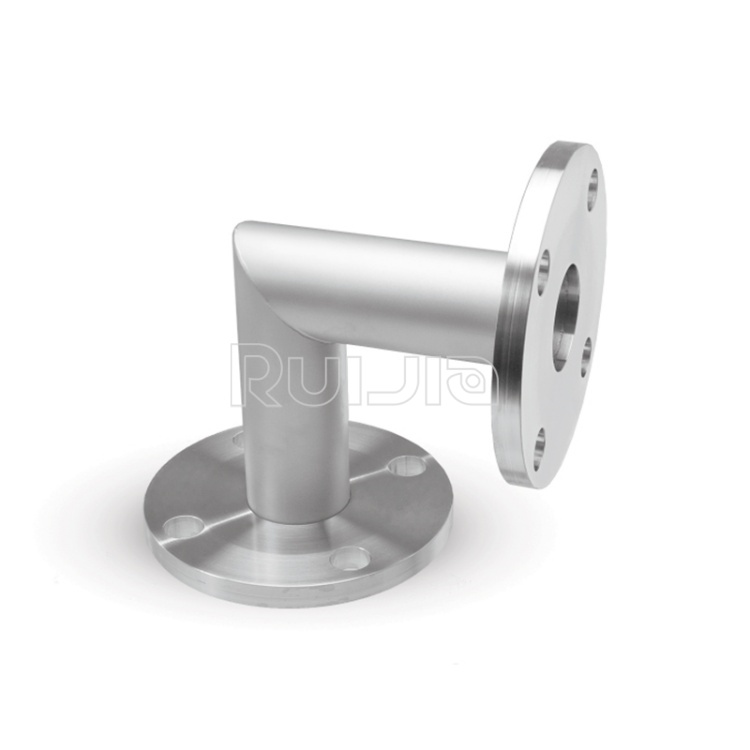
|
Temperature |
-26˚C to 200˚C |
|
Working Pressure |
Vacuum~atmosphere pressure |
|
Helium Leak Test |
1×10 -9 Pa・m³/sec or less |
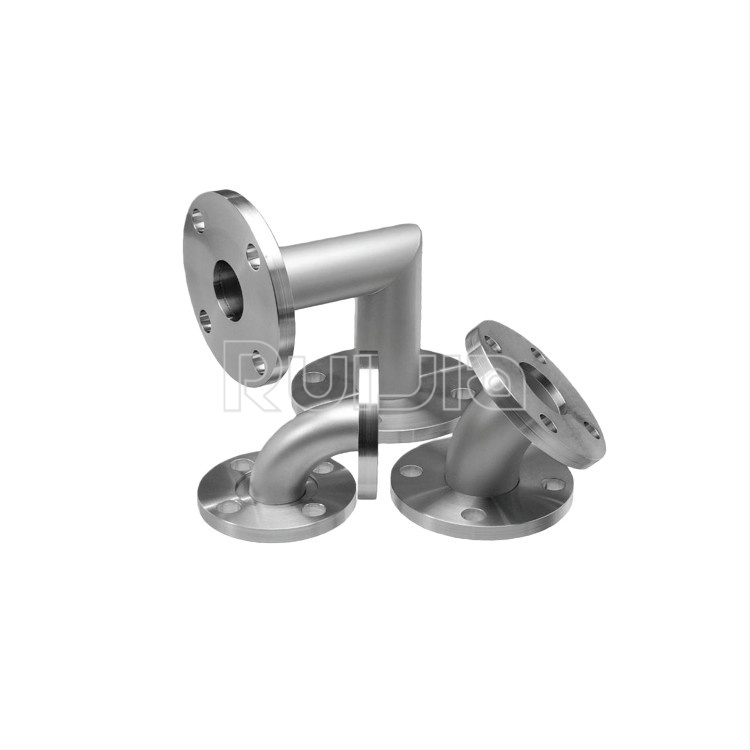
|
Temperature |
-26˚C to 200˚C |
|
Working Pressure |
Vacuum~atmosphere pressure |
|
Helium Leak Test |
1×10 -9 Pa・m³/sec or less |
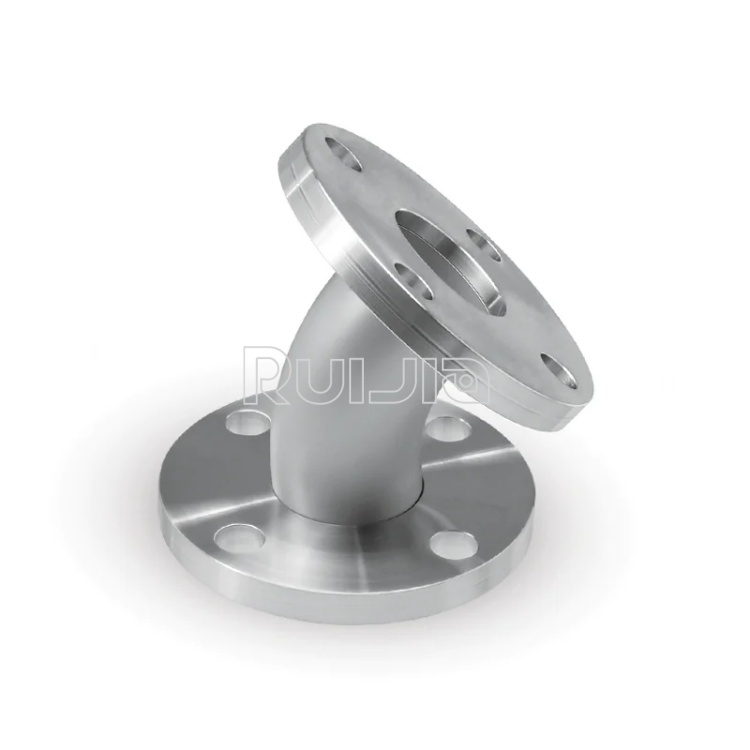
|
Temperature |
-26˚C to 200˚C |
|
Working Pressure |
Vacuum~atmosphere pressure |
|
Helium Leak Test |
1×10 -9 Pa・m³/sec or less |
Rich stock, fast delivery
Quick response within 24h
Quality assurance
Accessory replacement
GET A QUOTE