Determining adequate tightening torque for ISO-KF clamp connections, with size-based reference ranges and practical “enough” criteria.


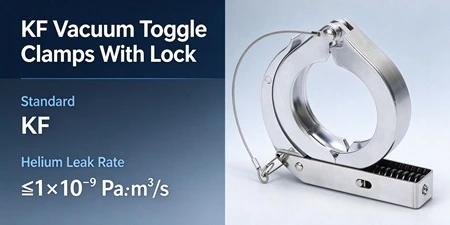
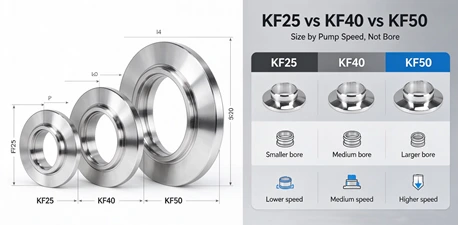
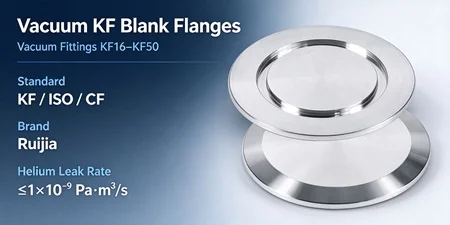
It starts with a barely visible speck—a tiny reddish-brown dot on the clamp edge of a vacuum joint. You wipe it away during routine inspection, barely registering it. Three months later, the same joint hisses during pump-down. The leak detector screams, your process timeline crumbles, and now you’re breaking down a perfectly aligned beamline at 2 a.m. because a fitting corroded from the inside out.
Corrosion in vacuum systems is a slow, silent saboteur. Most of the time, you don’t see the damage until it’s already compromised the seal integrity. If you’re working with reactive precursors, trace moisture, or mildly acidic process residues, the standard stainless steel components you’ve relied on for years might be the weakest link in your system. The question isn’t if you’ll face this problem—it’s when. And more importantly, what you choose to do about it.
A corroded flange isn’t just a maintenance headache—it’s a cost multiplier. When a seal face pits, you’re not just replacing a centering ring; you’re potentially scrapping the entire fitting. If that fitting is welded to an expensive vacuum chamber or a custom-length bellows assembly, the repair bill skyrockets. I’ve seen research groups lose weeks of beamtime because a single corroded connection point introduced a virtual leak that mimicked a chamber wall outgassing issue. They chased the ghost for days before tracing it to a pitted flange surface that looked “fine” from the outside.
The root cause? In many cases, it’s material selection. Standard vacuum flanges and fittings are commonly made from 304 or 304L stainless steel. While adequate for clean, dry, inert environments, 304 grades are vulnerable to chloride-induced pitting and stress corrosion cracking—even from seemingly benign sources like fingerprints, tap water residues, or trace HCl vapors from semiconductor processes. Once a pit forms, it concentrates the corrosive species, creating a self-accelerating degradation loop that no amount of routine cleaning can stop.
This is where the choice of alloy becomes critical. 316L stainless steel contains 2–3% molybdenum, an addition that dramatically improves resistance to pitting and crevice corrosion in chloride-containing environments. The “L” designation (low carbon) further reduces the risk of intergranular corrosion after welding—a common concern when fittings are permanently integrated into vacuum assemblies.
The performance difference isn’t subtle. According to ASTM G48 pitting corrosion test data, 316L exhibits a pitting resistance equivalent number (PREN) of approximately 24–26, compared to 18–20 for 304L. In practical terms, that means a high-quality 316L KF flange can survive hundreds of hours of exposure to mildly aggressive process chemistries that would visibly etch a standard 304 component in a single shift.
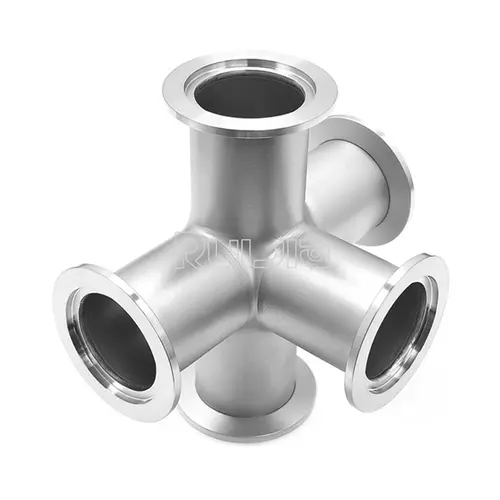
This isn’t just about chemistry—it’s about predictability. When you’re running a sensitive thin-film deposition or a long-duration vacuum bakeout, the last thing you want is uncertainty at your connection points. Upgrading to 316L turns a potential failure mode into a known, controlled variable. The initial price premium is modest compared to the cost of an unscheduled vent and the downstream impact on your process yield.
Choosing 316L is a critical first step, but it’s not the whole story. To genuinely eliminate corrosion-related leaks, you need to consider three additional factors that are often overlooked during procurement.
Surface Finish and Passivation
Even a 316L surface can corrode if its passive chromium oxide layer is compromised. Reputable manufacturers follow post-machining passivation protocols per ASTM A967, using citric or nitric acid baths to remove free iron and promote the formation of a uniform oxide film. Ask your supplier about their passivation process. If they can’t provide a certificate or batch traceability, the alloy alone won’t save you. One of the most common failure modes we see in field-return analysis involves fittings that were machined cleanly but never properly passivated—the surface was essentially raw 316L waiting to react.
Welding Quality on Permanently Attached Fittings
Many vacuum connections come welded to tubing, bellows, or chamber ports. A poor weld with excessive heat input can precipitate chromium carbides at grain boundaries—even in low-carbon grades if the cooling is too slow. This “sensitized” zone becomes a corrosion express lane. Look for components where the weld bead is smooth, properly back-purged, and verified by dye penetrant or helium leak testing. If you’re integrating precision KF flanges with factory-welded assemblies, ensure the manufacturer can provide weld maps or at minimum a statement of welding procedure qualification.
Elastomer Compatibility in the Sealing Interface
Often, the metallic flange survives but the O-ring groove traps aggressive media against the seal surface, creating a crevice that accelerates attack. For corrosive applications, consider centering rings with a fluorocarbon (FKM) or perfluoroelastomer (FFKM) O-ring rather than standard nitrile. Even better, look for designs where the elastomer does not sit in a metal crevice but is instead captured by a spacer that limits exposure. It’s a small detail that can double the service interval of your entire connection setup.
You don’t need to replace every vacuum component in your facility overnight. A pragmatic approach is to identify the “critical nodes”—connection points exposed to the most aggressive chemistry or thermal cycling—and upgrade those first. Typically, these are:
Flanges immediately downstream of the process chamber
Connection points in foreline traps or effluent management lines
Ports that see frequent venting to atmosphere with ambient humidity
Flanges near gas delivery systems handling halogenated precursors
By retrofitting these 10–15% of your total connections with 316L, you can often eliminate 80% of your corrosion-related downtime events. As you schedule preventative maintenance cycles, extend the upgrade to remaining positions. This tiered approach keeps capital expenditure manageable while delivering a rapid reliability improvement.
At Ruijia, this transition wasn’t theoretical for us. Over the years, we watched customers in semiconductor, solar cell manufacturing, and vacuum coating quietly specify 316L in their bill of materials—even when the official drawings still called for 304. They had learned through hard experience that the standard grade wasn’t enough. So we formalized what they already knew: we developed a complete range of vacuum connection components in 316L, from simple blank flanges and clamps to complex multi-port adapters and bellows assemblies.
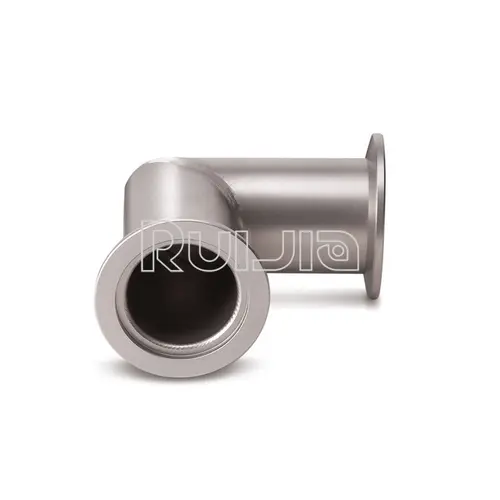
What separates a purpose-built 316L product line from a simple material substitution is the consistency of the supply chain. It’s easy for a machine shop to cut a few flanges from 316L bar stock and call it a day. It’s much harder to maintain certified 316L across thousands of SKUs, with full material traceability from the mill to the finished part. If you’re considering vacuum hardware that resists corrosive attack over the long term, material certs should be non-negotiable. Ask for the heat number, and verify that it corresponds to a genuine 316L composition with molybdenum in the 2.0–3.0% range.
Before you place your next purchase order for any vacuum connection components, run through these five questions:
What corrosive species are present in my process—even at trace levels? Don’t forget to include cleaning solvents, humidity during venting, and byproducts of upstream reactions.
What is my acceptable downtime cost per hour? This number will quickly justify the incremental cost of upgrading to 316L.
Can my supplier provide full material certification for 316L, including molybdenum content and passivation documentation?
Are the elastomer materials in my centering rings compatible with my process chemistry and baking temperatures?
Do I have a plan for periodic visual inspection of seal surfaces, and am I logging those inspections to spot trends?
If any answer gives you pause, it might be time to revisit your current sourcing strategy. Even a single fitting failure in a high-value process can erase years of cost savings from using lower-grade components.
Corrosion isn’t going away. As processes push into more chemically aggressive regimes—ALD with metal-organic precursors, reactive ion etching with halogen gases, vacuum pyrolysis with corrosive off-gassing—the demands on vacuum system materials will only intensify. The industry is already moving toward more resistant alloys and advanced surface treatments. Moving to 316L now isn’t just a fix for today’s leaks; it’s a step toward future-proofing your infrastructure against the next generation of process challenges.
If you’d like to explore how a material upgrade could strengthen your own vacuum setup, feel free to view the 316L KF component range available from Ruijia. We’ve built the line specifically for applications where standard grades fall short, and we’re happy to walk through the specifications with you.
Disclaimer: The information in this article is based on general materials science principles and field experience. Process conditions vary widely; always consult with a materials engineer or your vacuum system OEM regarding the suitability of specific alloys for your application. Material certification and passivation quality should be verified with your specific supplier.
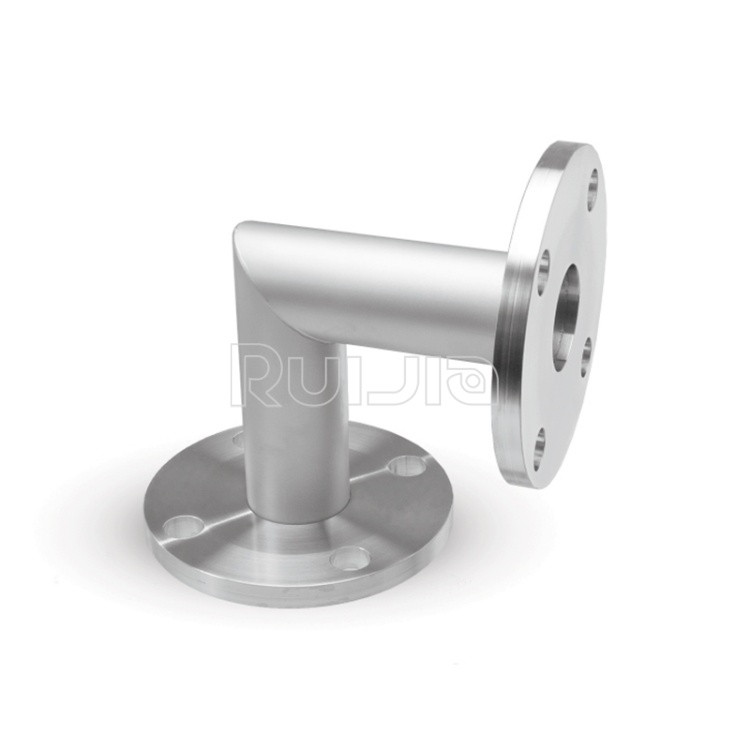
|
Temperature |
-26˚C to 200˚C |
|
Working Pressure |
Vacuum~atmosphere pressure |
|
Helium Leak Test |
1×10 -9 Pa・m³/sec or less |
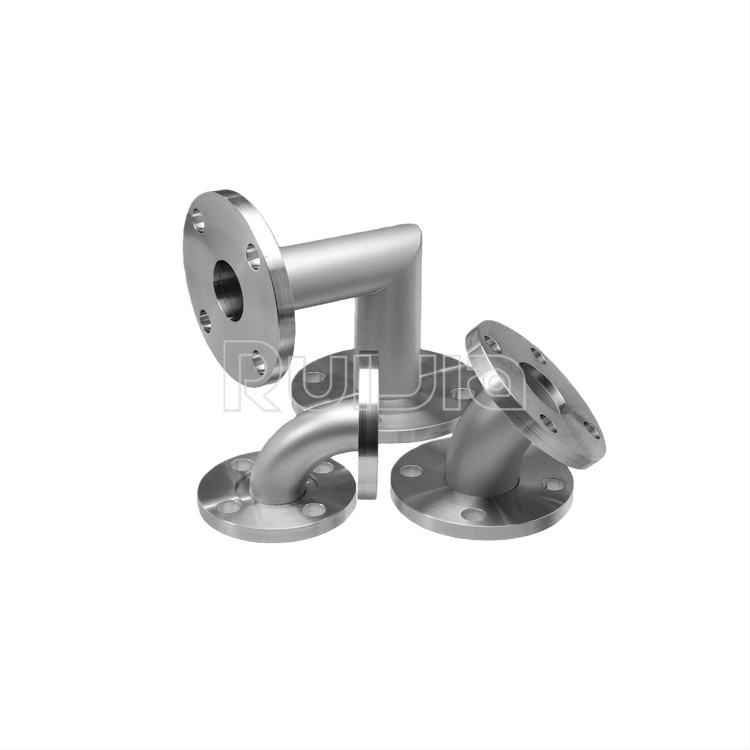
|
Temperature |
-26˚C to 200˚C |
|
Working Pressure |
Vacuum~atmosphere pressure |
|
Helium Leak Test |
1×10 -9 Pa・m³/sec or less |
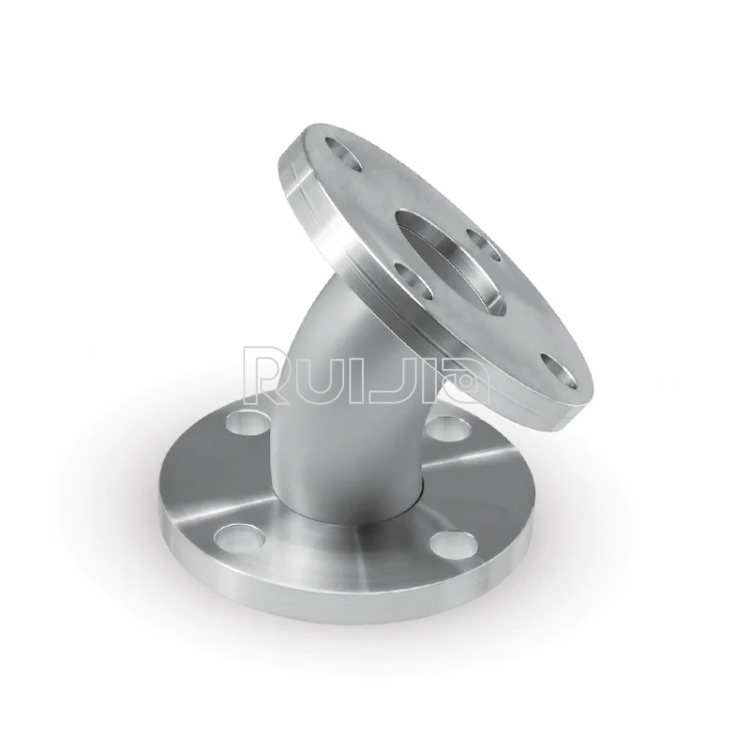
|
Temperature |
-26˚C to 200˚C |
|
Working Pressure |
Vacuum~atmosphere pressure |
|
Helium Leak Test |
1×10 -9 Pa・m³/sec or less |
Rich stock, fast delivery
Quick response within 24h
Quality assurance
Accessory replacement
GET A QUOTE