Determining adequate tightening torque for ISO-KF clamp connections, with size-based reference ranges and practical “enough” criteria.


When a semiconductor fab recently reported unexpected particle contamination in their vacuum chamber, the root cause wasn’t a faulty pump or a leaky seal. It was microscopic corrosion on a seemingly robust stainless steel mating surface. The result? Three weeks of unplanned downtime and a six-figure maintenance bill.
This isn’t an isolated incident. In high-corrosion environments — think aggressive process gases like chlorine, fluorine, or moisture-laden forensic analysis systems — the integrity of vacuum hardware is constantly under attack. The challenge isn’t just about stopping leaks; it’s about preventing surface degradation that compromises your entire process yield.
Most engineers default to 304 stainless steel for vacuum components. It's affordable, widely available, and performs adequately in clean, dry systems. But introduce halogenated gases or cyclic thermal loads, and the chromium oxide passive layer that provides corrosion resistance can break down.
Here’s where the industry shifts toward 316L stainless steel — a low-carbon variant with molybdenum added. According to ASTM A967 standards, molybdenum significantly improves resistance to pitting and crevice corrosion, particularly in chloride-rich environments. Many vacuum system operators transitioning from analytical to semi-industrial processes discover this distinction the hard way: after corrosion products appear on downstream wafers or analytical sensors.
But material grade alone doesn’t tell the whole story. Surface finish plays an equally critical role. A rough machined surface (Ra > 0.8 μm) provides microscopic crevices where corrosive species accumulate, accelerating local attack. That’s why high-reliability applications demand electropolished surfaces. Electropolishing removes a thin layer of material, smoothing asperities and enriching the surface with chromium — effectively creating a more robust passive film.
An often-overlooked failure mechanism involves mixing dissimilar metals. A vacuum system built with titanium components on one side and standard stainless steel on the other — connected through copper gaskets — creates a classic galvanic cell. The less noble material (in this case, copper, or even the stainless steel depending on the electrolyte) corrodes preferentially.
According to a technical note from the Vacuum Society of Japan, galvanic current in UHV systems can accelerate corrosion rates by an order of magnitude, especially when humidity from venting cycles provides the electrolyte.
There are two practical solutions:
Material matching – Keep all wetted materials within the same galvanic series (e.g., all 316L stainless steel).
Insulating kits – Use polymer or ceramic isolators to break the electrical path.
When process conditions push beyond what 316L can tolerate, three alternative alloy families come into play:
Hastelloy C-22 – Exceptional resistance to oxidizing and reducing acids, including wet chlorine. Widely used in chemical vapor deposition (CVD) systems handling precursor gases.
Inconel 625 – Maintains passivity in high-temperature fluoride environments. Nickel content above 58% prevents intergranular attack.
Titanium Grade 2 – Outstanding performance in wet chlorine and seawater applications, but sensitive to dry chlorine and hydrogen embrittlement.
Each alloy carries trade-offs. Hastelloy costs roughly four times more than 316L. Titanium cannot be used in systems with dry halogens. The selection requires careful analysis of your specific gas chemistry, operating temperature range, and allowable contamination budget.
To evaluate whether specialized alloys or cost-effective surface treatments fit your corrosion management plan, exploring documented case studies can provide practical insights.
Replacing the entire flange material isn’t always necessary. Surface engineering offers a middle path. Two proven coating technologies for corrosion-prone vacuum environments:
Nickel-PTFE composite coatings – Provide both corrosion barrier and dry lubrication. Particularly useful for sliding interfaces where fretting corrosion is a concern. However, PTFE outgassing limits their use in UHV (<1e-9 mbar) systems.
Passivation with citric or nitric acid (ASTM A967) – This chemical treatment removes free iron from the surface, allowing a uniform chromium oxide layer to reform. While passivation doesn’t change surface roughness, it dramatically reduces the number of active corrosion initiation sites. A properly passivated 304 flange can outperform non-passivated 316L in some mild corrosive environments.
The catch? Many commodity components skip this step or use inadequate bath chemistry. Third-party testing by an independent laboratory found that nearly 30% of “passivated” flanges from non-specialized suppliers showed residual iron particles under XPS analysis.
Even with optimal material selection, field experience shows three maintenance practices consistently extend service life:
Controlled venting – Always vent systems with dry nitrogen or argon. Ambient air introduces humidity and particulates that accelerate corrosion.
Gasket inspection protocols – Replace copper gaskets after each remaking. Copper corrosion products contaminate surfaces and create galvanic cells.
Helium leak testing with corrosion monitoring – Combine leak detection with periodic surface inspection using portable electrochemical impedance spectroscopy (EIS) probes. Several semiconductor fabs now use this approach for predictive maintenance.
A common mistake: over-torquing flanges. Excessive torque deforms the sealing surface, creating stress concentrations where corrosion initiates. Torque wrenches calibrated to ISO 16063-11 standards prevent this.
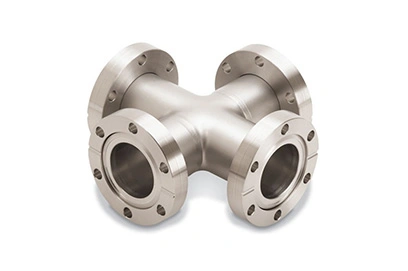
Bringing this together, an effective corrosion strategy for vacuum systems involves four steps:
Step 1: Map your entire gas/chemical exposure profile, including transient states (venting, pump-down, process interruptions).
Step 2: Select baseline material (start with 316L electropolished for most moderate-corrosion applications).
Step 3: Define inspection frequency and methods (visual with magnification, or EIS for critical tools).
Step 4: Document corrosion incidents and correlate with process records to refine material choices.
The industry is moving away from "replace when failed" toward condition-based monitoring. According to a 2024 survey by the Society of Vacuum Coaters, facilities implementing formal corrosion management reduced unexpected downtime by 42% and consumable costs by 28%.
If your operation demands long-term reliability under corrosive conditions, exploring ready-to-install solutions designed for aggressive environments can save both engineering hours and unplanned outages.
Too often, corrosion on vacuum hardware is treated as “just something that happens.” But the science of passivation, alloy selection, and surface engineering has matured substantially over the past decade. Whether you’re running halogen-based etching, high-temperature deposition, or forensic analysis involving corrosive samples, predictable corrosion performance is achievable.
The key is shifting from reactive replacement to proactive specification — choosing materials and finishes matched to your real-world exposure profile, not just catalog convenience.
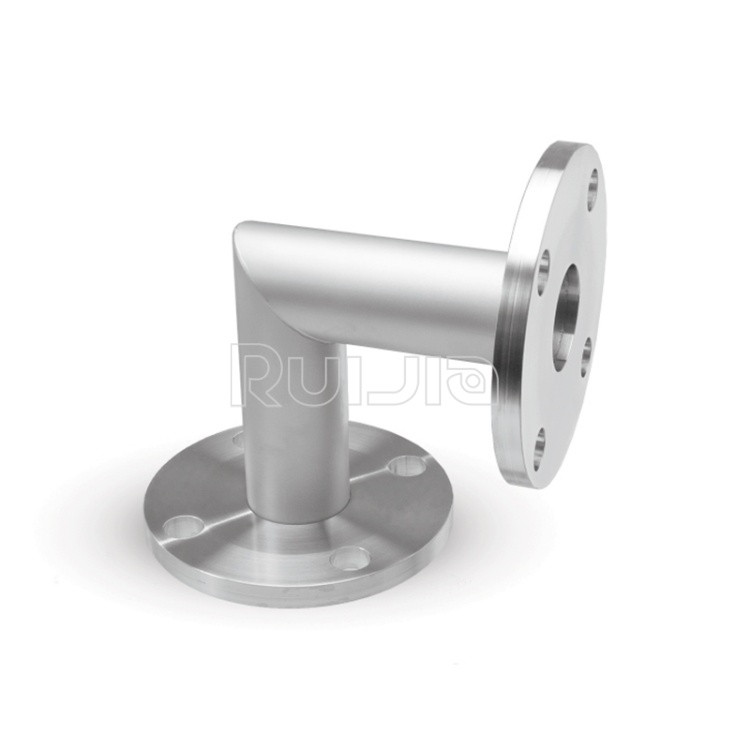
|
Temperature |
-26˚C to 200˚C |
|
Working Pressure |
Vacuum~atmosphere pressure |
|
Helium Leak Test |
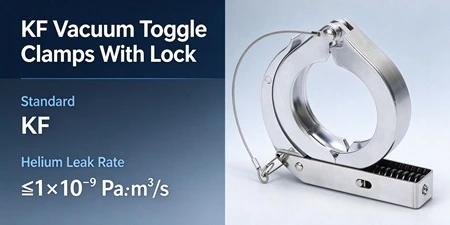
1×10 -9 Pa・m³/sec or less |
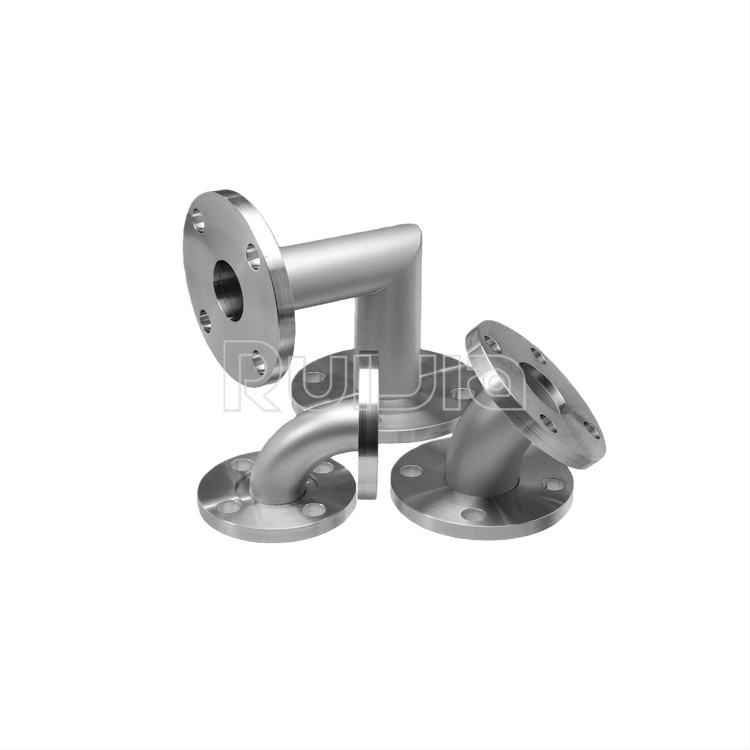
|
Temperature |
-26˚C to 200˚C |
|
Working Pressure |
Vacuum~atmosphere pressure |
|
Helium Leak Test |
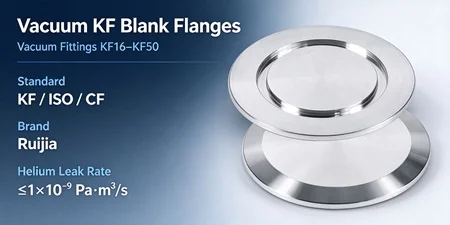
1×10 -9 Pa・m³/sec or less |
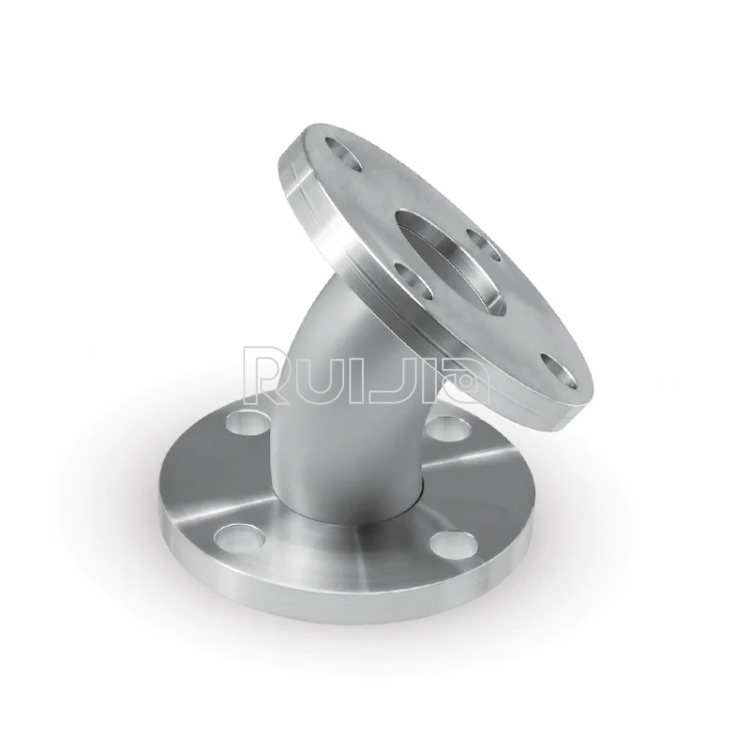
|
Temperature |
-26˚C to 200˚C |
|
Working Pressure |
Vacuum~atmosphere pressure |
|
Helium Leak Test |
1×10 -9 Pa・m³/sec or less |

Rich stock, fast delivery
Quick response within 24h
Quality assurance
Accessory replacement
GET A QUOTE