Determining adequate tightening torque for ISO-KF clamp connections, with size-based reference ranges and practical “enough” criteria.


Selecting the correct vacuum adapter is not about picking a component that physically fits—it is about ensuring that the connection maintains the required vacuum level, withstands process conditions, and does not become the weakest link in your system. The right choice depends on three core factors: the vacuum level of your application, the sealing mechanism required, and the material compatibility with your process media and temperature range.
This guide walks through the common types of vacuum adapters, explains how each sealing mechanism works, provides a practical selection framework, and highlights common mistakes to avoid.
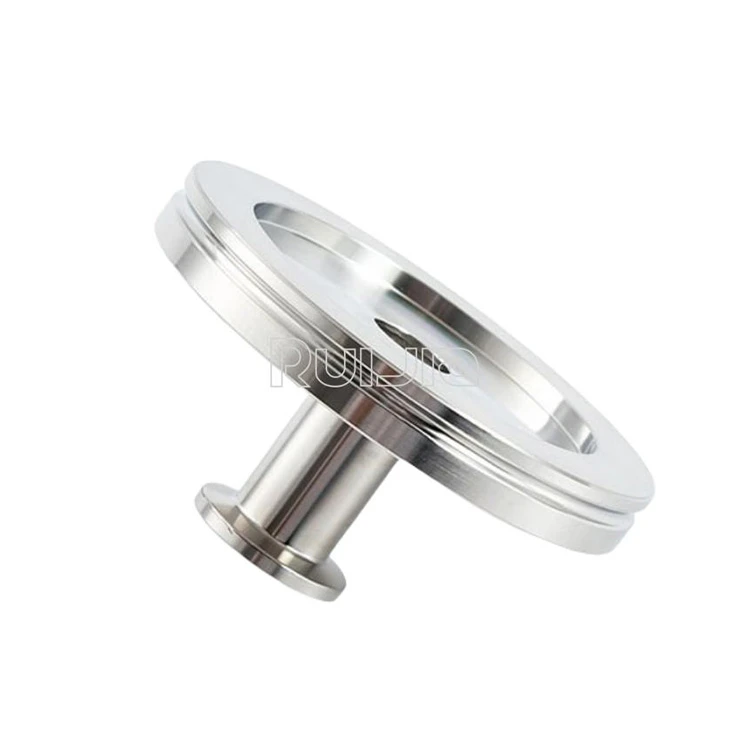
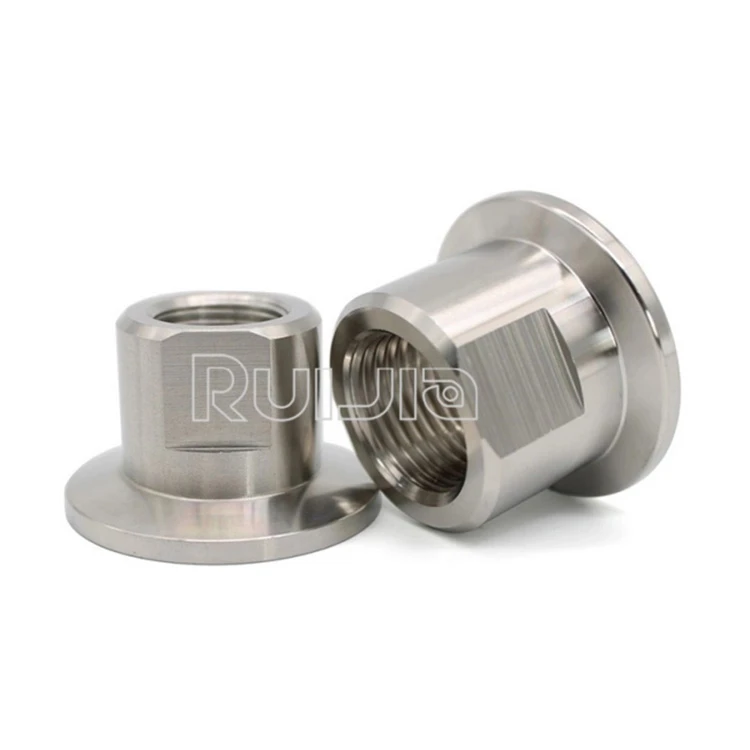
A vacuum adapter is a connecting component that enables the transition between different vacuum interface standards, pipe diameters, or connection methods. In a typical vacuum system, you may need to connect a KF-flanged pump to a CF-flanged chamber, or adapt a rubber hose to a Swagelok fitting. Adapters bridge these gaps while maintaining vacuum integrity.
Common types of vacuum adapters include:
| Adapter Type | Primary Function | Typical Application |
| Tubulated Adapter | Connects different flange standards (KF to CF, ISO to KF, etc.) | General system integration |
| Conical Reducing Adapter | Transitions between different pipe diameters | Size reduction in vacuum lines |
| VCR Adapter | Metal-sealed connection for high-purity systems | Semiconductor, analytical instrumentation |
| Rubber Hose Adapter | Connects rubber hoses to vacuum components | Cooling lines, rough vacuum, utility connections |
| Swagelok Adapter | Ferrule-sealed connection to Swagelok fittings | Gas and liquid lines in analytical systems |
| Quick Disconnect Adapter | Rapid assembly/disassembly | Maintenance-heavy applications |
The vacuum level of your system is the single most important factor in adapter selection. Different sealing mechanisms are suitable for different pressure ranges:
Low to medium vacuum (≥10⁻⁵ Pa): Rubber-sealed adapters such as KF, threaded, or hose adapters can be used. These are cost-effective and sufficient for applications like rough pumping, vacuum drying, and general laboratory work.
High to ultra-high vacuum (<10⁻⁵ Pa): Metal-sealed adapters like CF, VCR, or Swagelok adapters must be chosen. Rubber seals outgas significantly at low pressures and cannot withstand bakeout temperatures, making them unsuitable for high and ultra-high vacuum applications.
For reference, CF (Conflat) flanges use a metal seal (oxygen-free copper gasket) and can achieve leak rates better than 10⁻¹⁰ Pa·m³/s, making them the standard for ultra-high vacuum systems. KF flanges, by comparison, use an elastomer O-ring seal and typically achieve leak rates of 10⁻⁸ Pa·m³/s.
The sealing mechanism determines not only the achievable vacuum level but also the temperature resistance, chemical compatibility, and maintenance requirements of the connection.
Elastomer seals—typically made of Viton, silicone, or Buna-N—are used in KF and some ISO connections. They provide reliable sealing in low to medium vacuum applications and allow for quick tool-less assembly via clamp mechanisms. However, elastomers have limitations:
Outgassing increases at pressures below 10⁻⁵ Pa
Temperature range is limited (typically -20°C to 200°C depending on material)
Not compatible with all process chemicals
Metal seals—used in CF, VCR, and Swagelok connections—provide hermetic sealing suitable for high and ultra-high vacuum. Key characteristics:
Achieve leak rates below 10⁻¹⁰ Pa·m³/s
Withstand high-temperature bakeout (up to 450°C for CF with copper gasket)
Compatible with aggressive chemicals
More expensive and require precise torque control during installation
Swagelok adapters use a ferrule sealing mechanism where precision-machined ferrules compress against the tubing to create a mechanical, leak-tight seal. This design is resistant to vibration and thermal cycling, making it suitable for analytical and process applications.
The material of the adapter must be compatible with your process media, operating temperature, and cleanliness requirements.
Stainless Steel 304 is the most common choice for general vacuum applications. It offers good corrosion resistance and is cost-effective.
Stainless Steel 316/316L provides enhanced corrosion resistance, particularly against chlorides and acidic media. It is preferred for pharmaceutical, food processing, and semiconductor applications where purity is critical.
For high-purity applications, surface finish becomes an important consideration. Electropolished (EP) surfaces achieve roughness values below 5 µin (0.13 µm), significantly reducing particle retention and outgassing compared to mechanically polished surfaces.
When selecting a vacuum adapter for your system, work through the following five questions in order:
>10⁻⁵ Pa (low to medium vacuum): Rubber-sealed adapters (KF, hose adapters) are viable
<10⁻⁵ Pa (high to ultra-high vacuum): Metal-sealed adapters (CF, VCR, Swagelok) are required
Room temperature to 200°C: Elastomer seals may suffice (check specific material limits)
Above 200°C or bakeout required: Metal seals are necessary
Cryogenic temperatures: Verify material toughness at low temperature
Inert gases: Most materials are compatible
Corrosive or reactive gases: 316L stainless steel or specialized alloys may be required
High-purity or ultra-clean applications: Electropolished surfaces and metal seals are preferred to minimize contamination
Identify the flange type on each side of the connection:
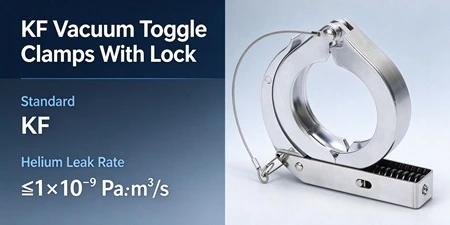
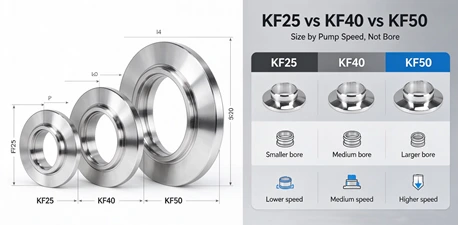
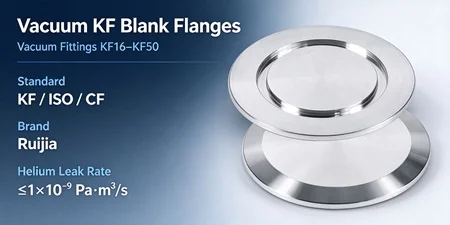
KF (quick-release, clamp connection)
ISO (larger-diameter, clamp or bolted)
CF (bolted, metal-sealed)
VCR or Swagelok (ferrule-sealed tube fittings)
NPT or other pipe threads
Frequent assembly/disassembly: Quick-disconnect adapters or KF clamps allow tool-less operation
Infrequent access: CF bolted connections provide superior sealing but require more time to assemble
VCR connections: Allow multiple make-and-break cycles while maintaining seal integrity
Forcing a KF flange to mate with a CF flange without an adapter will not seal. The geometries and sealing mechanisms are fundamentally different. Always use a purpose-designed adapter.
Rubber O-rings outgas significantly at pressures below 10⁻⁵ Pa. Using an elastomer-sealed adapter in an ultra-high vacuum system will prevent reaching base pressure and may contaminate the process.
A stainless steel adapter that works perfectly for dry nitrogen may corrode rapidly in a chlorine-containing process. Verify material compatibility with your specific process chemistry.
For semiconductor and other high-purity applications, standard mechanical polish may introduce unacceptable particle generation and outgassing. Specify the required surface finish (e.g., electropolished) based on your cleanliness requirements.
Use this checklist when specifying vacuum adapters for your system:
Q: Can I use a KF adapter in an ultra-high vacuum system?
A: No. KF adapters use elastomer O-ring seals that outgas at pressures below 10⁻⁵ Pa. For UHV applications, you need metal-sealed adapters such as CF or all-metal VCR types.
Q: What is the difference between a tubulated adapter and a reducing adapter?
A: A tubulated adapter transitions between different flange standards (e.g., KF to CF), while a reducing adapter transitions between different pipe diameters within the same or compatible flange standards.
Q: How do I know if I need a VCR adapter or a Swagelok adapter?
A: VCR adapters use a metal gasket seal and are preferred for high-purity, high-vacuum applications requiring bakeout capability. Swagelok adapters use a ferrule seal and are commonly used in analytical instrumentation and general process lines. The choice depends on the existing fitting type in your system.
Q: What materials are vacuum adapters typically made from?
A: Stainless steel 304 and 316L are the most common materials. For specialized applications, materials such as Hastelloy, Monel, and titanium may be used.
Q: How do I verify that an adapter will maintain my required leak rate?
A: Reputable manufacturers perform helium leak testing on their products. For CF flanges, leak rates better than 10⁻¹⁰ Pa·m³/s are achievable. Always request leak test reports from your supplier and verify that the tested leak rate meets your system requirements.
Choosing the right vacuum adapter is a matter of matching the component's sealing mechanism, material, and design to your system's pressure range, temperature, media, and maintenance requirements. Start with the vacuum level—this will immediately narrow your options between elastomer-sealed and metal-sealed designs. Then work through material compatibility and connection standards.
The most common mistake is selecting an adapter that physically fits but does not meet the vacuum or temperature requirements of the application. Always verify the specifications against your process conditions before ordering.
If you are unsure which adapter configuration suits your system, review the available vacuum adapter types and specifications, or discuss your material and vacuum requirements with a technical specialist.
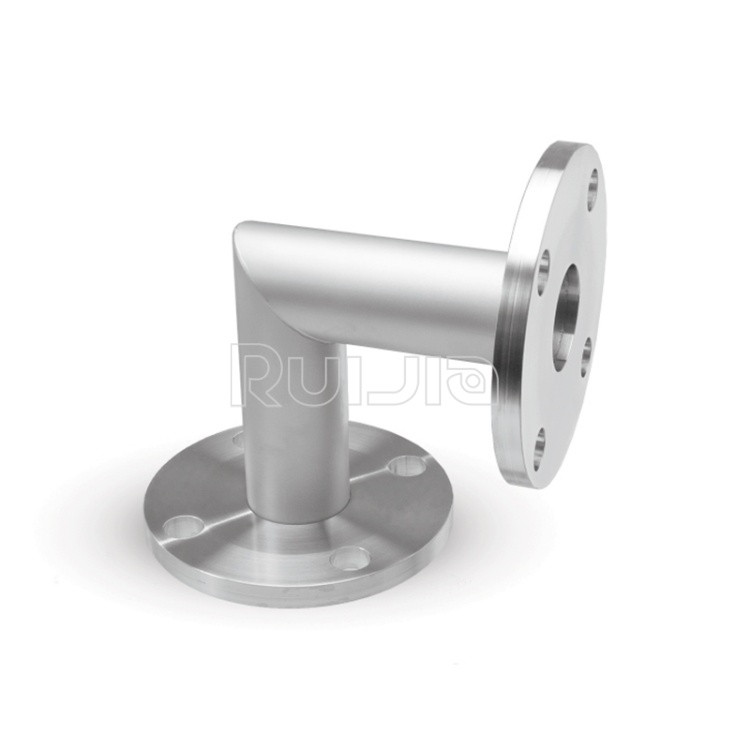
|
Temperature |
-26˚C to 200˚C |
|
Working Pressure |
Vacuum~atmosphere pressure |
|
Helium Leak Test |
1×10 -9 Pa・m³/sec or less |
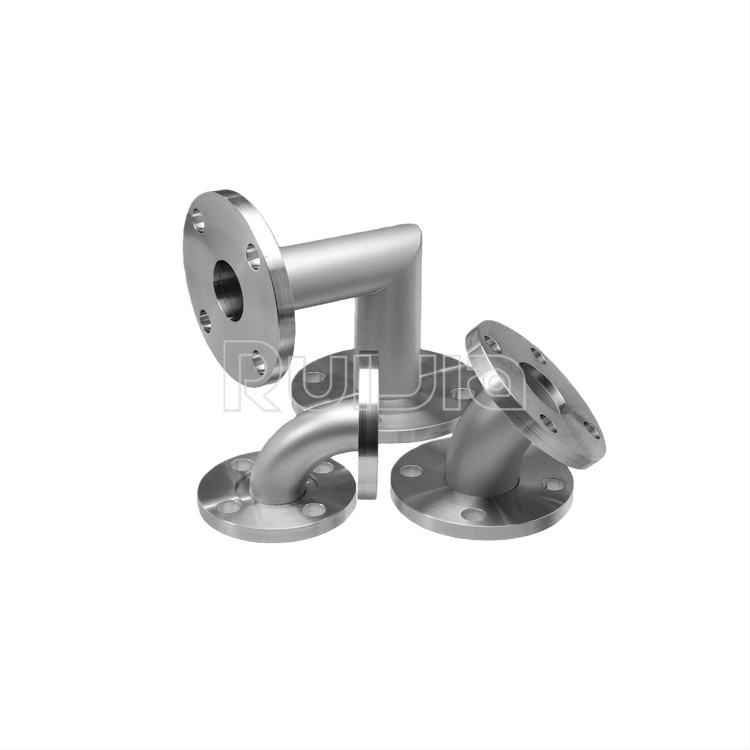
|
Temperature |
-26˚C to 200˚C |
|
Working Pressure |
Vacuum~atmosphere pressure |
|
Helium Leak Test |
1×10 -9 Pa・m³/sec or less |
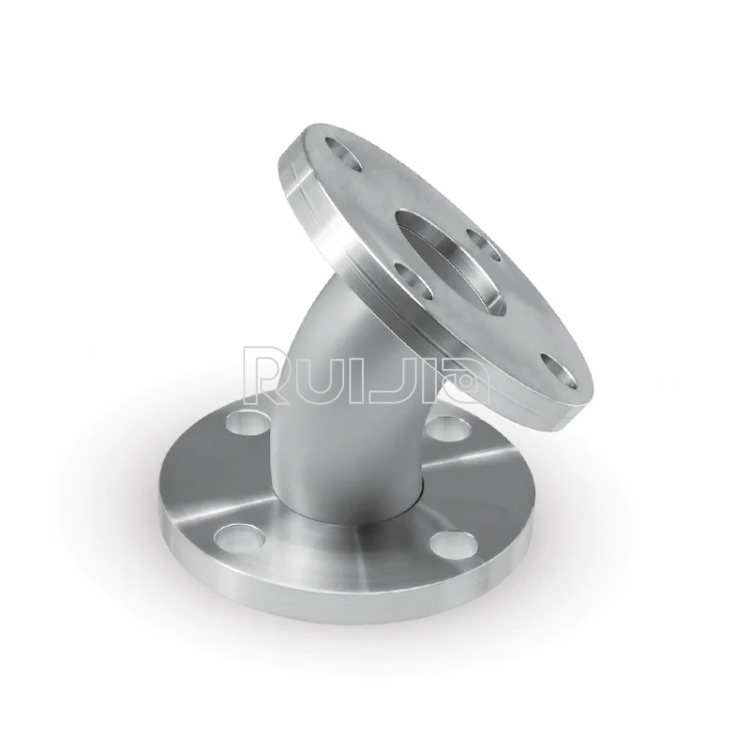
|
Temperature |
-26˚C to 200˚C |
|
Working Pressure |
Vacuum~atmosphere pressure |
|
Helium Leak Test |
1×10 -9 Pa・m³/sec or less |
Rich stock, fast delivery
Quick response within 24h
Quality assurance
Accessory replacement
GET A QUOTE