Determining adequate tightening torque for ISO-KF clamp connections, with size-based reference ranges and practical “enough” criteria.


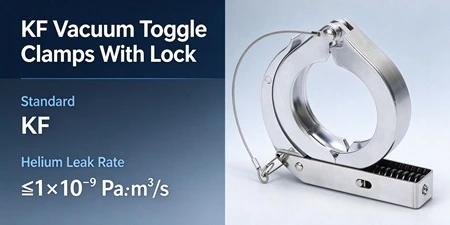
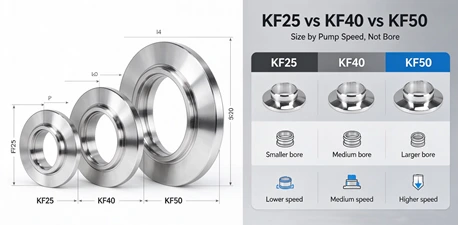
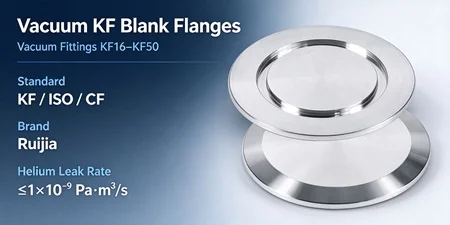
Need a straight answer on which vacuum flange to pick? Here's the 30-second version: CF (Conflat) flanges dominate ultra-high vacuum (UHV) with metal seals reaching 1x10⁻¹³ mbar and bakeout up to 450°C, but they cost more and require replacing copper gaskets each time you break the seal. KF flanges offer tool‑free, quick assembly for rough to high vacuum (down to 10⁻⁷ mbar) at a budget‑friendly price, though their elastomer O‑rings degrade under high temperatures above 150°C. ISO flanges bridge the gap for larger diameters (DN 63 to DN 630), handling pressures down to 10⁻⁹ mbar, with two flavors: ISO‑K (claw clamps) for flexibility and ISO‑F (bolted) for structural strength. That's the snapshot. Now let's unpack what each option actually means for your vacuum system—because selecting the wrong flange type can turn a routine assembly into a maintenance nightmare.
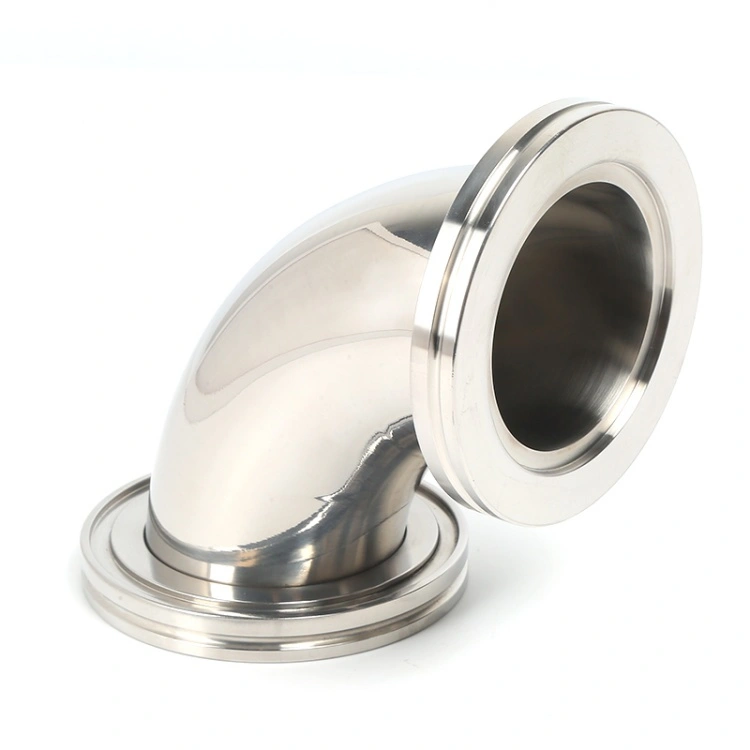
The KF flange—often called QF (Quick Flange) or NW flange—was originally developed by Leybold and has become the global standard for small‑diameter fittings up to 50 mm. Its genius lies in simplicity: two symmetrical flanges, a centering ring with an O‑ring gasket, and a wing‑nut clamping ring that you can tighten by hand. No tools. No torque wrenches. Just a few seconds and you've got a vacuum‑tight seal.
Pros:
Speed of assembly is unrivaled. In R&D labs where you're constantly swapping components, this alone makes KF the MVP. You can reconfigure an entire test stand in minutes rather than hours.
Low upfront cost. KF components are mass‑produced and widely available, which keeps prices competitive. For rough vacuum applications above 10⁻⁷ mbar, they deliver more than enough performance without the premium price tag.
Reusable seals. The Viton® or FPM O‑rings can be reused multiple times, unlike CF copper gaskets that are single‑use.
Cons:
Temperature limits. With standard FPM O‑rings, bakeout tops out at 150°C; even with metal seals, you're looking at 200°C at best. That's fine for many processes, but forget about aggressive degassing or high‑temperature deposition.
Leak rates are higher. KF connections typically achieve leak rates down to 10⁻⁉ mbar·l/s—perfectly adequate for forelines and roughing lines, but not suitable for UHV chambers where even microscopic leaks ruin your baseline pressure.
Clamp fatigue. Those quick‑release clamps are convenient, but repeated use can wear out the clamping mechanism. For semi‑permanent installations that rarely get opened, you might be better off with bolted flanges.
Where KF shines: Roughing lines connecting mechanical pumps to turbo pumps, small vacuum chambers in academic labs, analytical instruments like mass spectrometers, and any setup where frequent component swaps are part of daily operations.
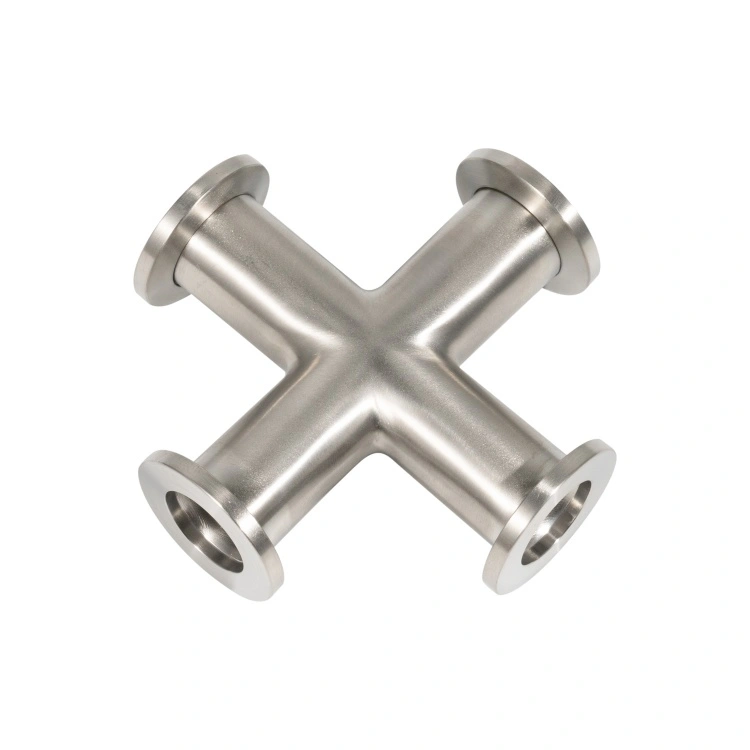
ISO flanges fill the gap between small KF fittings and heavy‑duty CF systems. They come in two main subtypes: ISO‑K (claw clamp design, similar in concept to KF but for larger diameters) and ISO‑F (bolted flange, offering greater mechanical strength). Sizes range from DN 63 all the way up to DN 630, covering tube diameters from roughly 70 mm to 650 mm.
Pros:
Broad diameter range. If your system uses pipe sizes above 50 mm, ISO is your practical option. KF stops at DN 50; ISO picks up where KF leaves off.
Better vacuum performance than KF. With metal gaskets, ISO‑K connections can reach 10⁻⁹ mbar—about two orders of magnitude better than KF's 10⁻⁷ mbar. That's high‑vacuum territory.
Clamp flexibility on ISO‑K. The claw clamps can be positioned anywhere around the flange circumference, unlike fixed bolt holes. This is a lifesaver when you're working in tight spaces with misaligned ports.
Structural strength on ISO‑F. When the flange doubles as a load‑bearing structural element, bolted ISO‑F provides the rigidity you need.
Cons:
Not as fast as KF. While ISO‑K clamps are quicker than bolting 12 screws, they're still slower than a one‑hand KF wing nut.
Not as UHV‑capable as CF. Even at its best, ISO tops out around 10⁻⁹ mbar. CF laughs at that from 10⁻¹³ mbar.
Elastomer seals still limit bakeout. Like KF, ISO relies on O‑rings (with an aluminum spring ring to prevent slippage), so bakeout temperatures are capped at 150–200°C.
Where ISO belongs: Semiconductor process chambers with larger port sizes, vacuum coating systems (PVD/CVD) that need high vacuum but not extreme UHV, space simulation chambers, and scientific research applications where diameters exceed 50 mm.
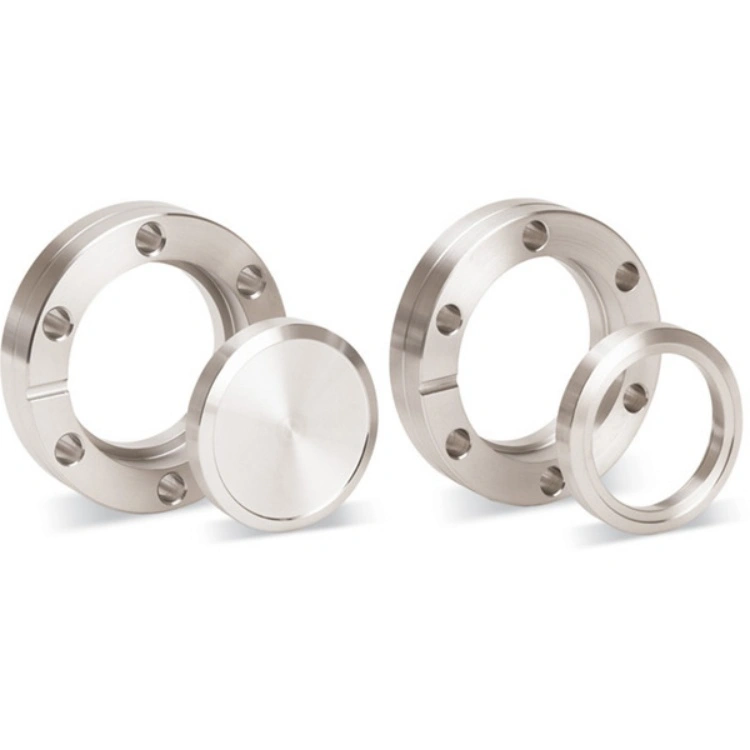
CF stands for Conflat, and in the world of vacuum technology, Confiat has earned its reputation as the gold standard for UHV systems. The design is deceptively simple: two identical metal flanges, a knife edge machined into each sealing face, and a soft OFHC copper gasket crushed between them. When you tighten the bolts, the knife edges bite into the copper, extruding metal into every microscopic surface imperfection to create a leak‑tight seal that's essentially forged together.
Pros:
Extreme vacuum performance. CF seals operate from atmospheric pressure down to 1x10⁻¹³ Torr (<1.3x10⁻¹³ mbar). That's not just high vacuum—that's ultra‑high and extreme‑high vacuum territory where pressure is measured in molecules per cubic meter.
High‑temperature bakeout. CF flanges can be baked at 450°C (842°F) without breaking a sweat. This is crucial for degassing chamber walls to achieve UHV base pressures. KF and ISO would have melted O‑rings long before you hit those temperatures.
All‑metal construction means no outgassing. Elastomer O‑rings slowly release trapped gases into your chamber (outgassing). CF's copper gasket and stainless steel flanges have effectively zero outgassing, which is non‑negotiable for surface science, MBE (molecular beam epitaxy), and particle accelerators.
Weldable internals. CF components are welded internally to eliminate crevices that could trap gases and create virtual leaks.
Cons:
Single‑use seals. Every time you break a CF connection, you must replace the copper gasket. That adds recurring cost and means you can't just "open and inspect" without budgeting for new gaskets.
Mechanical precision required. Over‑torquing can damage knife edges; under‑torquing produces leaks. You'll need a calibrated torque wrench and proper technique—not the "hand tight and go" approach of KF.
Higher initial investment. CF components are more expensive to manufacture due to precision machining of knife edges and the use of higher‑grade stainless steels.
Slower assembly. Bolting a CF flange with 20 or 32 screws takes time. Rotatable versions help with alignment but not with speed.
Where CF is non‑negotiable: Thin‑film deposition systems (PVD, CVD, ALD) requiring UHV base pressures, particle accelerators and synchrotron beamlines, fusion research reactors, space simulation chambers, SEM/TEM sample preparation systems, and any application involving electron beams or high‑energy particles where contamination from outgassing would ruin your results.
| Feature | KF Flange | ISO Flange (ISO‑K/F) | CF Flange |
|---|---|---|---|
| Pressure range | 760 torr → 10⁻⁷ mbar | 760 torr → 10⁻⁹ mbar | 760 torr → <1x10⁻¹³ mbar |
| Max bakeout temp | 150–200°C | 150–200°C | 450°C (up to 500°C with special materials) |
| Size range | DN 10 to DN 50 | DN 63 to DN 630 | DN 16 to DN 400+ (CF 1.33″ to 16″ OD) |
| Seal type | Elastomer O‑ring (Viton/FPM) | Elastomer O‑ring + centering ring | OFHC copper gasket (metal) |
| Seal reusability | Yes (multiple times) | Yes (multiple times) | No (single use only) |
| Assembly speed | Seconds, tool‑free | Minutes | Slow, requires torque wrench |
| Relative cost | Low | Medium | High |
After building and maintaining vacuum systems across semiconductor fabs and university research labs for years, I've learned that flange selection isn't about finding the "best" flange—it's about finding the right flange for your specific operating conditions. Here's my mental checklist:
Question 1: What base pressure do you really need?
Above 10⁻⁷ mbar? KF is probably fine. Need 10⁻⁹ to 10⁻⁸ mbar? Look at ISO with metal seals. Chasing 10⁻¹⁰ mbar or below? You're in CF territory. I've seen projects where engineers over‑specified CF flanges for a system that never ran below 10⁻⁶ mbar, wasting budget on capabilities they'd never use.
Question 2: Will you bake the system?
If your process requires bakeout above 200°C—say, 300°C to 450°C for UHV degassing—you have no choice but CF. Elastomer seals simply can't survive those temperatures. For bakeouts below 150°C, KF or ISO will work fine.
Question 3: How often will you open the system?
Every day for component swaps? KF's tool‑free clamps will save you hours over a month. Once a year for maintenance? CF's single‑use gasket cost becomes negligible, and the superior seal integrity justifies the extra assembly time.
Question 4: What diameter tubing connects to your chamber?
Small stuff under 2 inches? KF is the natural fit. Need 3 inches to 25 inches? ISO covers that range. For very large ports, CF also goes big—I've worked with DN400CF (16-inch OD) flanges in semiconductor cluster tools.
Question 5: What's your contamination tolerance?
Elastomer O‑rings outgas hydrocarbons and water vapor. If your process involves electron beams, high‑energy particle detection, or ultra‑sensitive surface analysis, those contaminants will create noise and drift. CF's all‑metal seals eliminate this problem entirely.
There's also a practical note on mixing flange types. While adapters exist to transition between KF, ISO, and CF, leading vacuum component manufacturers advise against mixing standards unless absolutely necessary to match existing equipment. Each time you convert, you introduce additional sealing surfaces and potential leak paths. Better to pick a primary standard and stick with it throughout your system, reserving adapters only for connecting legacy components that can't be retrofitted.
Here's something rarely discussed in spec sheets: standard flanges don't always fit. Your chamber might have non‑standard port spacing. Your instrumentation may require custom bore diameters. Your process could demand specialized materials like 316LN stainless steel for enhanced corrosion resistance in aggressive chemical environments.
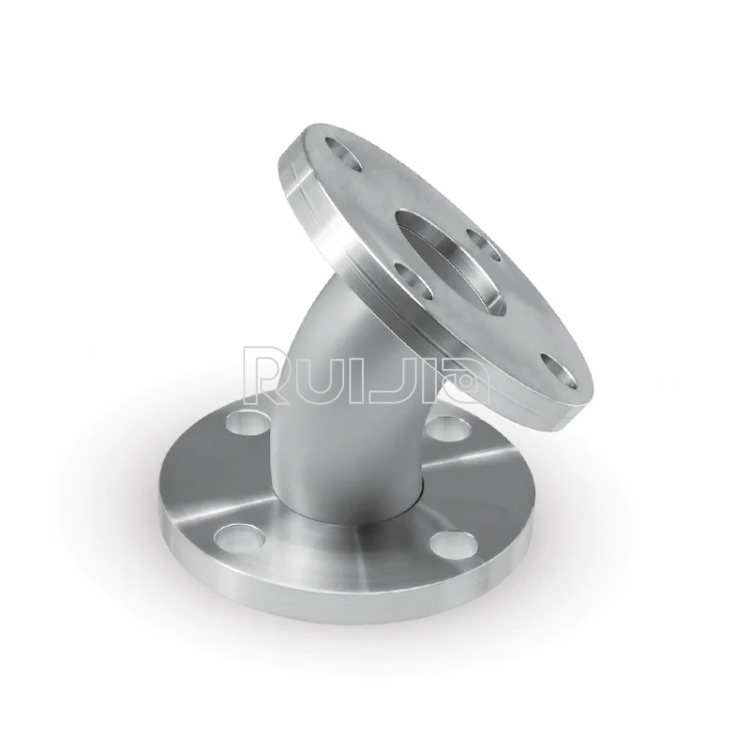
That's where Flanges and Fittings suppliers who understand custom manufacturing become essential. The ability to modify bolt hole patterns, add custom threading (UNC, UNF, or metric), or fabricate bored flanges with specific inner diameters for unique tubing sizes can make the difference between a system that assembles smoothly and one that requires field modifications at the last minute.
For instance, ultra‑high vacuum systems operating with reactive gases (like chlorine or fluorine compounds in semiconductor etching) often require flanges machined from 316LN ESR stainless steel. The electro‑slag remelting process refines the alloy's grain structure and removes non‑metallic inclusions, significantly improving corrosion resistance and reducing outgassing. Standard 304 stainless steel flanges would degrade in those environments within months.
Surface finish matters just as much as material choice. For demanding research or semiconductor applications, Ra 0.8 μm mirror polishing minimizes gas adsorption and particle trapping. This level of surface quality isn't found on commodity flanges; it requires precision CNC lathe work and dedicated quality control.
Customization options that rescue real‑world projects include:
Rotatable vs. non‑rotatable configurations—rotatable flanges solve alignment headaches in complex assemblies where fixed bolt holes would never line up
Tapped vs. clearance bolt holes—tapped flanges eliminate the need for nuts in blind ports, a small change that can save hours of assembly in cramped spaces
Welded neck designs—pre‑welded tubing assemblies reduce field welding time and the risk of weld‑induced distortion
Special materials—316LN for corrosion resistance, aluminum for lightweight, non‑magnetic UHV systems
When standard catalogs don't have what you need, exploring view specific configurations from manufacturers who support custom work is the smart move. click here for details on how tailored flange designs have saved other engineers from costly system redesigns.
The semiconductor industry's projected growth—industrial vacuum systems alone reaching $16.82 billion by 2032—means demand for specialized Flanges and Fittings isn't slowing down. But volume alone doesn't guarantee quality. The real value comes from suppliers who combine engineering insight with manufacturing flexibility: understanding why your application needs a particular flange type, then delivering it with the exact dimensions and surface treatments your process demands.
Whether you're outfitting a compact R&D sputtering system or building a multi‑chamber semiconductor production tool, the decision framework above should steer you right. For most high‑vacuum and UHV applications, CF flanges offer the sealing performance, temperature tolerance, and material purity that make them the default choice. learn more about available options to see how the right flange design can eliminate leak headaches before they start. And if your project falls into that 150°C‑max, quick‑assembly, budget‑sensitive category? KF might still carry the day. The key is knowing which compromise you're willing to make—and which one your process cannot tolerate.
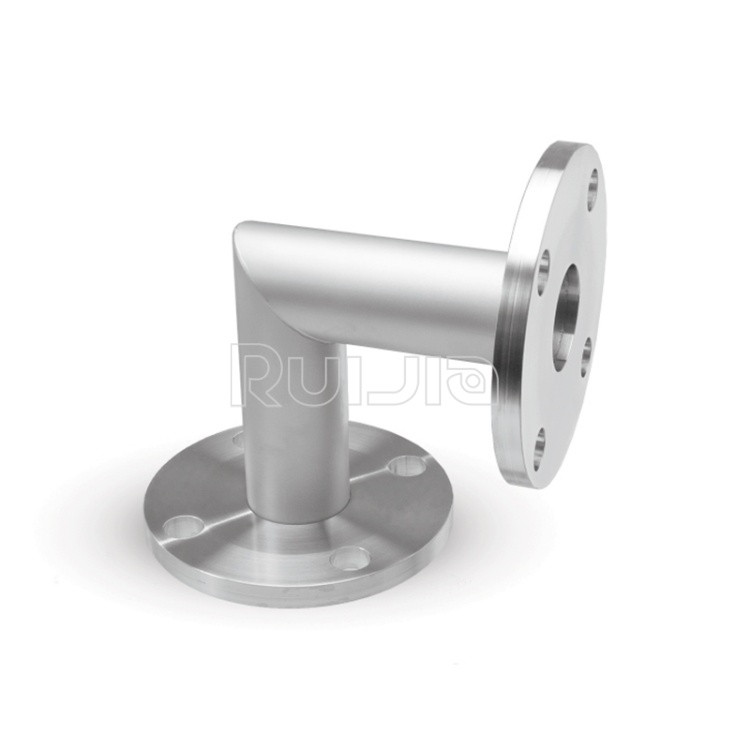
|
Temperature |
-26˚C to 200˚C |
|
Working Pressure |
Vacuum~atmosphere pressure |
|
Helium Leak Test |
1×10 -9 Pa・m³/sec or less |
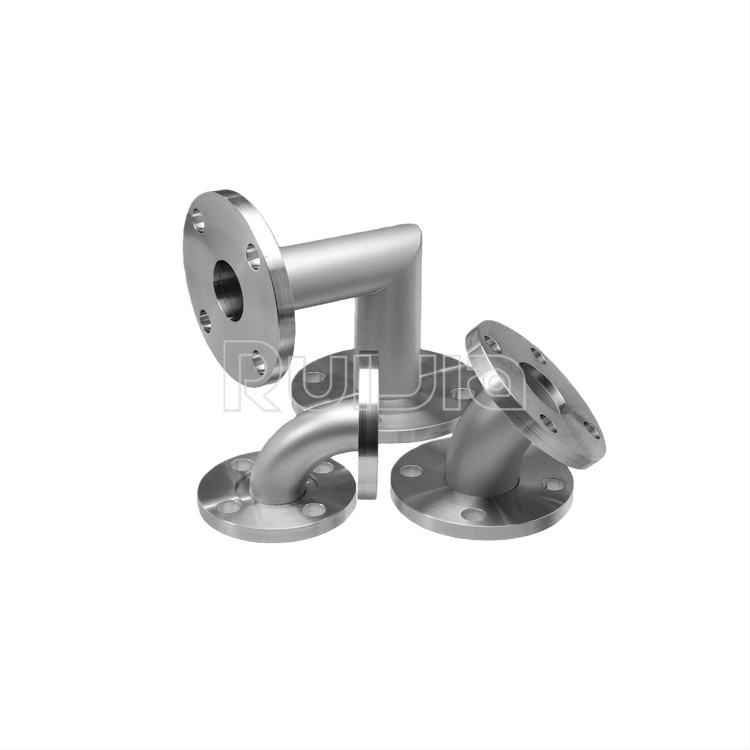
|
Temperature |
-26˚C to 200˚C |
|
Working Pressure |
Vacuum~atmosphere pressure |
|
Helium Leak Test |
1×10 -9 Pa・m³/sec or less |
|
Temperature |
-26˚C to 200˚C |
|
Working Pressure |
Vacuum~atmosphere pressure |
|
Helium Leak Test |
1×10 -9 Pa・m³/sec or less |
Rich stock, fast delivery
Quick response within 24h
Quality assurance
Accessory replacement
GET A QUOTE