Determining adequate tightening torque for ISO-KF clamp connections, with size-based reference ranges and practical “enough” criteria.


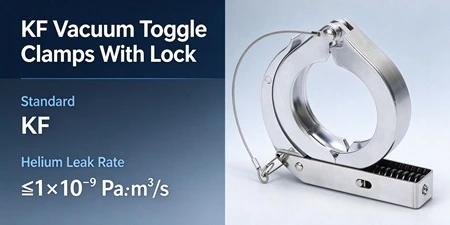
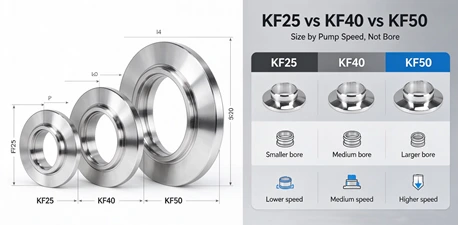
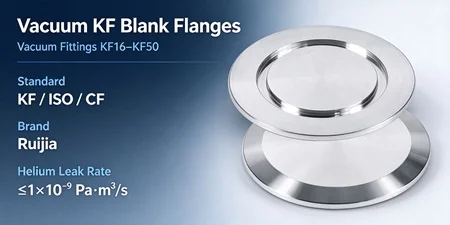
You have just finished assembling your vacuum chamber. The pump is running. The gauge reads atmospheric pressure—then begins to drop. 10⁻³ Torr. 10⁻⁵ Torr. And then it stalls. No matter how long you wait, the pressure refuses to go lower. A colleague taps the flange. The needle twitches. That movement tells you everything: the seal is breathing.
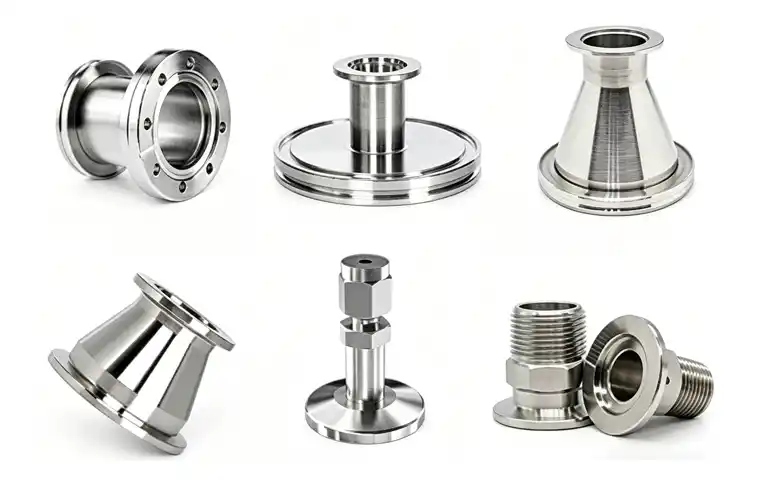
Vacuum engineers face a fundamental trade-off every time they spec a flanged connection. The component that seems minor—a simple ring of material compressed between two metal faces—determines whether your system reaches ultra-high vacuum or maxes out at mediocre levels.
According to industry data from the American Vacuum Society, elastomer seals remain the most common choice for vacuum applications below 10⁻⁇ Torr, accounting for approximately 65% of all vacuum sealing applications. Their popularity stems from simplicity: low cost, easy installation, and forgiving compression tolerances.
But here is what catalog pages rarely tell you. That rubber-like material you are relying on is constantly outgassing. Water vapor trapped during manufacturing slowly releases into your chamber. Hydrocarbons migrate from the seal bulk to the surface. For processes requiring clean surfaces—thin film deposition, surface analysis, semiconductor etching—that invisible contamination becomes your enemy.
Viton® (FKM) stands as the workhorse of elastomer vacuum sealing. Temperature rating from -20°C to 200°C for continuous operation, with brief excursions to 300°C possible. Outgassing rates typically range from 1×10⁻⁆ to 1×10⁻⁷ Torr·L/(s·cm²) after proper baking. Silicone offers wider temperature flexibility (-55°C to 230°C) but exhibits higher gas permeability. Buna-N works well for oil-containing systems but degrades under UV or ozone exposure.
The real constraint appears when you need bakeout. A system requiring 250°C degassing pushes most elastomers beyond their limit. The seal hardens, takes a compression set, and when cooled, the leak appears.
Oxygen-free copper gaskets, the standard for ConFlat flange connections, achieve outgassing rates below 1×10⁻¹⁰ Torr·L/(s·cm²)—three to four orders of magnitude better than elastomers. Temperature range extends cryogenic to 450°C for bakeout, with some special alloys reaching 800°C. No permeation, no outgassing, no aging degradation.
The catch? A copper gasket seals exactly once. Torque the bolts correctly, achieve the required compression, and you have a reliable seal. Loosen the flange, and the gasket must be replaced. No reusability. No second chances.
A 2019 study published in the Journal of Vacuum Science & Technology compared different sealing technologies for high-vacuum applications. The findings revealed that while properly installed elastomer seals achieve acceptable leak rates below 1×10⁻⁹ mbar·L/s, their long-term stability suffers. After 500 thermal cycles from room temperature to 150°C, elastomer seals showed measurable leak rate increases in 40% of test samples. Copper gaskets tested under identical conditions showed no degradation after 1000 cycles.
For semiconductor fabs operating 24/7, that reliability gap translates directly to yield. One major chip manufacturer reported reducing unscheduled vacuum system maintenance by 73% after transitioning critical chambers from elastomer to metal-sealed interfaces.
Ask any vacuum system designer the first question they consider, and they will say: "What is your bakeout temperature?"
Below 150°C, elastomers work reliably and economically. Between 150°C and 200°C, specialized formulations like Kalrez® or Chemraz® extend the range, but at costs approaching metal seal pricing. Above 200°C, elastomers simply fail. The material softens, flows into gap spaces, and when cooled, tears upon re-compression.
Metal-sealed flange systems start making economic sense exactly at this crossover point. The upfront hardware cost is higher—copper gaskets cost 5-10 times more than Viton O-rings—but the ability to bake at 400°C without breaking vacuum pays back in reduced pump-down time and lower base pressures.
A typical Viton O-ring with 1 cm² of exposed surface area releases approximately 1×10⁻⁆ Torr·L/s of volatile compounds at room temperature. In a 10-liter chamber, that adds a 1×10⁻⁇ Torr gas load constantly battling your pump. Achieve 10⁻⁹ Torr? Only if your pumping speed exceeds 1000 L/s—an expensive solution to an outgassing problem.
Copper releases essentially nothing. No hydrocarbons, no water vapor, no plasticizers. The gas load comes entirely from chamber walls and internal components. That is why ultra-high vacuum systems used in surface physics and synchrotron beamlines universally specify copper gaskets on every metal-sealed flange.
Here is how experienced vacuum engineers make the call:
Choose elastomer seals when:
Operating pressure stays above 10⁻⁷ Torr
Bakeout temperature does not exceed 150°C
Frequent flange disassembly is required (elastomers tolerate multiple re-compressions)
Initial budget dominates the decision
The application tolerates moderate hydrocarbon background
Choose metal seals when:
Base pressure below 10⁻⁸ Torr is required
Bakeout temperature exceeds 200°C
UHV conditions demand the lowest possible outgassing
Corrosive gases or reactive plasma will contact the seal
Long-term reliability outweighs per-seal cost
The system will operate for years without flange breakage
A perfect seal selection fails with poor installation practice. For elastomers, the most common error is over-compression. Squeezing a Viton O-ring beyond 25-30% of its original cross-section does not improve sealing—it extrudes the material into the gap and accelerates compression set. Lubrication matters too. A dry O-ring tears during assembly; over-lubrication outgasses for weeks.
For copper gaskets, the mistake is under-torquing. Conflat flange bolts require specific torque sequences and values to achieve the 200-300 MPa compressive stress that yields the copper into the knife-edge. Too little, and the seal leaks. Too much, and you deform the flange. A good practice: use new bolts on critical UHV systems, as thread wear alters torque-tension relationships.
Some applications benefit from a two-stage sealing approach. A primary metal seal for UHV integrity, backed by an elastomer seal acting as a contamination barrier or leak-check port. Dual-seal flanges with an intermediate pumping port allow helium leak detection without breaking vacuum. This configuration appears frequently in accelerator vacuum systems and space simulation chambers where zero tolerance for leakage exists.
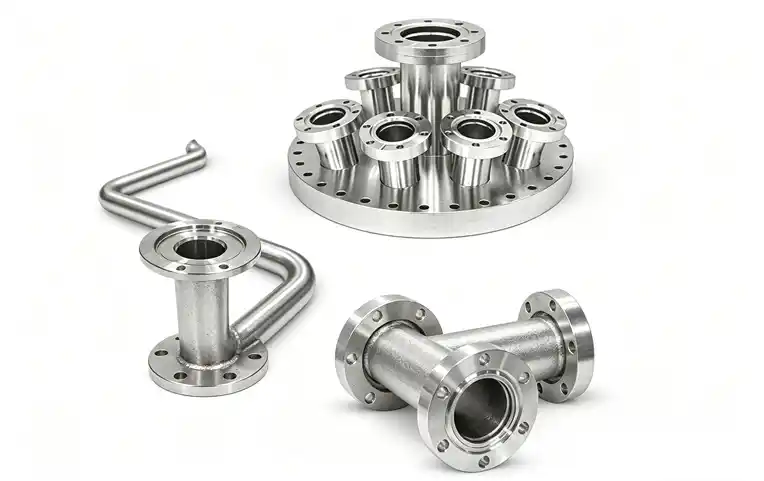
If your application sits squarely in the mid-range—pressures around 10⁻⁸ Torr, occasional bakeout to 200°C—you face the most difficult decision. Both seal types work, but neither excels. In these cases, explore different flange configurations and custom adapter solutions to optimize the interface design. Sometimes the answer lies not in the seal itself, but in how the entire flange assembly is engineered.
A simple accounting looks at gasket price: 2foraVitonO−ringversus2foraVitonO−ringversus15 for a copper gasket. But that ignores the real costs. An elastomer-sealed system requiring monthly gasket replacement consumes 24annuallyinseals—plusthelaborcostofdisassembly,cleaning,re−lubrication,andpump−downtime.Ametal−sealedsystemreplacedannuallyconsumes24annuallyinseals—plusthelaborcostofdisassembly,cleaning,re−lubrication,andpump−downtime.Ametal−sealedsystemreplacedannuallyconsumes15 in gaskets plus perhaps 15 minutes of labor.
Multiply across 50 flanges in a production system, and the numbers reverse. Elastomers become the expensive choice through accumulated maintenance labor. Several large-scale vacuum system operators report that switching to metal seals on frequently-cycled flanges paid back the hardware investment within six months through reduced technician hours alone.
Walk through your planned operation honestly. Will operators occasionally vent the system to air? How often do flanges need opening for sample changes or maintenance? Is your cleanroom environment hydrocarbon-sensitive? Does your pump budget include the extra capacity needed to overcome elastomer outgassing?
The honest answer to these questions points clearly to one seal type or the other. Neither is universally superior. The right choice depends entirely on your specific temperature, pressure, cleanliness, and access requirements.
If you find your application demanding characteristics from both categories, you might need a more nuanced solution. Review engineered vacuum components and design options that combine sealing technologies for challenging interfaces. The best vacuum systems do not compromise—they customize.
For applications where neither standard seal type quite fits your unique flange configuration or operating conditions, [understanding custom-engineered adapters] might provide the bridge you need. Explore RUIJIA's vacuum adapter solutions to see how tailored components solve real-world interface problems.
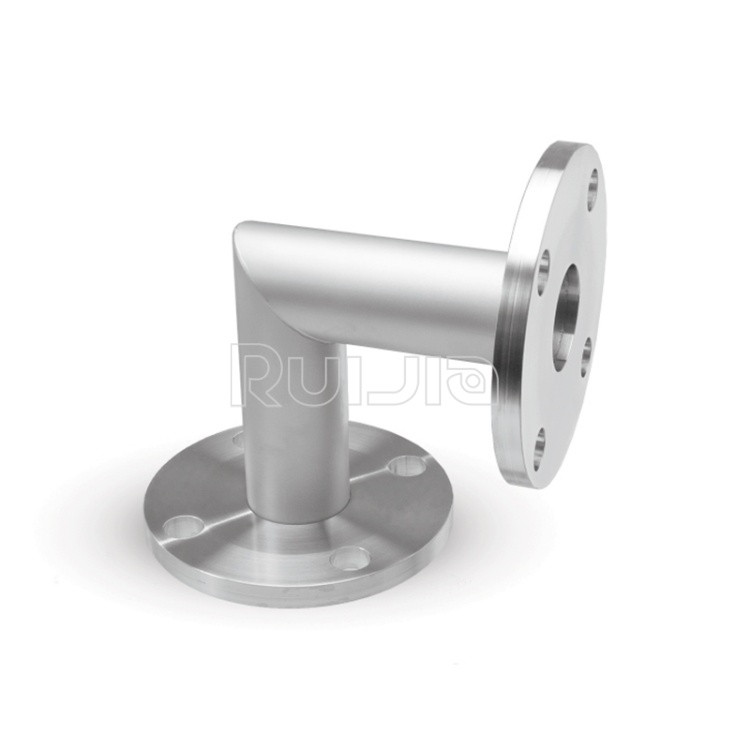
|
Temperature |
-26˚C to 200˚C |
|
Working Pressure |
Vacuum~atmosphere pressure |
|
Helium Leak Test |
1×10 -9 Pa・m³/sec or less |
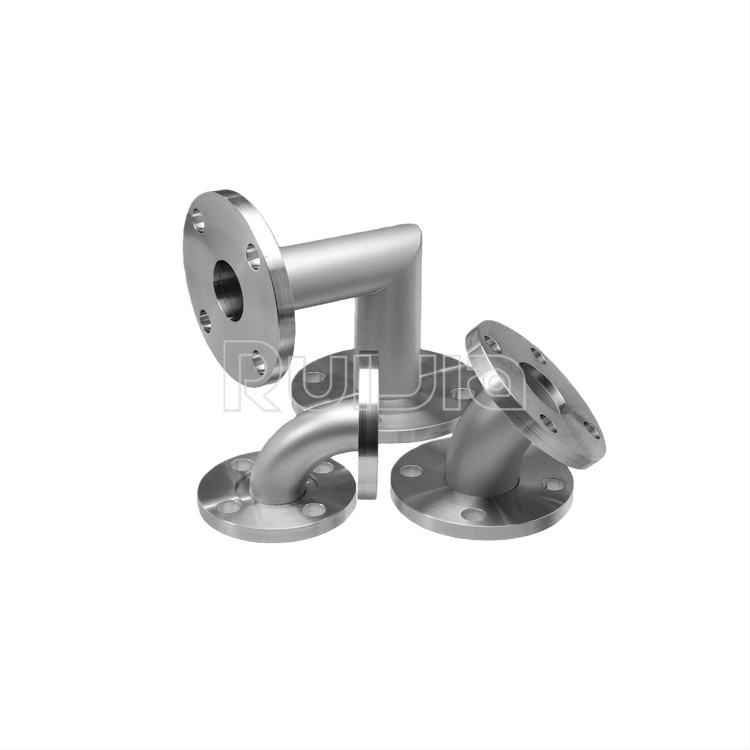
|
Temperature |
-26˚C to 200˚C |
|
Working Pressure |
Vacuum~atmosphere pressure |
|
Helium Leak Test |
1×10 -9 Pa・m³/sec or less |
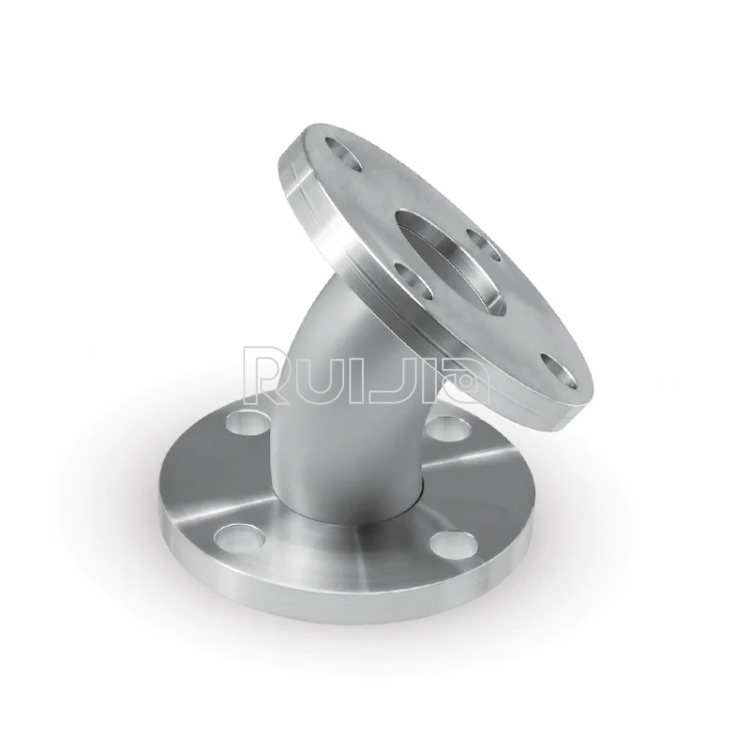
|
Temperature |
-26˚C to 200˚C |
|
Working Pressure |
Vacuum~atmosphere pressure |
|
Helium Leak Test |
1×10 -9 Pa・m³/sec or less |
Rich stock, fast delivery
Quick response within 24h
Quality assurance
Accessory replacement
GET A QUOTE