Determining adequate tightening torque for ISO-KF clamp connections, with size-based reference ranges and practical “enough” criteria.


A customer called me last month. His six-month-old vacuum system was showing rust-colored stains near the foreline. The gauges drifted. The pump oil darkened faster than usual. He had saved money on the fittings—about fifteen percent compared to the alternative quote. Now his entire process line was down for inspection. The culprit? A fitting made from the wrong stainless steel grade.
Most vacuum system buyers think about flanges, seals, and pumps first. The material of the fittings themselves feels like a secondary detail. Until something goes wrong.
According to ASTM A967 and ASME BPE standards, the two most common stainless steel grades for vacuum components are 304 and 316L. Both contain chromium for corrosion resistance, nickel for formability, and molybdenum in different amounts. That last element—molybdenum—makes all the difference in aggressive environments.
The global vacuum component market values material integrity so highly that 316L stainless steel commands a premium of roughly 20-30% over 304 for equivalent fittings. But paying that premium without understanding why is just as wasteful as skipping it when you actually need it.
304 stainless steel contains 18% chromium and 8% nickel. No molybdenum. Its corrosion resistance comes entirely from the chromium oxide layer that forms on the surface. In clean, dry vacuum environments—think R&D chambers running inert gases or simple evaporation systems—304 performs admirably. It machines well, welds cleanly, and costs less.
The problems start when aggressive chemistry enters the picture. Chlorides, acids, and even prolonged exposure to humid air can pit the surface. I have seen 304 fittings develop chloride stress corrosion cracking after less than 200 hours in a process venting small amounts of HCl. The cracks started at the thread roots, invisible to the naked eye, until the system Leak detector screamed during helium testing.
304L (low carbon version) improves weldability by reducing chromium carbide precipitation. For vacuum systems that undergo frequent bakeout cycles, 304L is the better choice within the 304 family.
316 stainless steel adds 2-3% molybdenum to the 304 formula. That small addition fundamentally changes the material's tolerance to pitting corrosion and crevice corrosion. The molybdenum stabilizes the passive layer in reducing environments and resists attack from chlorides, sulfuric acid, and many organic acids.
316L further reduces carbon content, making it the preferred grade for ultra-high vacuum (UHV) systems and any application involving welding. The "L" matters because carbon depletion at weld zones creates weak points for corrosion. For vacuum fittings that see thermal cycling, 316L eliminates that vulnerability.
A 2021 study published in the Journal of Materials Engineering and Performance tested both grades under simulated semiconductor process conditions. Samples were exposed to 10 ppm HCl vapor at 150°C for 500 hours. The 304 samples showed visible pitting at an average depth of 45 micrometers. The 316 samples showed no measurable pitting.
Another data point comes from the offshore industry, where 316 stainless steel is standard for marine environments. A vacuum system installed in a coastal semiconductor fab—with ambient humidity carrying salt aerosols—required 316 fittings throughout. The facility manager reported zero corrosion-related failures over eight years. A sister facility twenty miles inland using 304 fittings replaced seven components in three years.
These numbers translate directly to uptime. For a production system generating 5,000perhourofoutput,asingletwo−daycorrosionfailurecosts5,000perhourofoutput,asingletwo−daycorrosionfailurecosts80,000. The upgrade to 316 fittings across the entire system might cost $2,000. Simple math.
Here is something most catalog pages do not highlight. 304 stainless steel becomes slightly magnetic after cold working—bending, machining, or threading. The austenitic structure partially transforms to martensite under mechanical stress. 316 stainless steel remains essentially non-magnetic even after significant cold work, thanks to the molybdenum stabilizing the austenite phase.
Why does this matter for vacuum systems? Magnetic field-sensitive applications—electron beam welding, sputter deposition, magnetic resonance chambers—cannot tolerate even weak magnetic materials inside the vacuum envelope. A 304 fitting near an electron beam source can distort the beam path. I have watched a research group spend three weeks chasing focus problems, only to discover a 304 adapter was the cause.
For these applications, 316 is not a preference. It is a requirement.
Both grades handle vacuum bakeout temperatures well into the 400-450°C range. The difference appears in creep resistance and oxidation scaling at sustained high temperatures.
304 stainless steel begins forming visible oxide scale above 800°C in air. Under vacuum, the scaling temperature is lower because the protective chromium oxide layer does not form as readily without oxygen. 316 stainless steel offers slightly better high-temperature strength due to molybdenum solid solution strengthening.
For standard high vacuum bakeout at 200-300°C, both perform identically. For ultra-high vacuum systems requiring 400°C bakeout or specialized applications approaching 600°C, 316 holds a modest advantage in maintaining dimensional stability.
A passivation process removes free iron from stainless steel surfaces, enhancing corrosion resistance. Here is the trap: improperly passivated 304 performs worse than correctly passivated 304. And many budget fittings skip passivation entirely, shipping as-machined with embedded iron particles on the surface.
ASTM A967 specifies three methods for passivation—nitric acid, citric acid, or specialized treatments. A citric acid passivated 304 fitting can approach the corrosion resistance of non-passivated 316 in mild environments. But expose that same 304 to chlorides, and the passivation layer breaks down quickly.
316 stainless steel passivates more effectively because molybdenum helps maintain the passive film even when the surface is scratched or damaged. That self-healing characteristic makes 316 the default choice for any vacuum system handling corrosive gases, including chlorine-based etch chemistries, fluorine plasmas, and hydrogen chloride.
The price difference between 304 and 316 fittings varies by supplier and complexity. For standard KF flanges and CF flanges, expect to pay 25-35% more for 316. For custom machined adapters, the premium may drop to 15-20% because material cost becomes a smaller portion of total fabrication expense.
A straightforward calculation helps: (Cost of premature failure + downtime cost + replacement labor) versus (upgrade cost). For most R&D labs running non-corrosive processes, 304 works perfectly. For any production environment, especially semiconductor, pharmaceutical, or chemical processing, 316 pays for itself in reduced failure risk.
One pharmaceutical vac dry manufacturer told me they switched entirely to 316L after a 304 fitting corroded during a CIP (clean-in-place) cycle using dilute acetic acid. The contamination ruined an entire batch of intermediate product. "We saved 800onfittings,"theplantengineersaid."Thelostbatchcostus800onfittings,"theplantengineersaid."Thelostbatchcostus47,000."
Here is how I advise customers to make the decision:
Choose 304 stainless steel when:
The vacuum environment is clean, dry, and non-corrosive (inert gases, simple evaporation, general R&D)
No chlorides, acids, or aggressive cleaning agents contact the fittings
Magnetic properties are not a concern
The system operates at moderate temperatures (below 300°C bakeout)
Budget constraints are tight and failure consequences are low
Choose 316 stainless steel when:
Process gases include chlorides, fluorine, sulfur compounds, or organic acids
The system undergoes regular wet cleaning or exposure to humid conditions
Magnetic interference with electron beams or sensitive detectors must be avoided
UHV operation requires minimal outgassing after bakeout
The system is expected to operate for years without component replacement
Failure would cause expensive downtime or product loss
When you are unsure, test it. A simple coupon test—placing small samples of both grades inside your chamber during normal operation—reveals exactly how each performs under your specific conditions. Many vacuum component suppliers offer sample kits for exactly this purpose.
Misconception 1: "316 is always better for vacuum." False. 316 offers no advantage in clean, dry, inert gas systems. The extra cost buys nothing.
Misconception 2: "All stainless steel is non-magnetic." False. Cold-worked 304 can become noticeably magnetic. Check with a magnet before installation in sensitive systems.
Misconception 3: "Passivation is a permanent treatment." False. Passivation layers can be damaged by scratching, aggressive chemicals, or improper cleaning. Re-passivation after system modification or repair is sometimes necessary.
Misconception 4: "316 never corrodes." False. 316 resists pitting far better than 304, but concentrated chlorides at elevated temperatures still cause attack. Know your process limits.
Material selection for vacuum fittings is rarely about getting the "best" option. It is about matching the material to the actual operating environment. 304 vacuum components serve reliably in countless labs worldwide. 316 vacuum components protect critical systems where failure is not an option.
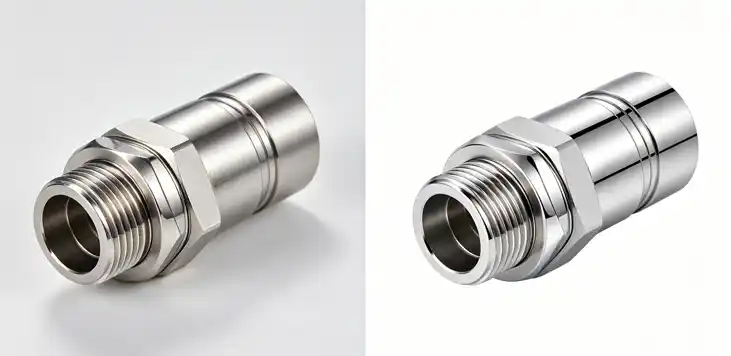
When you review vacuum adapter specifications, pay attention to the grade designation. A fitting labeled simply "stainless steel" without a grade number is almost certainly 304—or worse, an unidentified import with inconsistent properties. Explore detailed product information to verify what you are actually buying.
If your application involves aggressive process gases, high-humidity environments, or magnetic field sensitivity, 316 is not a luxury—it is insurance. Browse RUIJIA's vacuum adapter collection to find components made from both grades, documented with full material certification.
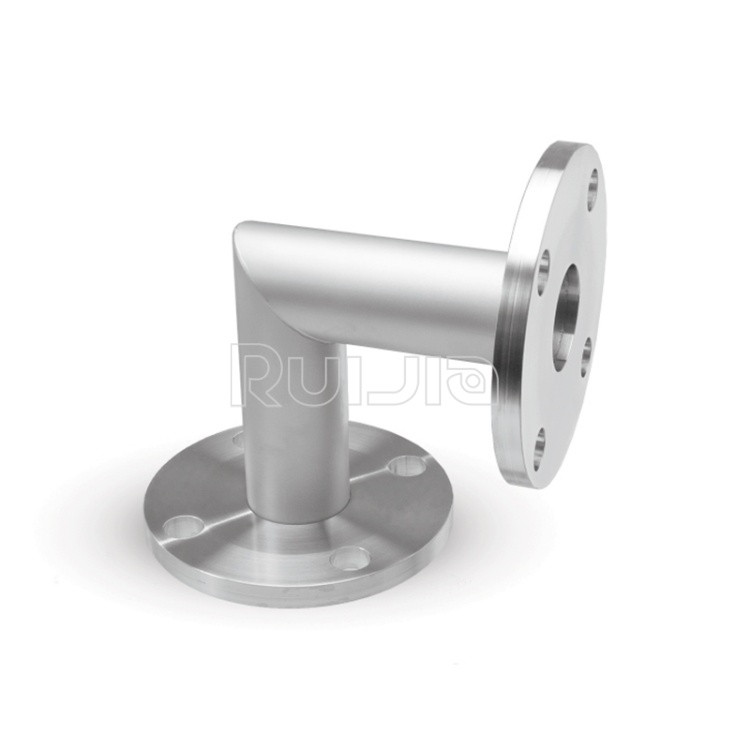
|
Temperature |
-26˚C to 200˚C |
|
Working Pressure |
Vacuum~atmosphere pressure |
|
Helium Leak Test |
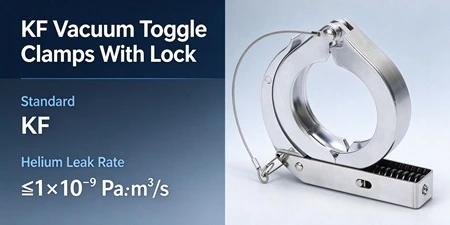
1×10 -9 Pa・m³/sec or less |
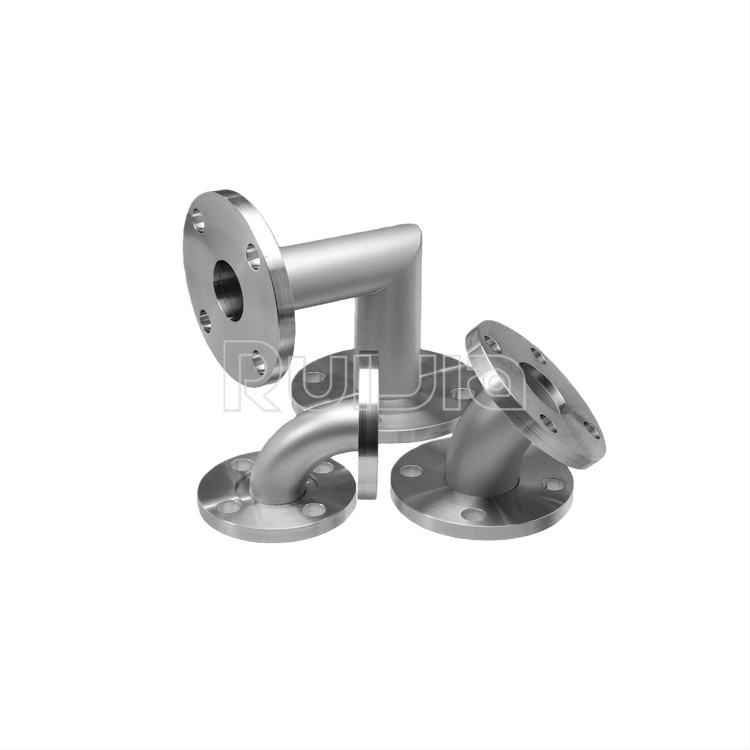
|
Temperature |
-26˚C to 200˚C |
|
Working Pressure |
Vacuum~atmosphere pressure |
|
Helium Leak Test |
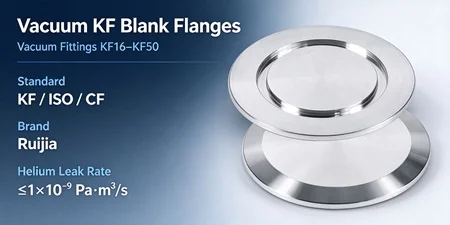
1×10 -9 Pa・m³/sec or less |
|
Temperature |
-26˚C to 200˚C |
|
Working Pressure |
Vacuum~atmosphere pressure |
|
Helium Leak Test |
1×10 -9 Pa・m³/sec or less |
Rich stock, fast delivery
Quick response within 24h
Quality assurance
Accessory replacement
GET A QUOTE