Determining adequate tightening torque for ISO-KF clamp connections, with size-based reference ranges and practical “enough” criteria.


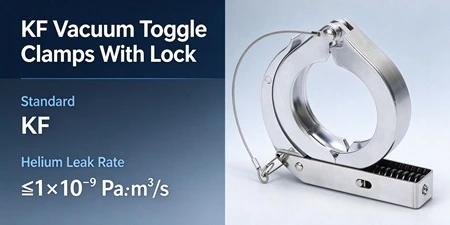
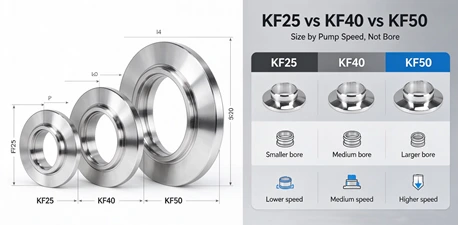
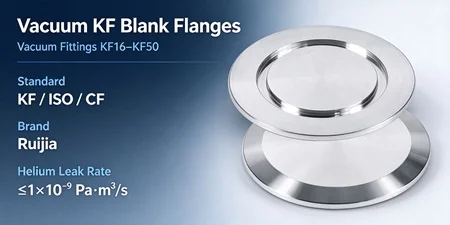
When a thin-film deposition line loses three hours of production because a single elbow connector couldn't seal reliably against repeated thermal cycles, the real cost isn't the part — it's the lost batch, the re-qualification time and the slow erosion of customer trust. In 2026, vacuum system design is being rewritten from the connection level up. The conversation has moved beyond "is this fitting leak-tight?" to "how fast can I reconfigure this line, how do I prove seal integrity to a digital twin, and what is the total cost of ownership over a five-year equipment lifecycle?"
Across semiconductor, analytical instrumentation and R&D vacuum, five trends are quietly redrawing the specification sheets. Here is what's changing — and how engineering teams can turn these shifts into measurable uptime.
Not long ago, tool-free assembly was considered a convenience feature for laboratory setups. In 2026, it is rapidly becoming a hard requirement for production tools that undergo frequent chamber access. The math is straightforward: in a typical PVD cluster tool, operators may open and re-seal vacuum boundaries four to eight times per maintenance window. A clamp design that requires a tool and careful cross-torquing can easily add 15–20 minutes per flange pair. When multiplied across dozens of connection points, this generates a significant availability deficit.
The fastest-moving fabrication sites are now specifying modular connection systems with single-knob or over-center clamp actuation, combined with rigidly located centering rings that ensure alignment repeatability below 0.1 mm. This eliminates the "blind torque" guesswork that leads to uneven O-ring compression, which remains one of the most common sources of low-level virtual leaks.
For teams evaluating a retrofit, the decision point is no longer cost per piece. It is cost per hour of chamber availability regained. Many maintenance leads report that a switch to quick-release connection components can pay for itself within the first three planned preventive maintenance cycles, purely through reduced mean-time-to-repair. If you are mapping out a chamber access frequency study, you can view specific modular connection options that are being benchmarked in similar throughput environments.
Interchangeability has been a selling point of vacuum connection standards for decades. In 2026, however, the expectation has tightened: components must not only mate mechanically, but also deliver consistent long-term performance across mixed-vendor assemblies. A centering ring supplied by one manufacturer should produce the same O-ring compression ratio and the same helium leak rate as another, when clamped with identical torque values. This is far from guaranteed in practice.
The difference often lies in the hidden tolerances — the chamfer angle on the centering ring shoulder, the flatness of the clamp's bearing surface, the precise durometer and dimensional recovery of the elastomer after bake-out. ISO 2861 and Pneurop 6606 provide the dimensional envelope, but they leave room for interpretation in material finish and mechanical compliance. Leading equipment builders are now supplementing these general standards with internal procurement specs that define surface roughness (typically Ra ≤ 0.8 µm on sealing faces), vacuum-fired cleaning protocols, and batch-level outgassing data.
This shift benefits end users who maintain mixed fleets of legacy and new equipment. Instead of being locked into a single OEM's supply chain, they can source components from qualified vendors who publish full geometric dimensioning and tolerancing data.
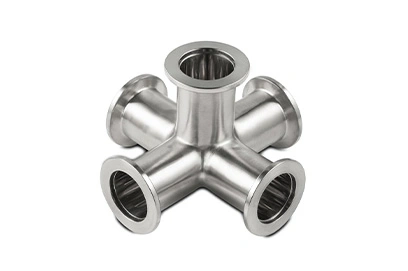
The practical lesson: when qualifying a new supplier, ask not just for a dimensional drawing, but for a certificate of conformance that ties batch numbers to leak rate test results. Some forward-leaning facilities go further and require a third-party comparative study, where the same connection point is assembled with components from three different suppliers and tested under thermal cycling. The resulting data set often reveals differences that a simple go/no-go gauge cannot catch. Those responsible for system integration can explore standardized quick-release vacuum fittings that have been subjected to exactly this kind of multi-vendor compatibility validation.
For thirty years, grade 304 stainless steel has been the default answer for vacuum connection hardware. In 2026, application-specific material selection is becoming the norm rather than the exception, driven by three pressures: aggressive chemical precursor delivery in atomic layer deposition, stricter particulate control in EUV lithography environments, and the push to reduce system weight in mobile analytical instruments.
Several developments deserve attention. Electropolished 316L is gaining share in semiconductor sub-fab installations where trace HCl or HF vapors cause pitting corrosion on standard 304 flanges within 12–18 months. Hard anodized aluminum components, manufactured from 6061-T6 stock and finished with a low-porosity seal layer, are cutting connection weight by nearly two-thirds in portable mass spectrometer inlets, without sacrificing achievable base pressure in the 10⁻⁸ mbar range. There is also a quiet but significant adoption of vacuum-brazed ceramic-to-metal adapters, which resolve the perennial problem of galvanic corrosion when stainless steel components couple directly to aluminum chamber bodies.
One corrosion engineering manager at a European coating house shared an instructive timeline: after switching to 316L quick-connect hardware in their reactive sputter section, flange-related leak events dropped from an average of one per quarter to zero over an 18-month observation window. The material upgrade represented less than 2% of the total tool cost.
The material story does not stop at the metal. Elastomer O-rings in perfluoroelastomer (FFKM) compounds are now specified where previously standard FKM (Viton®) was considered sufficient, especially in applications exposing seals to oxygen plasma afterglow or amine-based ALD precursors. The takeaway for process engineers: the cost of upgrading the seal material in a small-bore connection is often a rounding error compared to the cost of an unscheduled vent caused by a chemically attacked O-ring. For teams dealing with reactive chemistries, it may be time to get detailed material specifications for connection solutions designed to handle exactly these environments.
The classic vacuum foreline has been a data-blind spot. We know the pressure at the gauge, but we typically know nothing about the mechanical state of the dozen connection points that lie between the chamber and the pump. That is changing in 2026, not because every flange suddenly needs a sensor, but because the cost of embedding condition-monitoring features into connection hardware has dropped to the point where it is economically justifiable for high-value process tools.
Two practical implementations are emerging. The first is passive RFID tagging of critical connection pairs: each flange carries a unique identifier that links to a database containing its installation date, torque verification records, and last replacement date for the elastomer seal. This turns a manual maintenance log into a scannable, auditable history. The second, more advanced approach integrates a thin-film strain sensor into the clamp body, enabling real-time monitoring of clamping force retention. In a pilot installation on a plasma etch system, such a system detected a 15% relaxation in clamping force three days before the leak rate rose above the interlock threshold. The maintenance team swapped the O-ring during a scheduled window instead of during an unscheduled fault.
SEMI E187, which focuses on cybersecurity for fab equipment, is indirectly accelerating this trend by defining the data interfaces that allow these sensor signals to stream securely into an advanced process control (APC) platform. The implication: in the near future, a vacuum connection may no longer be judged solely by its leak rate at installation, but by how consistently it can demonstrate seal integrity over its entire service life. For those building digital twin capabilities into their vacuum subsystems, it is worth making sure that the physical connection hardware can support these digital threads.
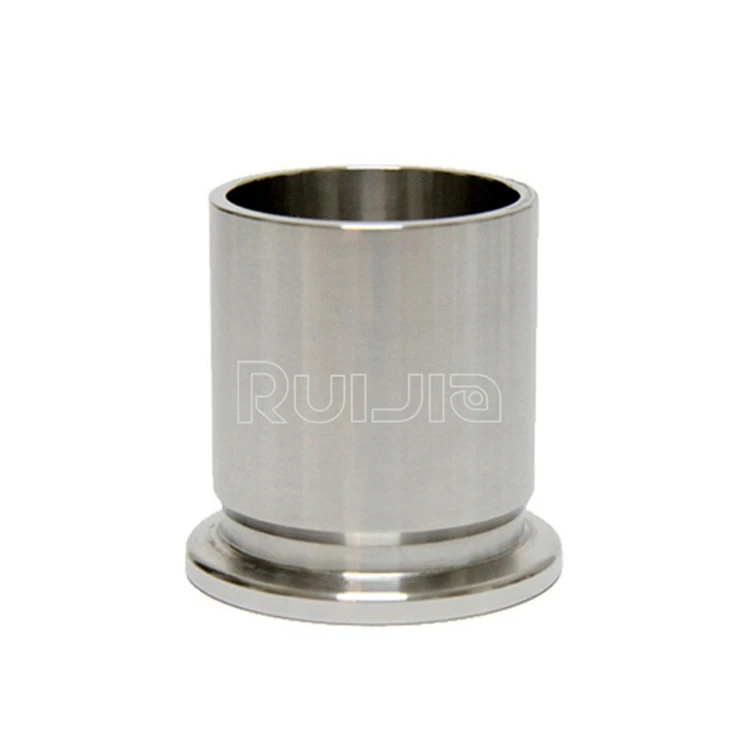
At first glance, a flange seems too small to matter in a corporate carbon footprint calculation. But when you multiply tens of thousands of such components across a global manufacturing footprint, the numbers become material. In 2026, sustainability in vacuum connection design is coalescing around three levers: longevity, reusability and packaging.
The most impactful lever is service life extension. A connection component that lasts 10 years instead of five halves the embedded carbon per year of use, even before accounting for the avoided manufacturing of a replacement. This is pushing procurement teams to evaluate true lifecycle durability rather than lowest unit price. Mixed-metal assemblies designed for indefinite reusability — where the clamp, centering ring and seal are individually replaceable instead of being discarded as a whole — are gaining preference.
Cleanroom packaging waste is another flashpoint. Traditional single-use plastic bags for individual components are being replaced by bulk-pack solutions that use reusable cassettes or paper-based, laser-marked sleeves. One mid-volume equipment manufacturer reported that a packaging redesign for their connection hardware line eliminated 1.2 metric tons of plastic waste per year, with no increase in particle contamination levels on incoming inspection.
Finally, the energy footprint of the vacuum system itself is influenced by connection quality. A single persistent virtual leak can force a dry pump to run at higher speed to maintain target pressure, consuming unnecessary kilowatt-hours. While this is a known phenomenon, the industry is now quantifying it: an SEMI energy collaborative study estimated that reducing air in-leakage across a typical 200-mm fab's vacuum forelines by 10% can save over 500 MWh annually. When you are building the business case for higher-quality connection hardware, these operational energy savings should be part of the total-cost-of-ownership equation. If you are ready to factor lifecycle sustainability into your next vacuum subsystem design, discover Ruijia's range of durable, reconfigurable vacuum hardware.
The common thread running through these five trends is the shift from treating vacuum connections as simple commodity fittings to treating them as engineered interface points that carry consequences for uptime, process reproducibility and operating cost. Whether you are reconfiguring an R&D deposition system or qualifying a second-source supplier for a high-volume production tool, the questions to ask are changing. Not just "does it seal?" but "how quickly can I open it without breaking alignment?" Not just "is it dimensionally standard?" but "can I prove batch-to-batch consistency over a decade of mixed-vendor assemblies?"
No single connection component addresses every trend equally, but the direction of travel is clear: modularity, material specificity, data transparency and lifecycle thinking are now part of the conversation. Teams that incorporate these factors into their evaluation rubrics early will have fewer surprises during commissioning and a stronger negotiating position with equipment suppliers who may still be specifying 30-year-old connection designs.
Disclaimer: This article is for informational purposes only and does not constitute engineering advice. Application-specific material compatibility, leak rate requirements and safety factors must be validated by qualified vacuum engineering personnel.
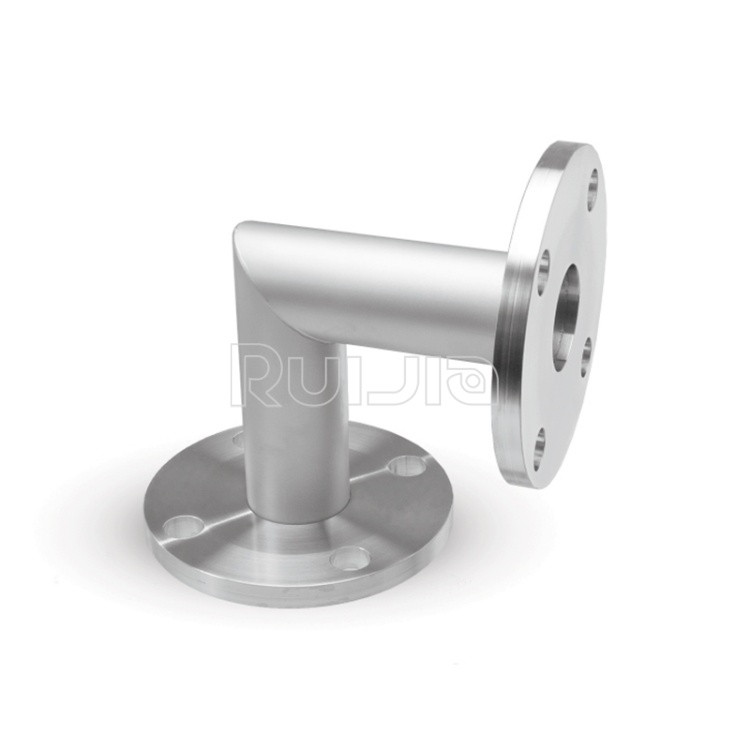
|
Temperature |
-26˚C to 200˚C |
|
Working Pressure |
Vacuum~atmosphere pressure |
|
Helium Leak Test |
1×10 -9 Pa・m³/sec or less |
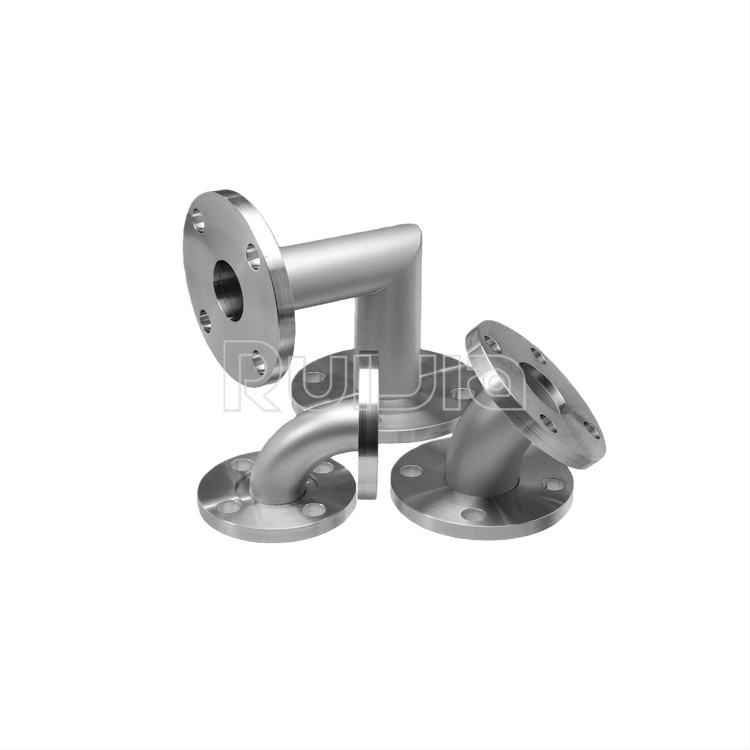
|
Temperature |
-26˚C to 200˚C |
|
Working Pressure |
Vacuum~atmosphere pressure |
|
Helium Leak Test |
1×10 -9 Pa・m³/sec or less |
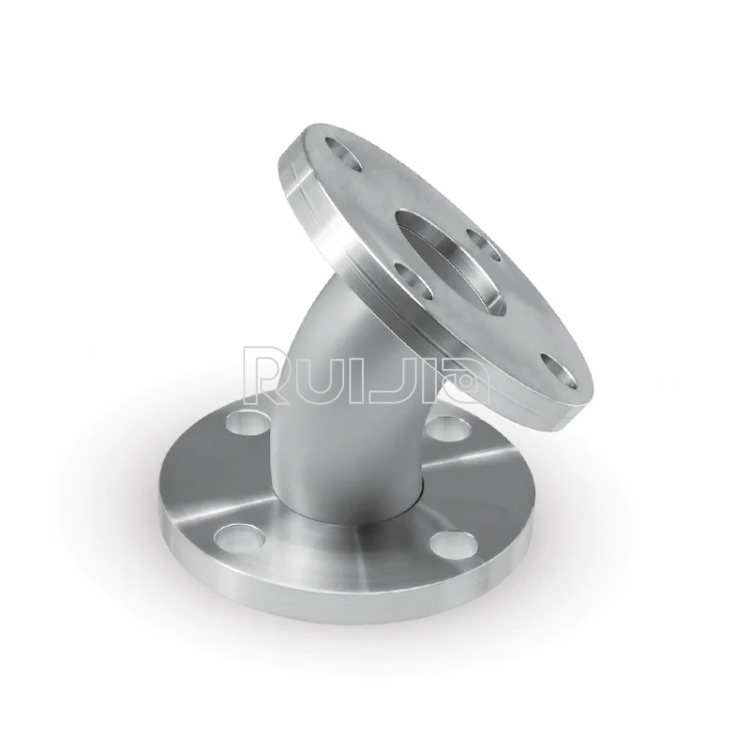
|
Temperature |
-26˚C to 200˚C |
|
Working Pressure |
Vacuum~atmosphere pressure |
|
Helium Leak Test |
1×10 -9 Pa・m³/sec or less |

Rich stock, fast delivery
Quick response within 24h
Quality assurance
Accessory replacement
GET A QUOTE