Determining adequate tightening torque for ISO-KF clamp connections, with size-based reference ranges and practical “enough” criteria.


The short answer: CF (Conflat) flanges achieve ultra-high vacuum (UHV) sealing through a metal-to-metal hard seal mechanism. When bolts are tightened, the flange's sharp knife edge is pressed into a softer metal gasket—typically oxygen-free copper—causing plastic deformation that fills microscopic surface irregularities and creates a leak-tight barrier. This all-metal seal design enables bakeability to 450°C and reliably maintains vacuum levels down to 10⁻¹⁰ Pa or better. [2†L2-L3]
But how exactly does this mechanism work? What makes copper the preferred gasket material? And how does a CF seal differ fundamentally from elastomer-based vacuum seals? This article explains the physics, materials, and practical considerations behind CF flange metal gasket seals.
CF stands for Conflat—a flange standard originally developed for ultra-high vacuum applications. CF flanges, also known as Conflat flanges, are mainly used in ultra-high vacuum systems to connect a wide range of vacuum equipment and components [2†L9-L11]. Unlike KF or ISO flanges that rely on elastomer O-rings for sealing, CF flanges use a metal static seal [2†L11].
The CF flange system is available in sizes ranging from CF16 to CF350, with special materials, sizes, and connection methods available upon request [2†L6-L8]. Common materials include stainless steel 304 and 316L, which provide excellent corrosion resistance, high-temperature resistance, and pressure resistance [2†L29-L31].
The core of the CF sealing mechanism lies in the knife edge—a sharp, raised ridge machined into the flange face. When the flange bolts are tightened, this knife edge is forced into the surface of the metal gasket.
Because the gasket is made of a softer metal (oxygen-free copper), the knife edge plastically deforms the gasket material. This deformation serves two critical purposes:
Surface filling — The deformed copper flows into and fills microscopic surface irregularities on both flange faces
High localized pressure — The concentrated force at the knife edge creates a very high contact pressure, well beyond the yield strength of the gasket material
The result is a metal-to-metal seal with no elastomer components that could outgas, degrade, or limit bakeout temperatures.
Plastic deformation is the key to CF seal reliability. Oxygen-free copper has good ductility and electrical conductivity [2†L11-L12]. Under the force of the tightened bolts, the copper gasket undergoes plastic deformation at the knife edge contact points, filling small defects on the flange surface and forming a reliable metal seal [2†L12-L14].
This is fundamentally different from elastomer seals, which rely on elastic deformation (compression and recovery) of a rubber-like material. Metal seals rely on permanent deformation—the gasket is consumed in the sealing process, which is why CF gaskets are generally considered single-use items.
The all-metal seal design of CF flanges offers distinct advantages:
| Feature | Benefit |
| No elastomer components | No outgassing, no degradation over time |
| Bakeable to high temperatures | Compatible with 450°C vacuum bakeout [2†L48] |
| Compatible with aggressive environments | Resists chemicals and radiation |
| Ultra-low leak rates | Helium leak rate better than 10⁻¹⁰ Pa·m³/s [2†L2-L3] |
Oxygen-free copper is the most common gasket material for CF flanges. Its key characteristics include:
High purity — Minimizes contamination and outgassing
Good plasticity — Deforms readily under knife edge pressure
Temperature resistance — Withstands bakeout up to 450°C [2†L48]
Cost-effective — Lower cost compared to plated alternatives
Poor reusability — Not recommended for repeated use [2†L48-L49]
Oxygen-free copper gaskets are suitable for static applications with infrequent disassembly and assembly [2†L49]. Each reassembly requires a fresh gasket to ensure reliable sealing.
For applications requiring more frequent maintenance or disassembly, silver-plated copper gaskets offer an alternative:
Excellent sealing performance — Silver provides a smoother, more consistent sealing surface
Lower clamping force required — Easier to achieve reliable seal
Temperature resistance — Withstands up to 300°C [2†L51]
Anti-oxidation — Silver plating resists oxidation that can degrade seal quality
Suitable for frequent disassembly — Better reusability than bare copper [2†L51-L52]
| Consideration | Oxygen-Free Copper | Silver-Plated Copper |
| Maximum bake temperature | 450°C | 300°C |
| Reusability | Poor | Better |
| Clamping force required | Higher | Lower |
| Cost | Lower | Higher |
| Best application | Static, infrequent disassembly | Frequent maintenance, low-clamp-force systems |

To understand why CF flanges are specified for UHV applications, it helps to compare metal seals with elastomer seals at a fundamental level.
Sealing mechanism: Elastic deformation — the O-ring compresses and springs back
Material: Viton, silicone, Buna-N,或其他 rubber compounds
Temperature limit: Typically 150–200°C maximum
Outgassing: Elastomers continuously outgas, especially under vacuum
Permeation: Gases can permeate through the elastomer material
Aging: Elastomers degrade over time (hardening, cracking)
Sealing mechanism: Plastic deformation — the gasket is permanently deformed
Material: Oxygen-free copper, silver-plated copper, or other soft metals
Temperature limit: Up to 450°C (copper), compatible with high-temperature bakeout
Outgassing: Minimal — metal does not outgas
Permeation: Zero — metal is impermeable to gases
Aging: No degradation over time in vacuum
The choice between metal and elastomer seals ultimately depends on the vacuum level required, operating temperature, and maintenance frequency.For a broader comparison of flange types, read KF vs ISO vs CF Flanges: Pros & Cons.
Proper bolt tightening is critical for achieving a reliable CF seal. The bolts must be tightened evenly and to the correct torque specification. Uneven tightening can cause:
Asymmetric gasket deformation
Leak paths at low-pressure areas
Flange damage or distortion
Key principle: Tighten in a cross pattern, gradually increasing torque in multiple passes.
Always use a fresh gasket for each assembly (for copper)
Handle gaskets with clean gloves to avoid contamination
Inspect the knife edge for damage before assembly
Ensure flange faces are clean and free of debris
After tightening, inspect the flange joint for:
Even bolt protrusion (indicates even tightening)
Visible gasket extrusion (confirms proper deformation)
No flange gap (flanges should be in full contact)
CF flanges are typically verified using helium mass spectrometry leak detection. This is the industry standard method for confirming UHV seal integrity.
At RUIJIA, all CF products undergo helium leakage testing to ensure that the helium leak rate is better than 10⁻¹⁰ Pa·m³/s [2†L2-L3]. This level of leak tightness is essential for applications such as:
Semiconductor manufacturing
Vacuum metallurgy
Vacuum heat treating
Aerospace systems
Medical equipment
Research and development [0†L30-L32]
| Mistake | Consequence | Prevention |
| Reusing copper gaskets | Leak due to insufficient fresh deformation | Always use new copper gaskets for each assembly |
| Uneven bolt tightening | Asymmetric seal, leak paths | Use torque wrench, cross-pattern tightening |
| Contaminated gasket or flange | Outgassing, poor seal | Handle with clean gloves, clean flange faces |
| Over-tightening bolts | Flange distortion, knife edge damage | Follow specified torque values |
| Using wrong gasket material | Incompatible with temperature or process | Match gasket type to application requirements |
Can CF flange copper gaskets be reused?
Generally, no. Oxygen-free copper gaskets rely on plastic deformation to create the seal. Once deformed, the material has already flowed to fill the surface irregularities of the previous assembly. Reusing the same gasket typically results in insufficient deformation and a leak path. For applications requiring frequent disassembly, consider silver-plated copper gaskets, which offer better reusability [2†L51-L52].
What is the maximum bakeout temperature for CF flanges?
With oxygen-free copper gaskets, CF flanges can be baked at temperatures up to 450°C [2†L48]. This high-temperature compatibility is one of the key advantages of all-metal seals, enabling thorough outgassing of vacuum systems before critical operations.
How does a CF seal compare to a VCR or Swagelok seal?
CF, VCR, and Swagelok all use metal sealing mechanisms, but they serve different purposes. CF flanges are designed for large-diameter UHV connections with bolted assembly. VCR and Swagelok adapters are typically used for smaller-diameter tubing connections with threaded or ferrule-based sealing [6†L18-L20][6†L27-L30]. CF is the standard choice for main chamber and large pipeline connections in UHV systems.
Why is oxygen-free copper used instead of regular copper?
Oxygen-free copper has higher purity and better ductility than standard copper. The absence of oxygen reduces the risk of hydrogen embrittlement during high-temperature bakeout and provides more consistent plastic deformation properties for reliable sealing [2†L11-L12].
What is the typical helium leak rate for a properly sealed CF flange?
A properly assembled CF flange with a fresh copper gasket can achieve a helium leak rate better than 10⁻¹⁰ Pa·m³/s [2†L2-L3]. This level of leak tightness is essential for UHV applications in semiconductor manufacturing, aerospace, and research.
CF flange metal gasket seals achieve ultra-high vacuum integrity through a well-understood mechanical principle: plastic deformation of a softer metal gasket by a harder knife edge. This all-metal sealing approach eliminates the outgassing, temperature limitations, and aging issues associated with elastomer seals, making CF flanges the standard choice for UHV applications requiring bakeability and long-term reliability.
Key takeaways for engineers and procurement professionals:
Use a fresh copper gasket for each assembly — reusing gaskets invites leaks
Tighten bolts evenly in a cross pattern to the specified torque
Match gasket type to your application — oxygen-free copper for static use, silver-plated copper for frequent maintenance
Verify with helium leak detection to confirm seal integrity
When you need reliable CF flanges and fittings for your UHV system, understanding the science behind the seal helps you make better specification and maintenance decisions.
Review the available CF flange configurations at RUIJIA's CF Flanges and Fittings product page to explore standard sizes, materials, and customization options. For technical questions about your specific application requirements, contact our engineering team for personalized support.
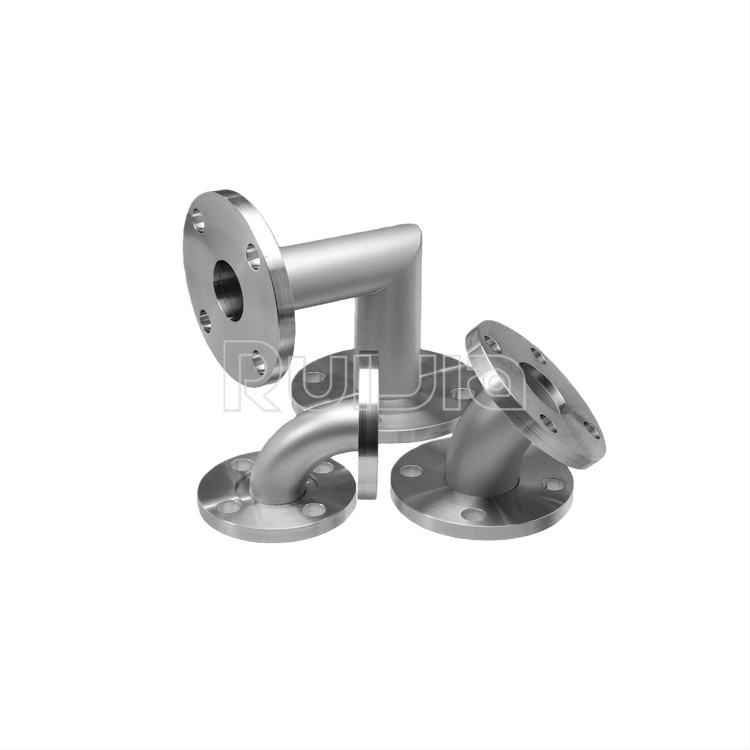
|
Temperature |
-26˚C to 200˚C |
|
Working Pressure |
Vacuum~atmosphere pressure |
|
Helium Leak Test |
1×10 -9 Pa・m³/sec or less |
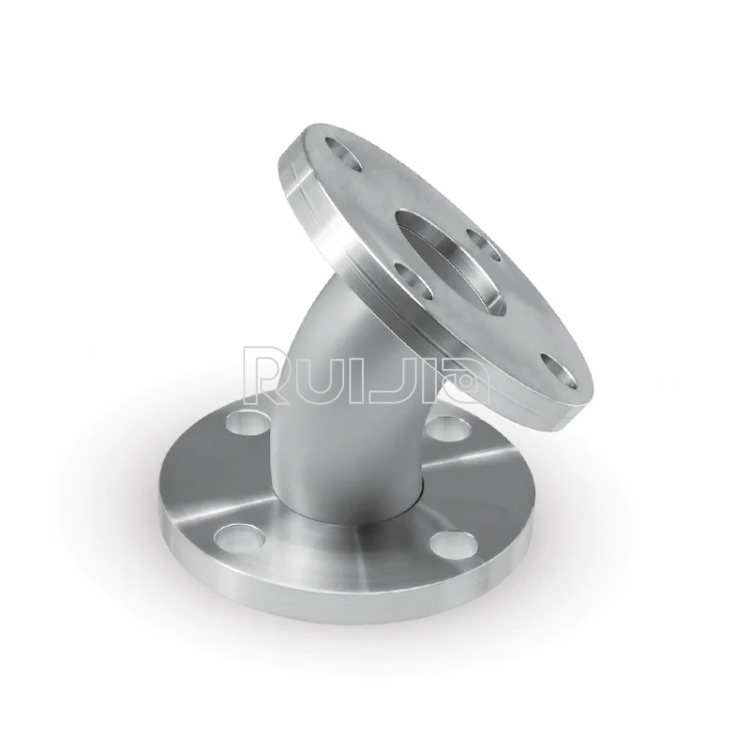
|
Temperature |
-26˚C to 200˚C |
|
Working Pressure |
Vacuum~atmosphere pressure |
|
Helium Leak Test |
1×10 -9 Pa・m³/sec or less |
|
Temperature |
-26˚C to 200˚C |
|
Working Pressure |
Vacuum~atmosphere pressure |
|
Helium Leak Test |
1×10 -9 Pa・m³/sec or less |
Rich stock, fast delivery
Quick response within 24h
Quality assurance
Accessory replacement
GET A QUOTE